
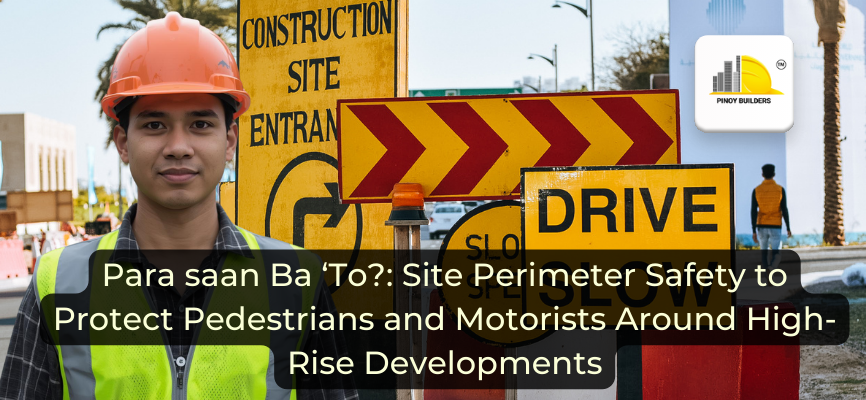
High-rise construction sites are bustling hubs of activity, but they also pose significant risks to the surrounding public. For every towering structure reaching for the sky, there’s an equally important responsibility to ensure the safety of pedestrians and motorists below. In this article, we will delve into the critical aspects of site perimeter safety, outlining legal responsibilities, essential protective measures, and crucial traffic management strategies.
In this article, we break down why those high fences and blue nets around construction sites aren’t just for privacy—they are literal lifesavers.
The Legal Blueprint: DOLE and DPWH Standards
Public safety is a strict statutory requirement rather than a mere suggestion for construction projects. Under the mandates of DOLE Department Order No. 13 and the National Building Code (PD 1096), contractors are legally bound to implement comprehensive protective measures for the general public. Failure to adhere to these DPWH-overseen standards can result in severe legal consequences and project shutdowns.
- Fencing and Hoardings: Before any excavation or demolition begins, a site must be fully enclosed. Standard hoardings should be at least 2.4 meters (8 feet) high, built from sturdy materials to prevent unauthorized entry and contain ground-level debris.
- Permit Requirements: No construction permit is valid without a comprehensive Occupational Safety and Health Program (OSHP) that specifically details how the perimeter will be secured.
Catching the Fall: Overhead Protection & Netting
In high-rise development, gravity is the constant enemy that transforms every loose bolt or fragment into a lethal projectile. To shield pedestrians and motorists effectively, a multi-layered containment system is essential to provide redundant protection against vertical hazards. This defensive strategy ensures that even if one safety measure fails, subsequent layers like catch basins and safety nets are in place to intercept falling debris.
1. Protective Canopies (Overhead Protection)
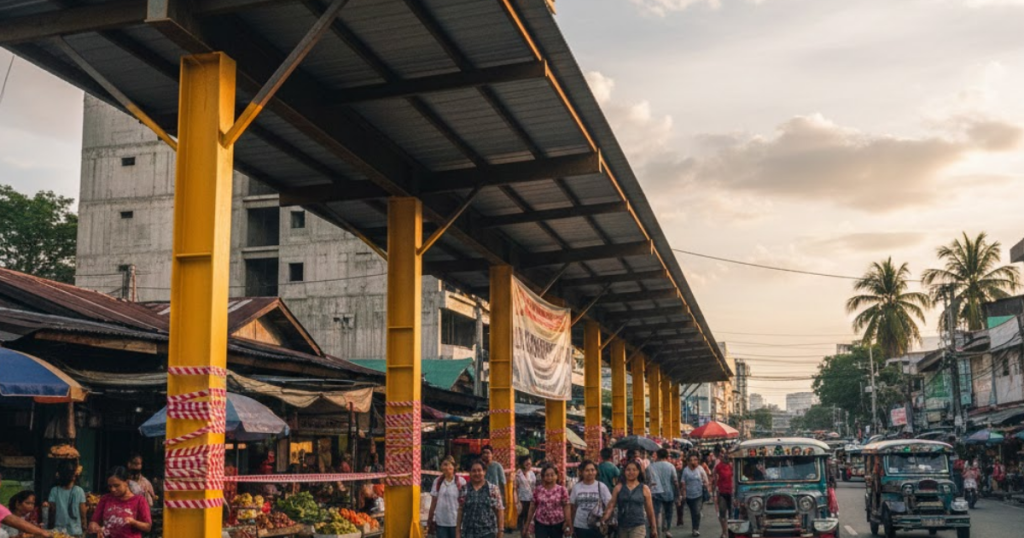
If the construction is near a sidewalk, a “protective shed” or canopy must be built. These are heavy-duty structures designed to withstand the impact of falling objects, ensuring people can walk past the site without looking up in fear.
2. Safety Nets and Catch Basins
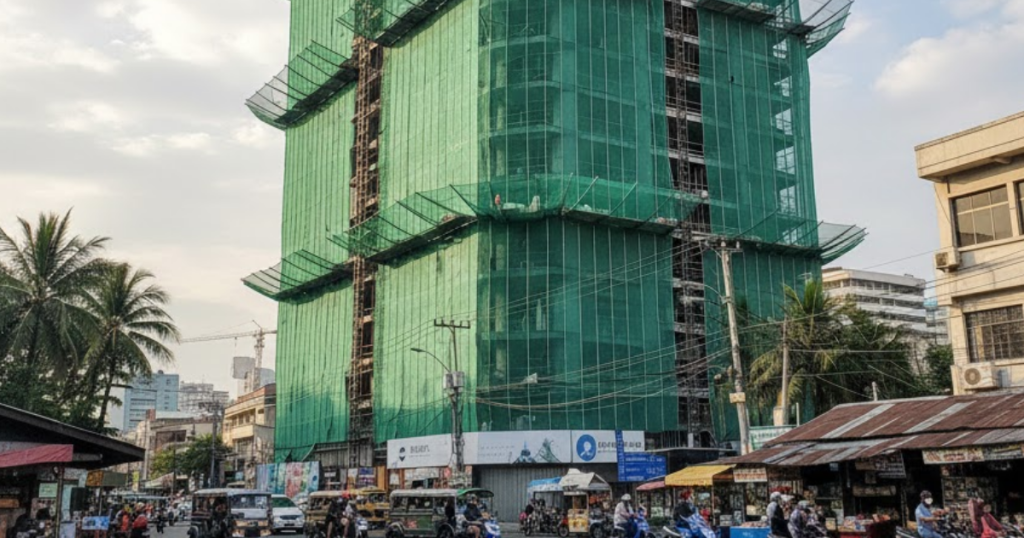
- Vertical Netting: Often seen as blue or black mesh, these wrap the building to contain dust and small debris.
- Catch Basins (Outriggers): These are horizontal platforms or nets that extend outward from the building every few floors. They are designed to “catch” larger debris or equipment that might bounce off the building’s edge.
Visibility and Flow: Signs, Lights, and Traffic
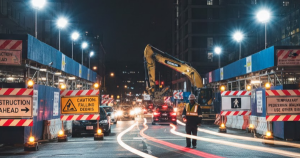
A construction site should never be a surprise to a motorist or a maze for a pedestrian. Achieving this level of safety requires a proactive approach to visibility and navigation through strategic site management. By prioritizing clear communication and orderly traffic flow, contractors can minimize the risk of accidents in high-traffic urban environments.
- Warning Signage: Highly visible, reflectorized signs must be placed at strategic distances (e.g., “Construction Ahead,” “Caution: Falling Debris,” or “Temporary Pedestrian Walkway”).
- Night Lighting: The perimeter must be well-lit after dark. Hazard lights or amber flashing beacons should mark corners and obstructions to prevent motorists from clipping the hoardings.
- Traffic Management: If the project encroaches on the road, trained Flagmen must be deployed to manage the flow of vehicles and ensure pedestrians aren’t forced to walk into live traffic lanes.
The Bottom Line: Safety is Non-Negotiable
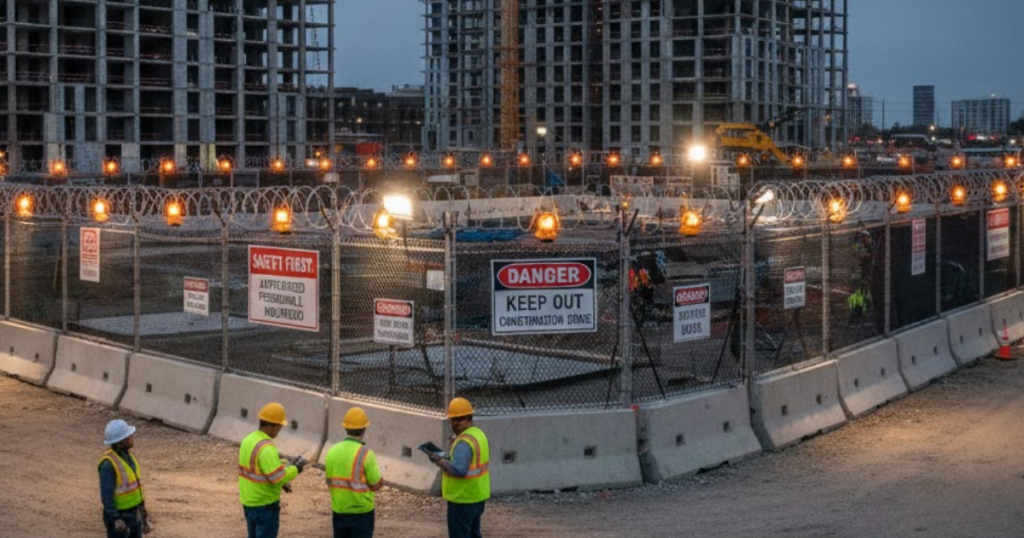
One of the biggest mistakes a developer can make is treating perimeter safety as an “extra” or a way to cut costs. In reality, these measures are essential investments that safeguard a project against massive legal liabilities and tragic accidents. Prioritizing safety within the initial budget is the only way to ensure a development remains both ethical and financially viable.
Perimeter safety measures must be integrated into the initial budget and project timeline. Skimping on high-quality hoardings or skipping the installation of catch basins might save a few pesos today, but the cost of a single accident—legal fees, stop-work orders, and irreparable damage to reputation—will far outweigh those “savings.”
At the end of the day, a successful project is measured by the floors built and the lives kept safe. Perimeter safety is the ultimate sign of a professional, responsible contractor.






 Facebook
 Instagram
 Linkedin
 Twitter
 Youtube
