

As the Lunar New Year approaches, the tradition of Spring Cleaning takes center stage. In Filipino-Chinese culture, sweeping out the dust isn’t just about hygiene; it’s about clearing away the “stagnant energy” of the past year to make room for fresh luck (swerte).
In this article, we will guide you through the logistics of a true “Oplan Alis-Kalat.” We will distinguish between everyday trash and heavy debris, explain how to coordinate with local authorities for bulky pickups, and detail why hiring accredited haulers is essential for staying on the right side of the law.
1. Know Your Waste: Escombro vs. Regular Trash
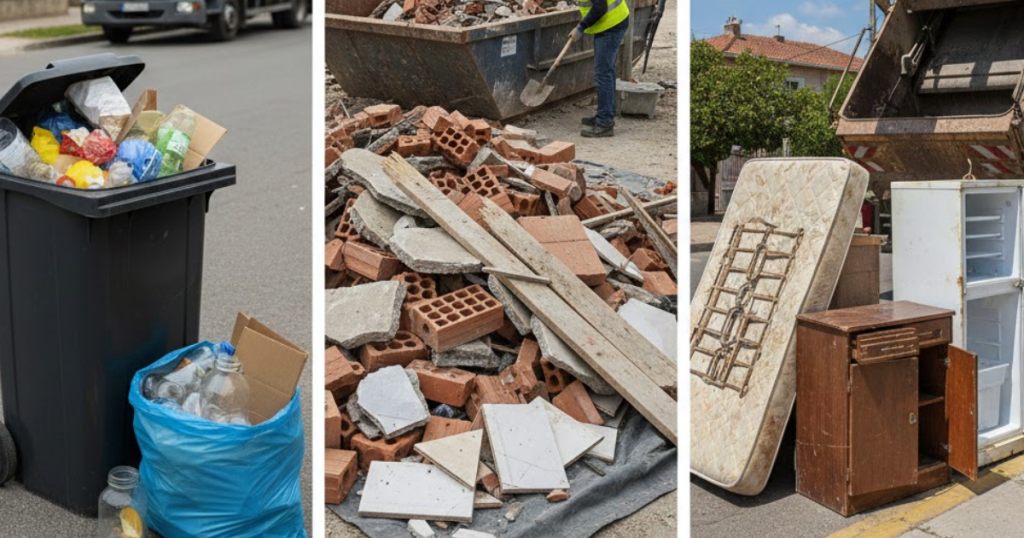
A successful cleanup begins with realizing that not all waste is treated equally by collection services. Many people mistakenly pile all their items at the gate, only to find that garbage trucks will not pick up the heavier materials. To avoid this, you must distinguish between regular trash and debris that requires specialized disposal.
- Regular Household Trash: This includes kitchen waste, plastics, and small items that fit in standard bins. These are covered by your daily or bi-weekly collection.
- Construction Debris (Escombro): This refers to heavy materials like broken hollow blocks, tiles, concrete chunks, and wood scraps.
- Bulky Waste: Large items like old mattresses, wooden cabinets, and refrigerators.
Important Note: Local garbage trucks are generally not equipped to compact or transport escombro. Leaving heavy debris on the sidewalk can lead to clogged drains and “eyesore” citations from your homeowners’ association or the city.
2. Coordinate with your Barangay or CENRO
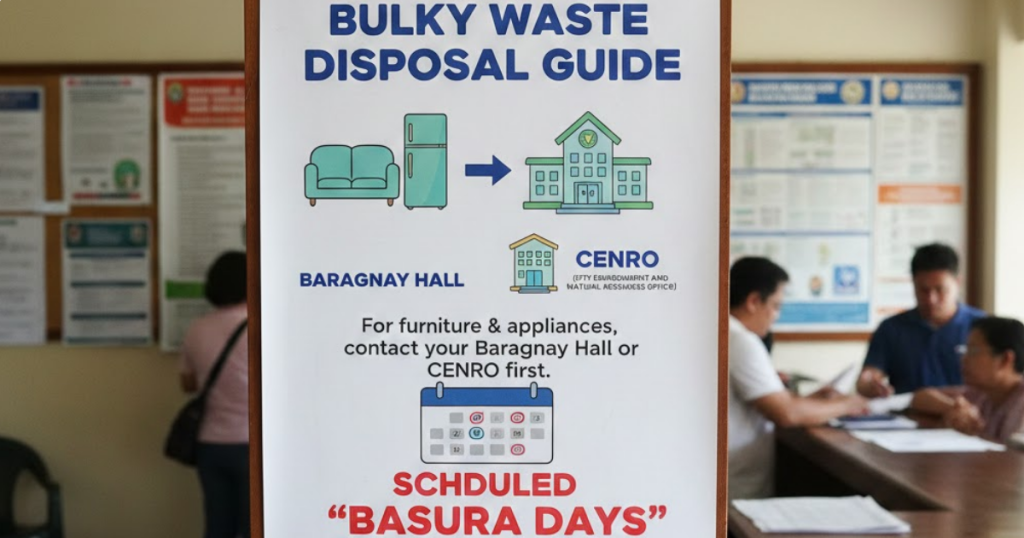
For items classified as “Bulky Waste,” such as old furniture and appliances, your first point of contact should be your Barangay Hall or the City Environment and Natural Resources Office (CENRO). These offices can provide information on scheduled “Basura Days” or special collection services available in your area. Reaching out to them ensures that your large items are picked up properly rather than being left on the curb.
Many local government units (LGUs) offer scheduled “Basura Days” specifically for bulky items.
- Call Ahead: Don’t just drag the sofa out. Coordinate a specific pickup time.
- Special Collections: Some cities provide a “Special Trip” service for a small fee, ensuring your old wardrobe doesn’t end up sitting in the rain for weeks.
3. Hire Accredited Haulers for High-Volume Disposal
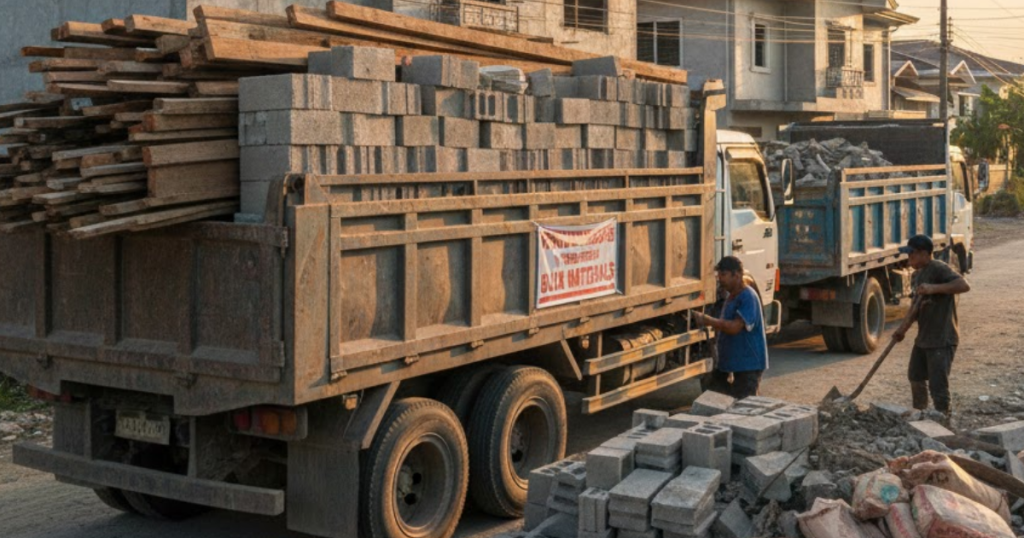
If your recent renovation has left you with a mountain of hollow blocks, timber, or cement bags, the standard Barangay truck simply won’t be enough to handle the load. To manage such a high volume of debris, you will need to hire a professional private hauling service equipped for heavy lifting. These experts ensure your materials are transported safely and disposed of in authorized landfills.
- Why Accreditation Matters: Professional haulers have the heavy-duty trucks (6-wheelers or 10-wheelers) necessary to move tons of debris.
- Legal Landfills: Accredited haulers are required by law to dump waste in authorized sanitary landfills. This ensures your renovation waste doesn’t end up in a river or a vacant lot.
4. Avoid the “Colorum” Trap and Legal Fines
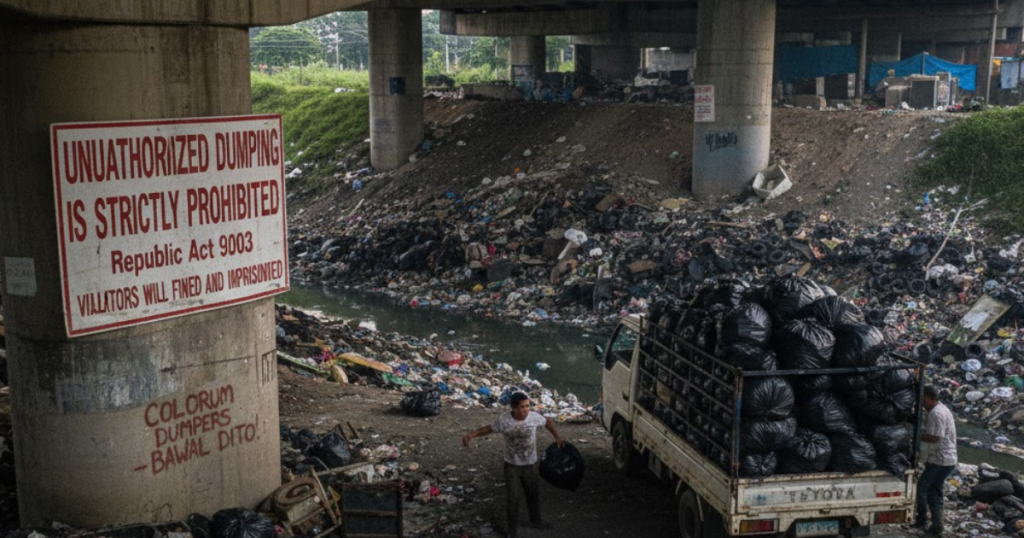
While it may be tempting to pay a random person with a pedicab or an unmarked truck a few hundred pesos to “disappear” your trash, you should strictly avoid doing so. These individuals are often “colorum” dumpers who lack the permits to handle waste responsibly. Engaging their services risks having your debris dumped illegally in unauthorized areas, which can lead to serious legal trouble for you.
- Illegal Dumping: These individuals often dump your waste in unauthorized areas, such as under bridges or in empty lots.
- The Law: Under the Ecological Solid Waste Management Act (RA 9003), both the dumper and the source of the waste (you) can be held liable.
- Penalties: Fines can range from ₱300 to several thousand pesos, or even community service and jail time for repeat or large-scale violations.
A Clean Slate for the New Year
By disposing of your debris responsibly, you aren’t just following the law—you’re practicing the true spirit of the New Year. You are ensuring that your community remains clean, your drainage remains clear for the coming rains, and your home is a true magnet for good fortune.






 Facebook
 Instagram
 Linkedin
 Twitter
 Youtube
