
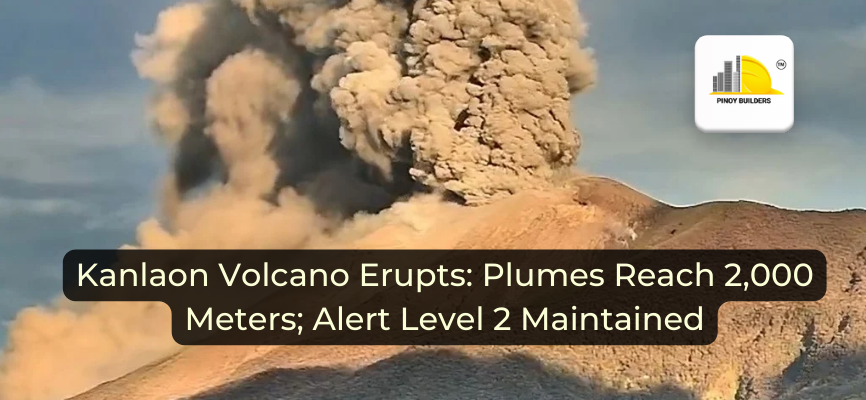
NEGROS ISLAND, Philippines — The Philippine Institute of Volcanology and Seismology (PHIVOLCS) reported a “moderately explosive” eruption at Kanlaon Volcano on Thursday afternoon, February 19, 2026, sending a massive plume of ash and gas into the sky and triggering immediate safety protocols across the Negros Island Region.
In this article, we explore the recent explosive activity of Kanlaon Volcano on Negros Island, detailing the 2,000-meter ash plume and pyroclastic flows recorded by PHIVOLCS. We cover the immediate evacuation of high-risk zones, the history of unrest leading up to this event, and the ongoing safety measures—including class suspensions and aviation warnings—currently in place for affected communities.
The Eruption Event
The explosion occurred at the summit crater at exactly 4:38 p.m. and lasted for approximately two minutes. According to seismic records, the event generated a dense, dark gray plume that rose 2,000 meters above the vent before drifting southwest.
In addition to the ash column, PHIVOLCS observed pyroclastic density currents (PDCs)—locally known as uson—descending the southern and southwestern upper slopes. These hazardous flows of hot gas and volcanic debris reached within one kilometer of the summit crater.
Regional Impact and Evacuations
The Office of Civil Defense (OCD) in the Negros Island Region confirmed that residents within the four-kilometer Permanent Danger Zone (PDZ), specifically those in Canlaon City and La Castellana, have been moved to evacuation centers.
Authorities are also closely monitoring an “extended danger zone” reaching six kilometers from the summit. It is estimated that over 1,200 families—roughly 4,150 individuals—could be affected if the volcano’s activity intensifies further.
Heightened Unrest
This latest explosion follows a period of increased activity that began in late 2025. Recent months have seen:
- October 2024: A minor explosive eruption.
- December 2025: Significant ash emissions.
- January 2026: The emission of a superheated plume.
- February 13, 2026: A 17-minute ash emission event just days prior to the current eruption.
PHIVOLCS Director Teresito Bacolcol noted that while gas emissions had appeared relatively low in the weeks leading up to the blast, a “pressure buildup” caused by blocked gas pathways likely triggered the sudden explosion.
Government Response and Safety Warnings
As of Friday, February 20, Alert Level 2 remains in effect. This indicates a moderate level of volcanic unrest, with the possibility of sudden steam-driven or phreatic explosions.
Local government units (LGUs) have taken the following actions:
- Class Suspensions: Schools in Canlaon City, La Carlota City, and La Castellana have suspended classes due to ashfall and the pungent smell of sulfur.
- Flight Restrictions: Civil aviation authorities have advised pilots to avoid flying near the volcano’s summit, as ash can be catastrophic to aircraft engines.
- Health Advisory: Residents are urged to wear face masks (N95 preferred) or wet cloths to prevent ash inhalation, which poses a risk to children, the elderly, and those with respiratory conditions.
Authorities continue to warn of potential lahars (volcanic mudflows) in the event of heavy rainfall, which could wash loose volcanic debris into nearby rivers and streams. Residents are advised to stay vigilant and rely only on official updates from PHIVOLCS and their respective disaster management offices.








 Facebook
 Instagram
 Linkedin
 Twitter
 Youtube
