


Ever notice how certain buildings just stick with you? Whether it’s a theater in your area, a church you visit every week, or a mall you sometimes walk around in, some structures feel timeless, making you pause and appreciate the thought behind them.
In the Philippines, a few architects have left such an indelible mark that they’ve been honored as National Artists for Architecture. What’s fascinating is the schools that shaped these visionaries and how their education fueled some of the country’s most iconic spaces.
In this article, let’s take a closer look at their alma maters, careers, and contributions.
6 National Artists for Architecture and their Alma Mater
1. Pablo S. Antonio: The Art Deco Visionary
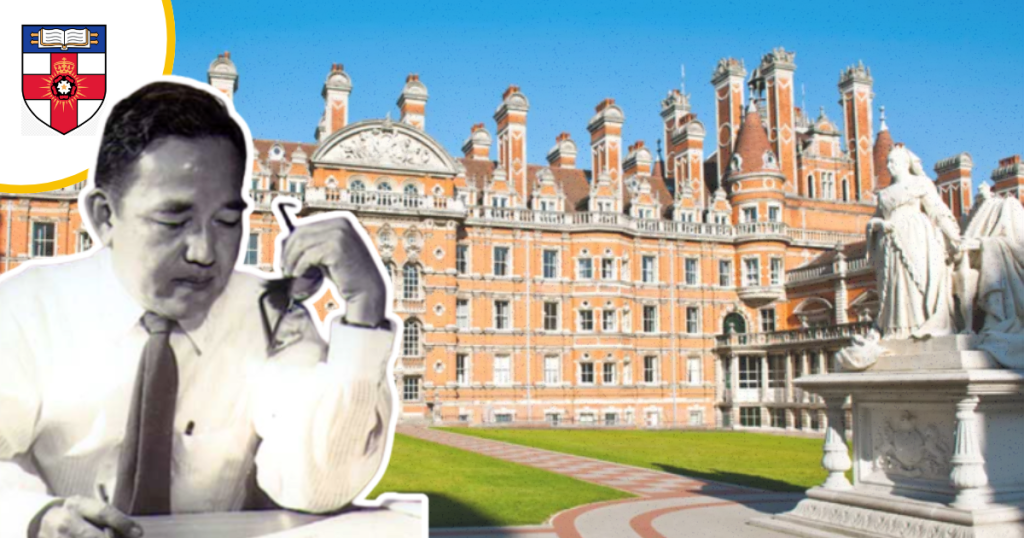
Born in Binondo, Manila, Pablo S. Antonio was orphaned at 12 and worked while finishing high school. His journey in architecture began at Mapúa Institute of Technology, but he left before completing the course. Later, an engineer funded his studies at the University of London, where he finished a five-year architecture program in just three years, graduating in 1927.
Antonio passed the Philippine Architect Licensure Exam in 1932 and quickly made his mark with the Ideal Theater in 1933. He became known for his Art Deco style, featuring clean lines, plain surfaces, and clever adaptations to tropical conditions such as slanted windows and sunshades.
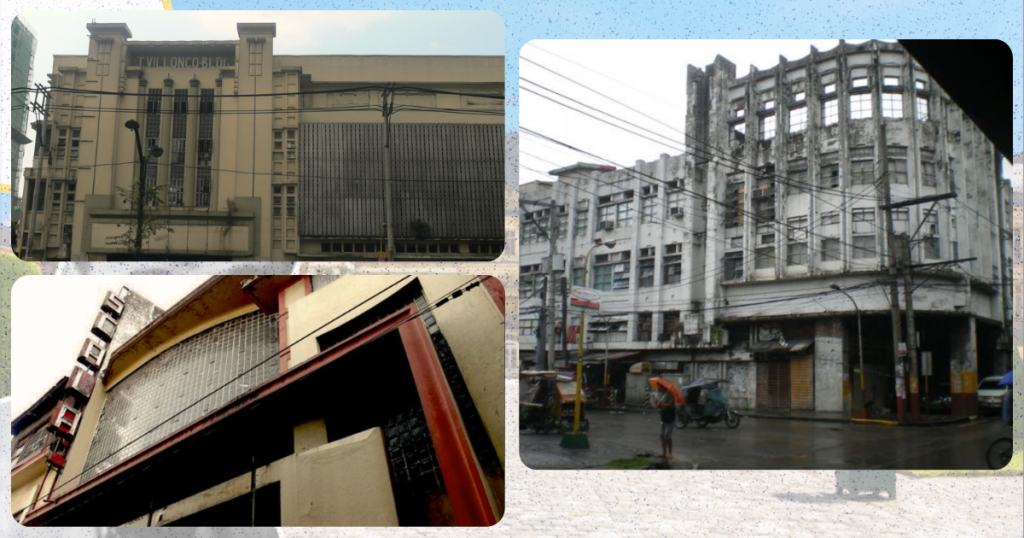
Images from amugiztah214 and Cinema Treasures.
His portfolio includes theaters like Life (now Teofilo Villonco Building), Forum, and Scala, as well as campus buildings for FEU and the Manila Polo Club. Beyond his designs, Antonio contributed to the profession as President of the Philippine Architects Society and as a board member for licensure exams.
In 1976, Pablo S. Antonio was posthumously awarded the National Artist for Architecture. Today, his work remains a benchmark of modern Philippine architecture.
2. Leandro V. Locsin: Floating Volumes in Concrete
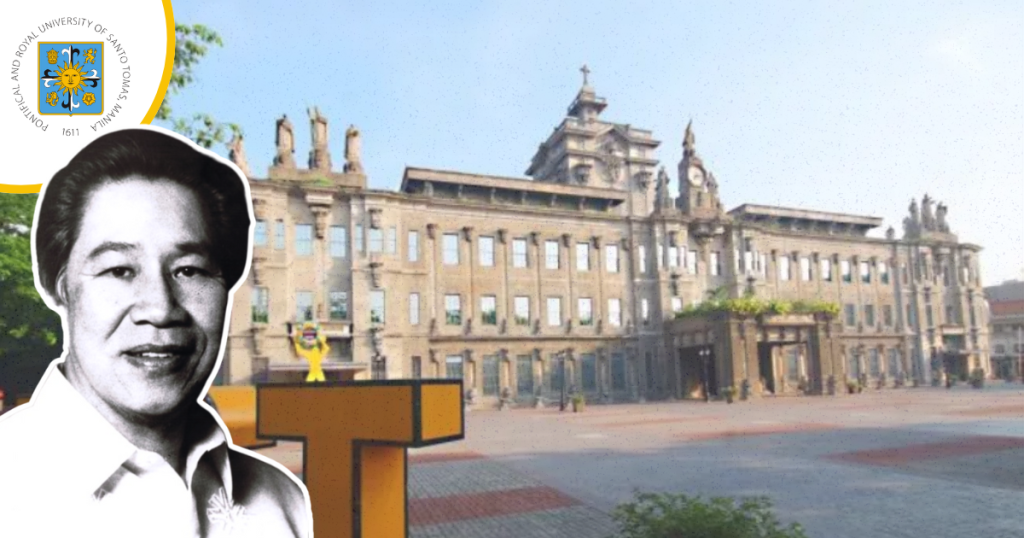
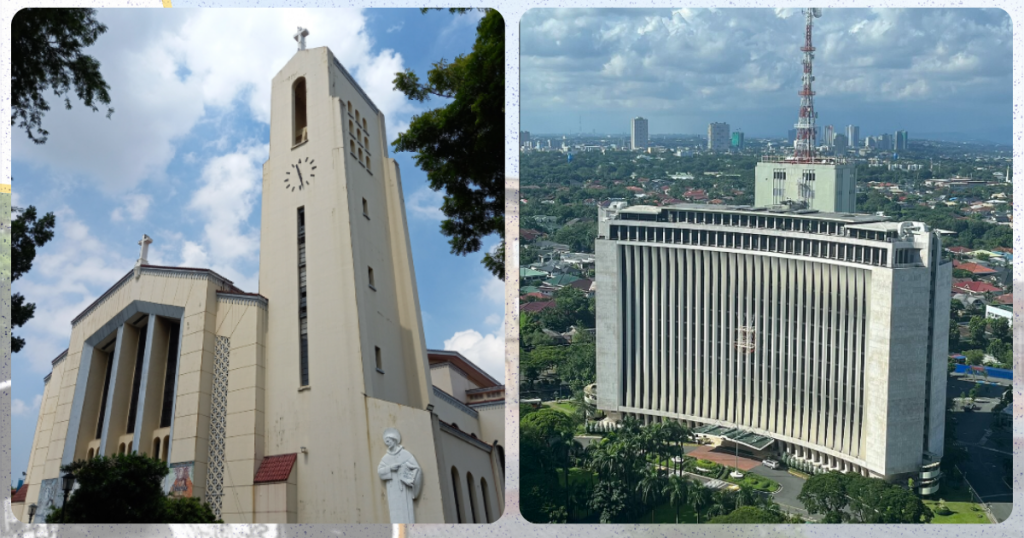
Born in Silay, Negros Occidental, Leandro V. Locsin developed a unique modernist approach, influenced by architects such as Paul Rudolph and Eero Saarinen. He began his studies at the University of Santo Tomas, first in the College of Music before switching to Architecture.
One of his earliest landmark works was the Church of the Holy Sacrifice at UP Diliman, a circular chapel featuring a thin-shell concrete dome. His roster also includes architectural gems such as the Cultural Center of the Philippines (CCP), the Folk Arts Theater, the Philippine International Convention Center, and even the Sultan of Brunei’s Istana Nurul Iman. Locsin’s style is instantly recognizable for its “floating” volumes and dramatic contrasts between light and heavy structures.
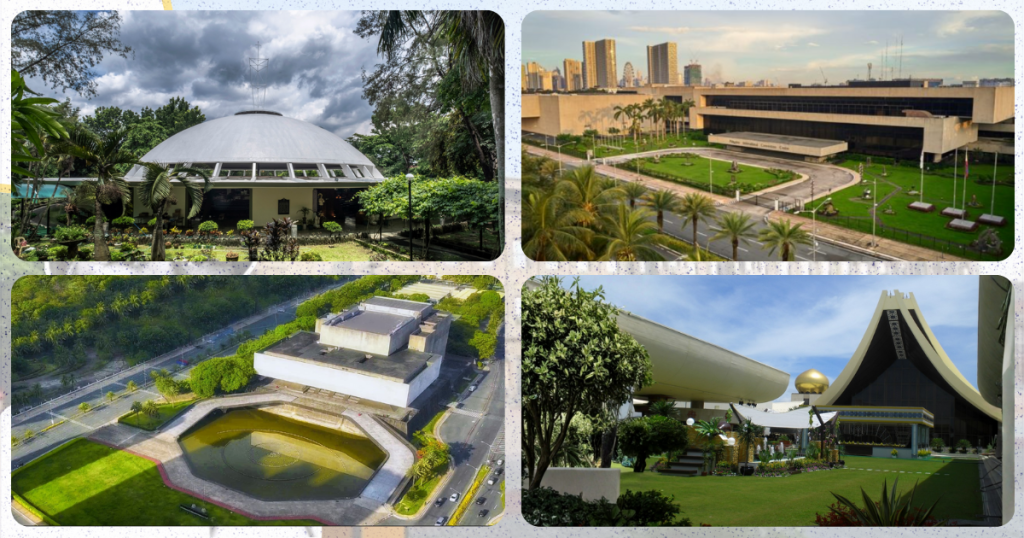
Images from amugiztah214 and Cinema Treasures.
In 1990, Leandro V. Locsin was awarded the National Artist for Architecture title, and his buildings continue to shape the modernist landscape of the Philippines.
3. Juan F. Nakpil: The Dean of Filipino Architects
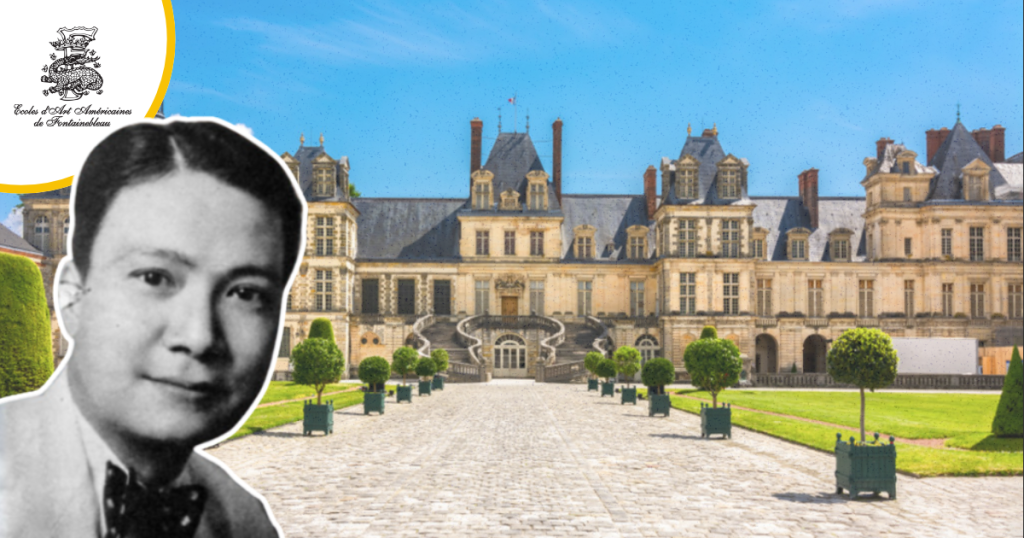
Juan Nakpil, often called the “Dean of Filipino Architects,” studied engineering at Benguet State University and later at the University of Kansas, where he earned a degree in Mechanical Engineering. Afterwards, he studied architecture at France’s Fontainebleau School of Fine Arts, as recommended by his professor from the Harvard Graduate School of Architecture.
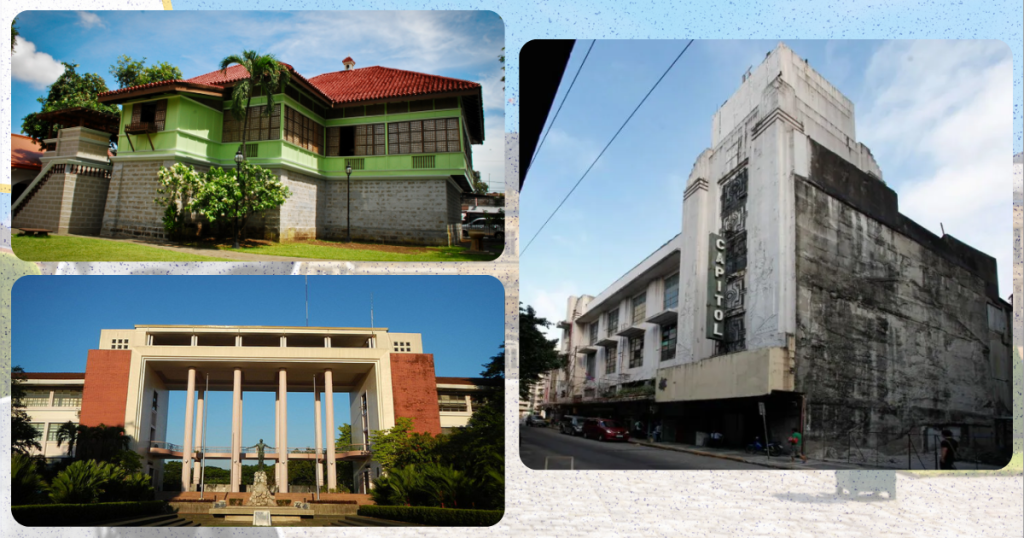
Images from Real Living Philippines, Lenstrospective – WordPress, and Cultural Learnings – Substack.
Early in his career, Nakpil worked with Andres Luna de San Pedro. His style blended Beaux-Arts, Art Deco, and International Modern, while also developing a distinctly Filipino voice. Some of his notable works are the Capitol Theatre, University of the Philippines Diliman Quezon Hall, and the Rizal Shrine.
Beyond designing buildings, he was active in civic and architectural institutions, mentoring younger architects and shaping professional standards.
Nakpil became a National Artist for Architecture in 1973. His legacy shows how international influence, combined with local context, can create architecture that resonates for generations.
4. Ildefonso P. Santos Jr.: Father of Philippine Landscape Architecture
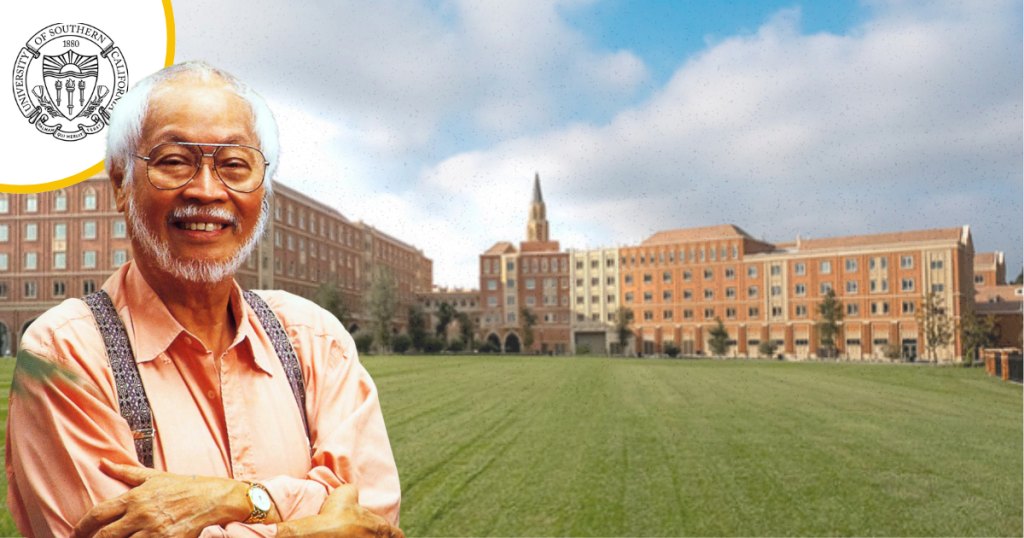
Ildefonso Santos Jr., or IP Santos, earned a Bachelor’s in Architecture from UST and later completed a second degree and a Master of Architecture at the University of Southern California. He founded I.P. Santos & Associates in 1963 and is often called the father of Philippine landscape architecture.
Santos designed parks, plazas, and public spaces that harmonize nature and art. Some of his notable works include the Makati Commercial Center, Tagaytay Highland Resort, and his contributions to the design of Paco Park.
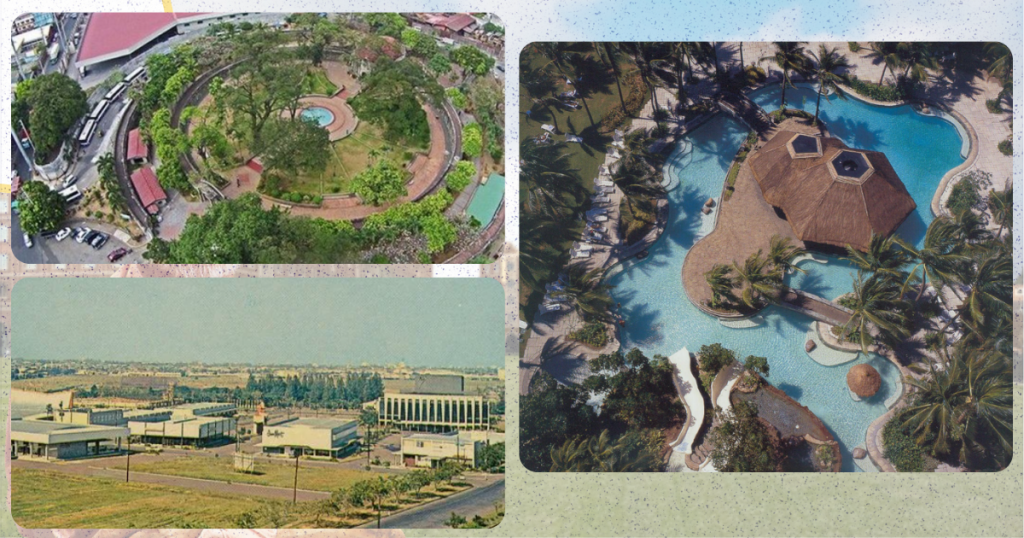
Images from The Urban Roamer, Ildefonso P. Santos + Associates, and PhilStar
He championed “serial vision,” creating landscapes that unfold in sequences, and creatively used indigenous plants and water features. Santos also helped professionalize the field by lecturing and advocating for the formal recognition of landscape architecture.
He was awarded the National Artist for Architecture (allied arts) in 2006. His philosophy demonstrates how designing beyond buildings can deeply enrich Filipino culture in a modern world.
5. José María V. Zaragoza: Master of Ecclesiastical Architecture
Images from Smapse Education and Wikipedia
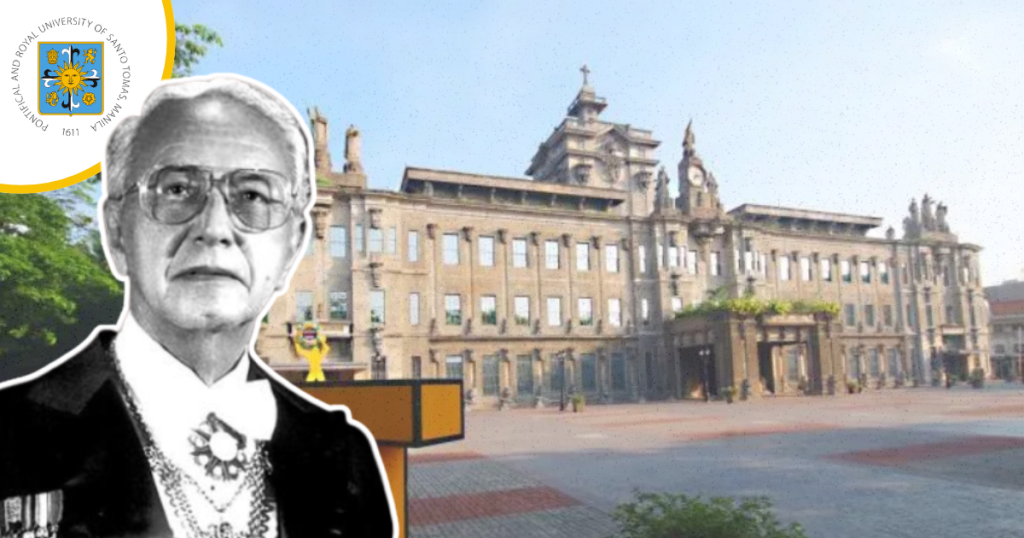
José María Zaragoza graduated from UST with a BS Criminology degree in 1936 and pursued studies in liturgical art and architecture at the International Institute of Liturgical Art, Rome. He designed around 45 churches and religious centers, including the Santo Domingo Church and the Union Church of Manila, as well as more than 270 residences, hotels, offices, and hospitals.
Images from Wikipedia and Lakbay ng Lakan
Zaragoza blended traditional Spanish colonial forms with International Modern style, sometimes drawing inspiration from Frank Lloyd Wright. His ability to merge European influences with Filipino sensibilities made him a pillar of modern Philippine architecture.
In 2014, José María Zaragoza was conferred the title of National Artist for Architecture. His work illustrates how combining tradition with modernity can create structures that feel both timeless and contemporary.
6. Francisco “Bobby” Mañosa: Champion of Filipino Identity
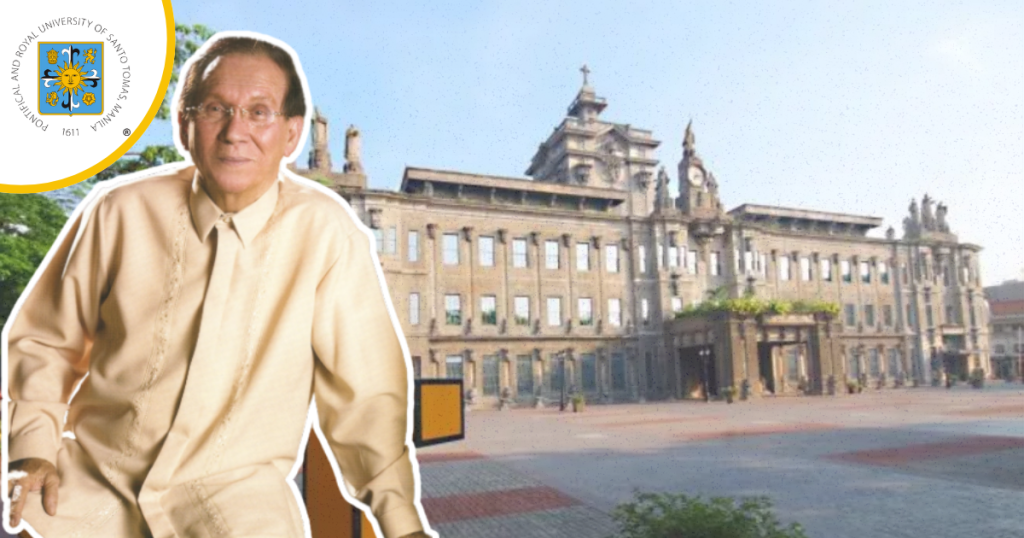
Bobby Mañosa studied architecture at UST and became a pioneer of Philippine neovernacular architecture. Deeply rooted in Filipino identity, he drew inspiration from traditional forms like the bahay kubo and bahay na bato.
His notable projects include the Coconut Palace, EDSA Shrine, Mary Immaculate Parish (“Nature’s Church”), Amanpulo, and Davao Pearl Farm. Mañosa’s designs advocate for architecture that reflects local culture rather than copying foreign trends.
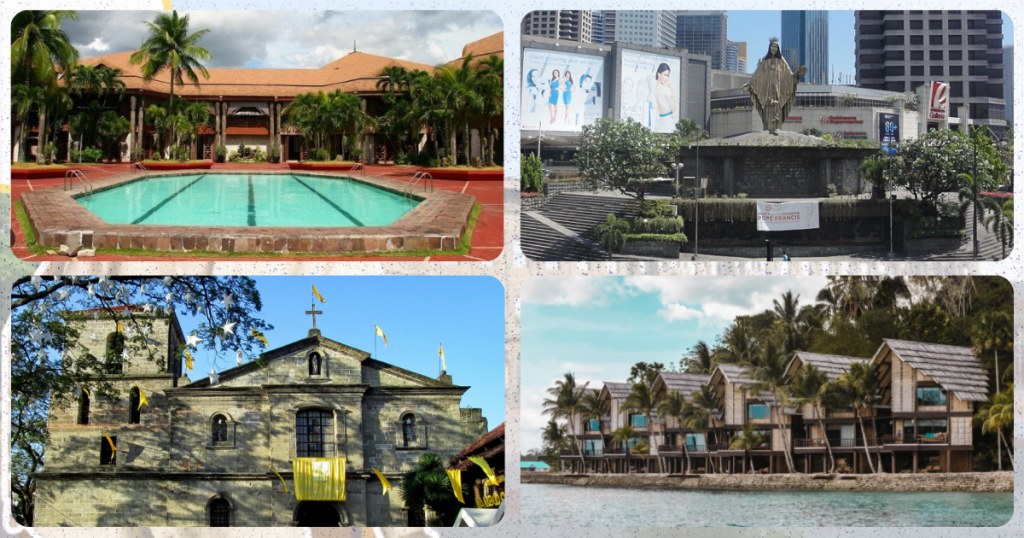
Image from Billion Bricks, Spot.PH, Lumang Simbahan (Facebook), and Tatler Asia
In 2018, Bobby Mañosa was awarded the title of National Artist for Architecture. His philosophy shows how local materials, climate, and heritage can inspire architecture that is both functional and meaningful.
It’s Not Just the School; It’s the Builder
It’s worth noting that the University of Santo Tomas (UST) has produced the most graduates who later became National Artists for Architecture. This highlights the school’s strong architectural training and long-standing presence in the field.
However, it’s also important to recognize that their success didn’t come solely from their alma mater. These architects grew by branching out through studying abroad, exploring different styles, learning from industry mentors, and continuously refining their craft. Their achievements were the result of years of practice, exposure, and purposeful professional evolution.
The takeaway here is simple: your university is just the starting point. What matters more is how you develop your skills, stay curious, and adapt to the industry. The talent is in the person, not the campus name on the diploma.
Schools, Vision, and the Legacy Left Behind

From Pablo Antonio to Bobby Mañosa, these National Artists were shaped by their alma maters—but it was their curiosity, innovation, and respect for culture that defined their legacy. Their buildings, landscapes, and churches continue to inspire, showing how thoughtful design can enhance everyday life.
Next time you pass a landmark or a thoughtfully designed park, remember the visionaries behind it. Maybe you can take them as a cue for your own projects. After all, architecture isn’t just for the professionals; it’s about seeing the world differently and appreciating the beauty of the craft.
References
Dabao, C. (n.d.). Benilde unveils an exhibition celebrating Leandro Locsin’s enduring influence on Filipino architecture. Tatler. https://www.tatlerasia.com/homes/architecture-design/benilde-leandro-locsin-exhibition
peaceababonsite. (n.d.). Pablo S. Antonio. Philippine Artists,Traditions and Culture. https://peaceababonsite.wordpress.com/2017/10/23/pablo-s-antonio/
Tejada, C. (2016, August 18). Architect Heroes: 3 Art Deco Buildings by Pablo S. Antonio. Real Living Philippines. Retrieved December 4, 2025, from https://www.realliving.com.ph/lifestyle/arts-culture/architect-heroes-3-art-decor-buildings-by-pablo-s-antonio-a40-20160818
Wikipedia. (n.d.). Istana Nurul Iman. Wikipedia. https://tl.wikipedia.org/wiki/Istana_Nurul_Iman
Wikipedia. (n.d.). Pablo Antonio. Wikipedia. https://en.wikipedia.org/wiki/Pablo_Antonio
Wikipedia. (n.d.). Wikipedia. Life Theater. Retrieved December 4, 2025, from https://en.wikipedia.org/wiki/Life_Theater
Wikipedia. (n.d.). Wikipedia. Juan Nakpil. Retrieved December 4, 2025, from https://en.wikipedia.org/wiki/Juan_Nakpil






 Facebook
  Instagram
  Linkedin
  Twitter
  Youtube