
In the Philippine construction landscape, a common comment heard during site visits to modern homes is, “Bakit mukhang hindi tapos?” (Why does it look unfinished?). This reaction usually stems from the sight of raw concrete, visible pipes, and skeletal beams. However, what might look like a “budget cut” to the untrained eye is actually one of the most sophisticated trends in global architecture: Industrial Design.
In this article, we will debunk the “unfinished” myth, explore the technical artistry required to make utilities look beautiful, and evaluate whether this raw aesthetic actually saves you money in the long run.
Redefining “Industrial”: Intentional vs. Unfinished
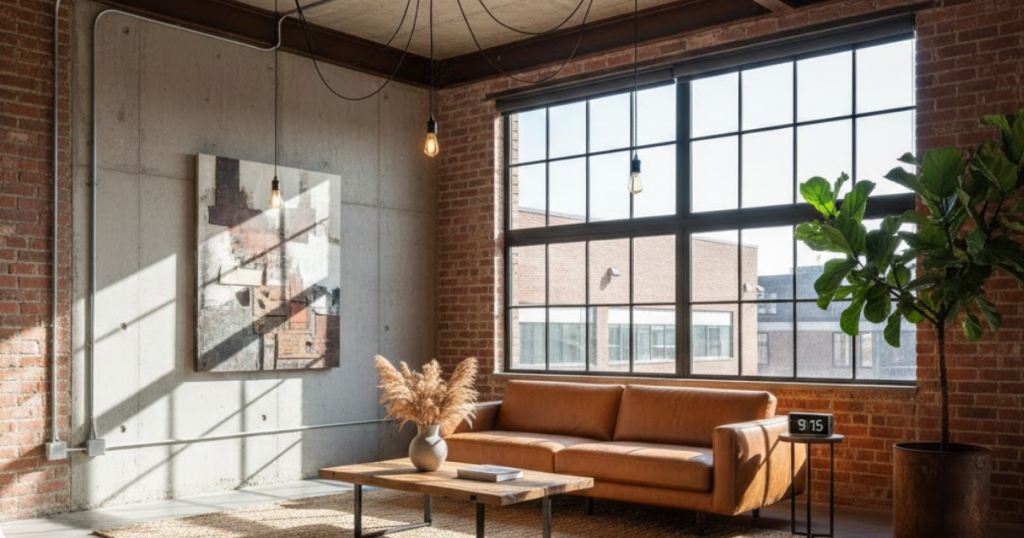
The most significant hurdle for homeowners is the misconception that industrial design is synonymous with a messy construction site. In reality, the industrial aesthetic is about honesty in materials.
It celebrates the structural “bones” of the house—steel, brick, and concrete—that are usually hidden behind layers of drywall and paint. An industrial home isn’t “unfinished”; it is highly curated. The difference lies in the execution. While a messy site has jagged edges and dangling wires, a professional industrial interior features clean lines, purposeful shadows, and a harmonious balance between “cold” structural elements and “warm” accents like wood or leather.
Mastering the “Skeletal” Look: Beams and Utilities
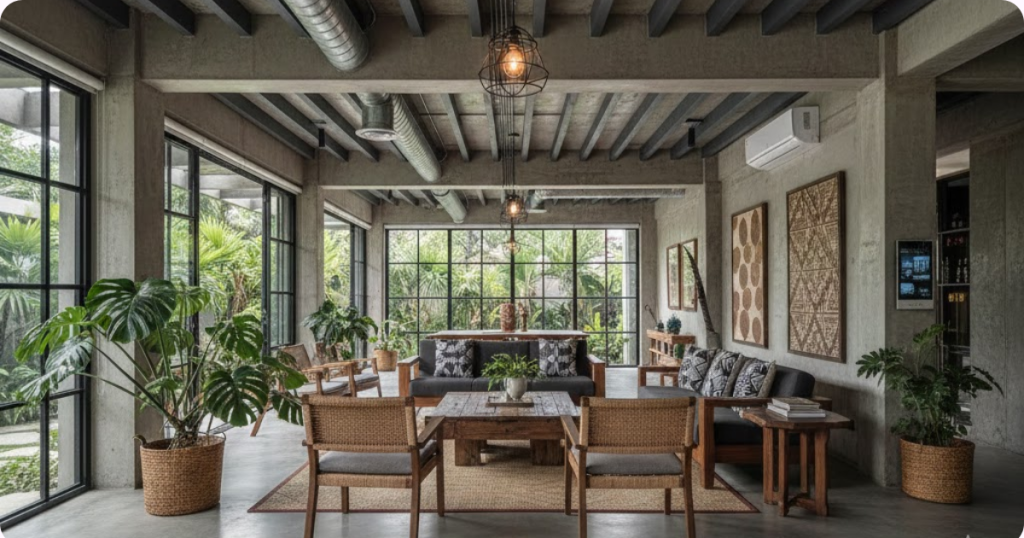
To achieve an industrial look that feels premium, you cannot simply leave the ceiling off and call it a day. Instead, you must treat your utilities and structural elements as if they were intentional pieces of furniture within the room. This shift in mindset ensures that exposed pipes, ducts, and wires are arranged with a level of artistry that elevates the space rather than making it look neglected.
- Exposed Beams: Instead of hiding a structural beam, it is sanded smooth or painted in a matte charcoal or black finish to create a rhythmic visual frame for the room.
- Utility Mapping: When the ceiling is exposed, electrical conduits (pipes) and AC ducting become visible. Architects use EMT pipes (Electrical Metallic Tubing) arranged in perfectly straight, parallel lines or 90-degree bends.
- Ducting: Large, galvanized spiral ducts are often used for air conditioning. Their metallic sheen adds a “high-tech” feel to the organic texture of the concrete.
Choosing Your Texture: Concrete Finishes
Achieving the “raw” aesthetic for your walls and floors can be done through three distinct methods, each providing a unique visual vibe and level of durability. Whether you prefer the rugged honesty of structural concrete or a more refined, glossy surface, choosing the right technique is essential for your home’s character. Understanding these differences allows you to balance the desired atmosphere with the long-term maintenance needs of your living space.
| Finish | Description | How to Achieve It |
| Bare Concrete | The most “honest” look. Shows the grain of the wood forms used during pouring. | Requires high-quality formworks during the pouring phase. Once the forms are removed, the concrete is cleaned and sealed. |
| Skim Coat | A thin layer of cement-based plaster used to hide imperfections. It looks smooth but retains a “cloudy” gray texture. | Applied with a wide trowel over existing masonry. It is often left unpainted and finished with a clear matte topcoat. |
| Polished Concrete | A high-gloss, premium finish that looks like natural stone or marble. | Involves heavy-duty grinding machines that “sand” the concrete surface until it shines, followed by chemical densifiers. |
The Cost Reality: Is It Actually Cheaper?
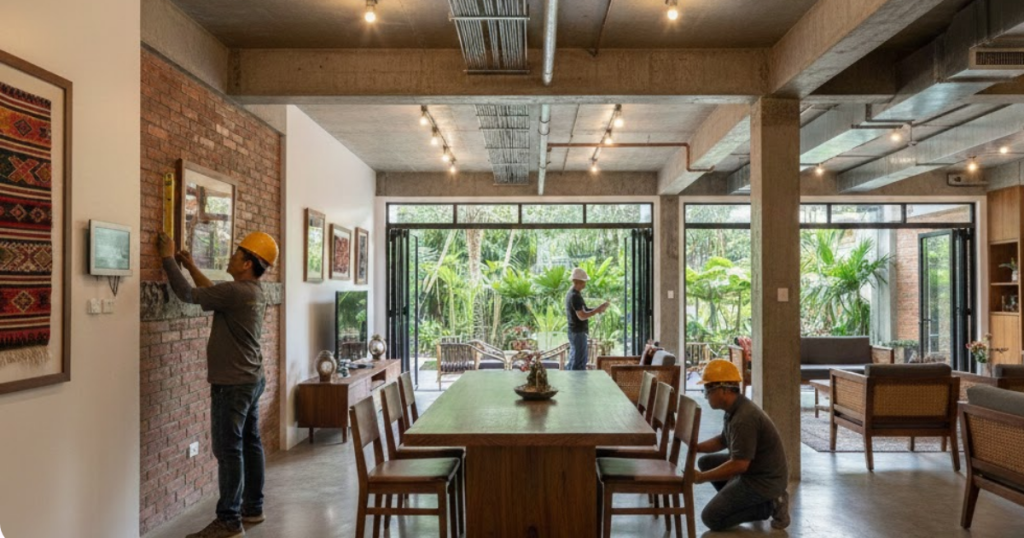
While many believe industrial design is a budget-friendly choice due to the elimination of ceiling materials, the financial reality is often more nuanced. You might save on gypsum boards and metal studs, but these savings are frequently offset by the need for more meticulous finishing of structural elements. Because every pipe and beam is visible, you must invest in specialized labor to ensure all utilities are installed with aesthetic precision.
- Ceiling Savings: You do save on the cost of gypsum boards, metal studs, and the labor for ceiling installation.
- Specialized Labor Costs: Because everything is exposed, there is “nowhere to hide” mistakes. Your electricians and plumbers must work much slower to ensure every pipe is perfectly straight. This often results in higher labor costs for MEP (Mechanical, Electrical, and Plumbing) works.
- Finishing Costs: A raw concrete beam requires more meticulous grinding and sealing than a beam that will simply be hidden by a ceiling.
The industrial aesthetic is a bold choice that celebrates the strength and soul of residential construction. While it may prompt a few “is it finished?” questions from your titos and titas, the result is a home that feels open, airy, and timelessly modern. If you value transparency in design and the raw beauty of masonry, then exposing the “bones” of your home might be the most honest design decision you ever make.






 Facebook
  Instagram
  Linkedin
  Twitter
  Youtube