

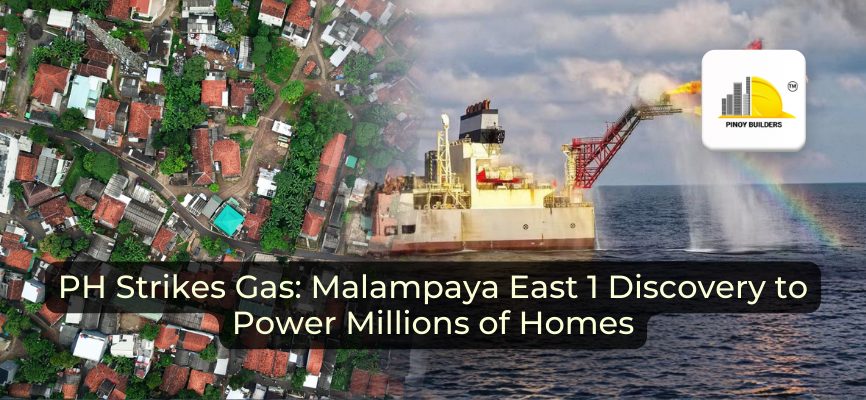
In a breakthrough hailed as a “victory for the Filipino people,” the Philippines has confirmed its first major natural gas discovery in over a decade.
President Ferdinand “Bongbong” Marcos Jr. officially announced on Monday, January 19, 2026, the successful drilling of the Malampaya East 1 (MAE-1) well, a new reservoir that promises to secure the country’s energy future and reduce reliance on expensive imported fuels.
A Massive Find Beneath the Sea
Located approximately five kilometers east of the existing Malampaya Deep Water Gas-to-Power Project in Palawan, the MAE-1 reservoir is estimated to hold 98 billion cubic feet of natural gas.
According to initial reports, this volume is equivalent to nearly 14 billion kilowatt-hours (kWh) of electricity per year. To put that in perspective, the new supply is capable of powering:
- Over 5.7 million households,
- Approximately 9,500 commercial buildings, or
- Nearly 200,000 schools annually.
“Initial testing showed that the well flowed at 60 million cubic feet per day,” President Marcos stated in his announcement. “This indicates the well has the potential to produce even more, confirming it is a high-productivity resource comparable to the original Malampaya wells.”
In addition to natural gas, the discovery also yielded condensate, a high-value liquid fuel that will further aid in stabilizing the national power supply.
Filipino-Led Victory
The discovery is the first milestone of the Malampaya Phase 4 Drilling Campaign, led by Prime Energy Resources Development B.V., the energy arm of tycoon Enrique Razon Jr.’s Prime Infrastructure.
The President emphasized the significance of local expertise in this achievement. “We are proud that Filipinos led this drilling operation. Most importantly, they completed it without any accidents or environmental incidents,” Marcos said.
Prime Energy, which operates Service Contract 38 (SC 38), described the find as a fulfillment of their promise to revitalize the country’s indigenous gas sector. The project is a consortium effort including UC38 LLC, PNOC Exploration Corporation, and Prime Oil and Gas Inc.
Timeline and Future Prospects
While the discovery is confirmed, commercial extraction is expected to take at least one year. Industry estimates suggest the new supply will likely enter the grid by 2027, just as the original Malampaya field’s output was projected to decline significantly.
The Department of Energy (DOE) is optimistic that this is just the beginning. Energy Secretary Sharon Garin noted that the drilling campaign is ongoing, with two more prospects—Camago-3 and Bagong Pag-asa-1—currently being explored.
“Driven by the President’s marching order for energy security, this discovery was delivered in record time,” Garin said. “By strengthening our geological data… we are creating the conditions for responsible investments that deliver lasting benefits for Filipinos.”
Why This Matters for Builders and Business
For the construction and development sectors, this discovery offers a glimmer of hope for more stable electricity prices. The Philippines currently has some of the highest power rates in the region, largely due to a reliance on imported coal and Liquefied Natural Gas (LNG).
By extending the life of the Malampaya gas field—which currently supplies about 20% of Luzon’s electricity—the country can hedge against volatile global fuel prices, ensuring a steadier energy baseload for industries, commercial establishments, and infrastructure projects across the archipelago.







 Facebook
  Instagram
  Linkedin
  Twitter
  Youtube