In the construction industry, one of the most important decisions a contractor can make is whether to rent or own construction equipment. The choice affects not only day-to-day operations but also long-term business growth, financial stability, and return on investment (ROI). In this article, we will explore the advantages and disadvantages of renting versus owning equipment, consider costs, maintenance, and storage, and provide insights into which option may be better suited to your business needs.
In this article, we break down the critical trade-offs between fleet ownership and rental flexibility to help you determine the most profitable path for your company’s future.
Why the Rent vs. Own Decision Matters
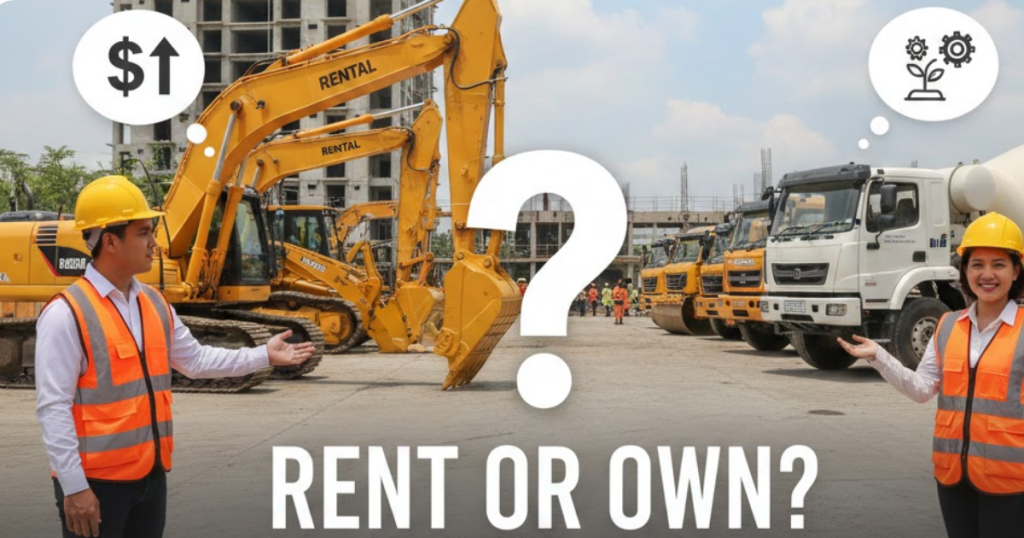
Deciding whether to rent or buy construction equipment is crucial for cash flow, project capacity, and flexibility. Contractors must weigh upfront costs against ongoing expenses like maintenance, storage, and insurance, while focusing on equipment utilization to maximize ROI. A smart acquisition strategy is key to long-term growth and staying competitive.
Advantages of Renting Construction Equipment
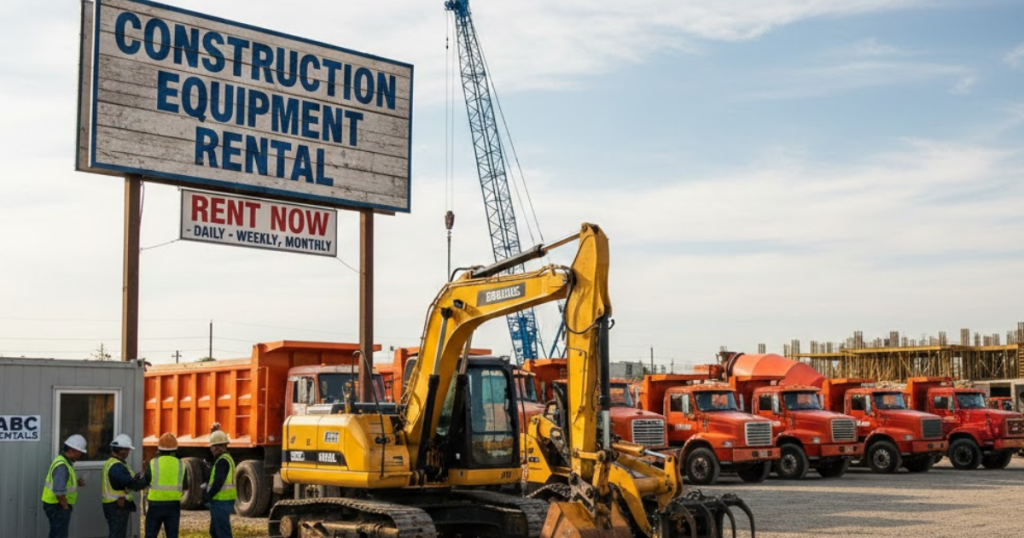
Renting construction equipment provides contractors with flexibility, lower upfront costs, and reduced maintenance responsibility, making it an attractive option for businesses of all sizes. By choosing to rent rather than purchase, contractors can adapt to project demands without being tied down by the long-term financial and operational commitments of ownership. Key advantages include:
- Lower Initial Investment: Renting preserves cash flow and liquidity by eliminating large upfront purchase costs. It reduces financial risk and allows capital to be allocated toward labor, materials, or expansion.
- Access to Modern Equipment: Contractors can use the latest models featuring advanced technology, better fuel efficiency, and enhanced safety. This boosts productivity and provides access to specialized machinery without long-term commitment.
- Maintenance and Repairs Included: Rental agreements typically cover servicing and troubleshooting. This eliminates the cost and logistical burden of maintenance, minimizing downtime from unexpected breakdowns.
- Project Flexibility: Renting makes it easy to scale a fleet based on specific project needs. It ensures the right tool is used for the job and prevents “idle equipment costs” associated with owning machinery that isn’t always in use.
Advantages of Owning Construction Equipment
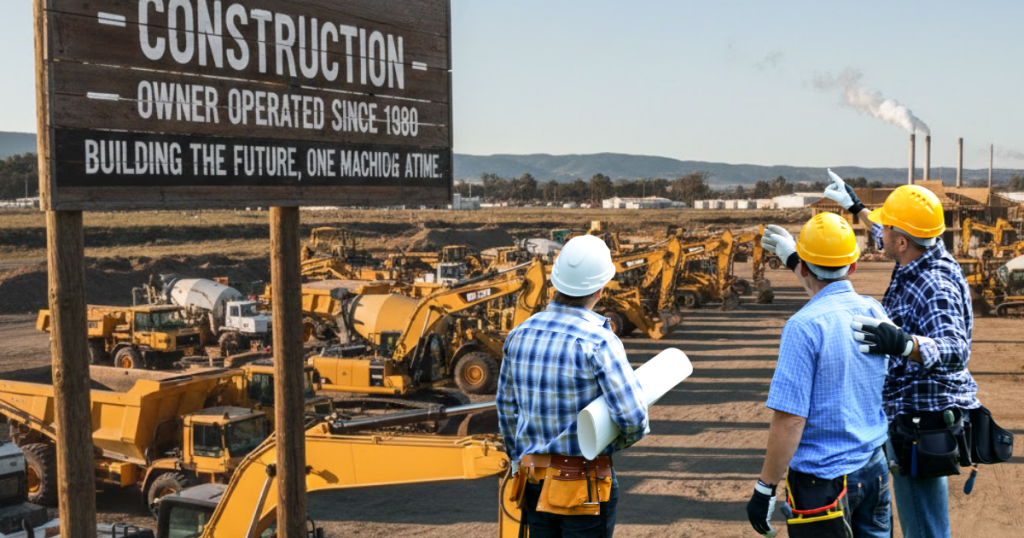
Owning construction equipment provides contractors with full control, long-term cost savings, and tangible asset value, making it a strategic choice for businesses with consistent equipment needs. While the upfront investment is higher than renting, ownership offers benefits that can improve operational efficiency, strengthen financial standing, and support long-term growth. Key advantages include:
- Full Availability: Owned equipment is always on-hand, eliminating the risk of rental scheduling conflicts. This allows for immediate response to urgent tasks and ensures projects stay on schedule without third-party delays.
- Long-Term Investment: For high-utilization companies, buying is more cost-effective than repeated rental fees. Over time, the cost per use decreases, significantly improving the long-term Return on Investment (ROI).
- Customization and Branding: Owners can modify machinery to meet specific job standards or add company logos and colors. This enhances on-site professionalism and builds brand recognition that is not possible with rentals.
- Asset Equity: Machinery serves as a tangible asset on the balance sheet, strengthening the company’s financial position. These assets can be used as loan collateral or resold later to recoup a portion of the initial investment.
Cost, Maintenance, and Storage Considerations
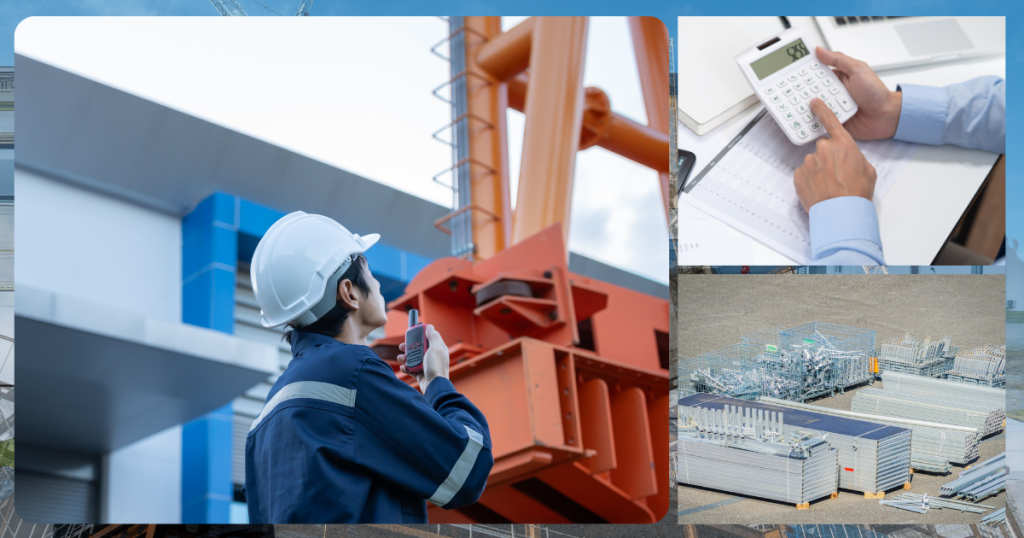
When deciding whether to rent or own construction equipment, contractors must carefully evaluate costs, maintenance, and storage requirements, as these factors can significantly impact profitability and business growth.
- Cost & Depreciation: Ownership requires a large upfront investment and accounts for taxes, insurance, and inevitable depreciation. While renting involves higher daily rates, it offers predictable fixed fees and frees up capital.
- Maintenance & Repairs: Owners are responsible for all servicing, safety compliance, and the costs of unexpected downtime. Renting shifts these technical burdens and repair costs to the provider, ensuring the contractor can focus solely on project execution.
- Storage & Logistics: Owned machinery requires permanent, secure, and weather-protected storage facilities. In contrast, rental equipment is returned immediately after use, eliminating long-term storage costs and the need for extra real estate.
- Strategic ROI: Choosing between the two depends on utilization rates. High-use machinery favors ownership for long-term ROI, while specialized or occasional-use equipment is typically more cost-effective to rent.
Maximizing ROI and Business Growth

To maximize return on investment (ROI) and support long-term business growth, contractors must take a strategic approach to equipment acquisition, carefully balancing cost, utilization, and operational efficiency. Making informed decisions about renting versus owning can directly impact profitability, project performance, and the ability to scale operations.
- Evaluate Equipment Utilization: Base your decision on frequency of use. High-frequency, long-term needs favor ownership to lower cost-per-use, while intermittent needs are best met by renting to avoid paying for idle machinery.
- Analyze Cash Flow: Renting preserves liquidity by eliminating the need for massive upfront capital expenditures. This frees up funds for materials, labor, and expansion, which is vital for growing companies.
- Consider Maintenance Capacity: Only own equipment if you have the in-house staff and technical expertise to manage repairs. If not, renting is safer as it shifts the burden of maintenance and downtime risk to the provider.
- Adopt a Hybrid Strategy: Most successful firms own “core” machinery used daily and rent specialized or seasonal equipment. This balances the availability of ownership with the flexibility and low risk of renting.
The Strategic Bottom Line
Growth comes from maximizing “up-time” while minimizing “idle-time.” Ownership provides stability for your core work, while renting provides the scalability to take on larger, diverse contracts. Balance your fleet based on real-world usage to keep your capital fluid and your business ready for the next bid.



 Facebook
  Instagram
  Linkedin
  Twitter
  Youtube