The “Golden Window”:
Inside the DPWH’s 2026 Dry Season Sprint—how the P530B budget is being deployed before the monsoons.
A Unified Voice for Filipino Builders
Filipino builders, whether professionals, contractors, or government agencies, need more than materials—they need reliable timing, trusted partners, and long-term value. In 2026, the Philippine infrastructure landscape is defined by a strategic ₱529.6 billion infrastructure budget under the Department of Public Works and Highways (DPWH), aimed at maximizing the “Golden Window” of the dry season (Department of Public Works and Highways, 2026). This limited period of ideal weather creates a high-productivity sprint where civil engineering works can proceed without the costly delays and safety hazards brought by the monsoon rains. The focus in 2026 has shifted toward a “Maintenance-First” policy, ensuring that public expenditure builds a more resilient Philippines (Philippine Information Agency, 2026).
In this article, we explore how the DPWH is leveraging the dry season “Golden Window” to accelerate the construction timeline, optimize the ₱530B budget, and ensure that critical project deployment is reinforced before the arrival of the 2026 monsoon season.
Key Takeaways
- The DPWH is operating with a ₱529.6 billion budget for 2026, prioritizing quality through a rigorous government procurement process over new, unverified projects (Department of Budget and Management, 2026).
- The “Golden Window” refers to the dry season months when construction efficiency is at its peak before the rainy season begins in June.
- Funding has shifted toward the maintenance of existing systems, with ₱2.49 billion dedicated to Maintenance and Other Operating Expenses (MOOE) for flood control (GMA News Online, 2026).
- Strategic road rehabilitation and bridge repair are being prioritized to ensure structural integrity across the archipelago (DPWH, 2026).
What Makes the 2026 “Golden Window” a Critical Sprint?
The dry season in the Philippines is more than just a break from the rain; it is an essential period for infrastructure acceleration. During these months, the DPWH and its contractors engage in a “sprint” to complete complex civil engineering works, such as earthworks and paving, that are nearly impossible to execute during the monsoons. In 2026, this urgency is heightened by a focused budget that mandates projects be delivered “right the first time” to justify the public expenditure (Philippine Information Agency, 2026).
- Earthwork Efficiency: Soil stabilization and excavation are completed faster in dry conditions.
- Safety and Accessibility: Reduced risk of landslides and flooding on-site allows for 24/7 shifts.
- Concrete Curing: Ideal temperatures and low humidity ensure optimal structural strength for new roads.
How Is the ₱530B Budget Strategically Deployed?

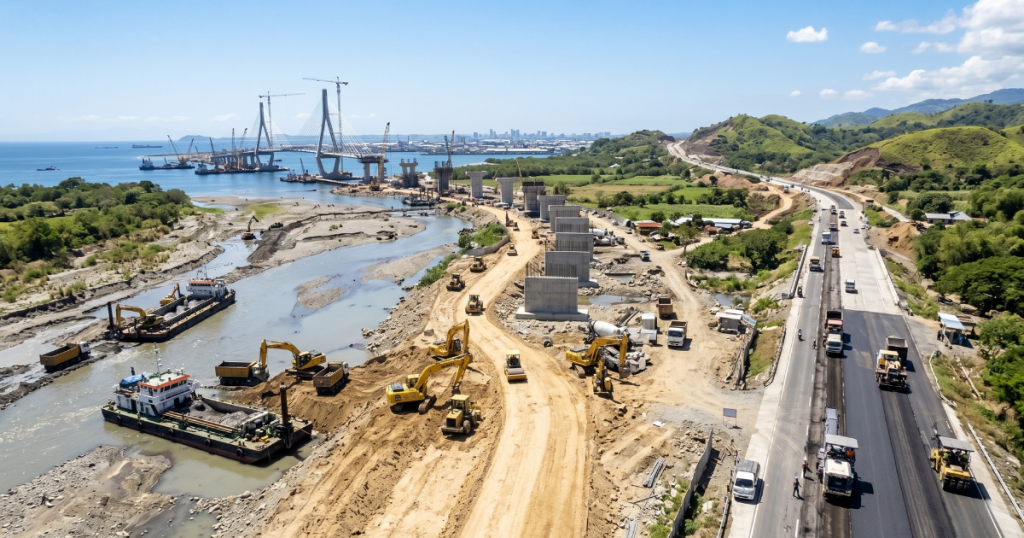
Photo from BusinessWorld
The 2026 budget marks a transition toward quality over quantity. Rather than starting hundreds of new projects, the DPWH is focusing on urban mobility and preserving existing assets. For example, the Bataan-Cavite Interlink Bridge (BCIB) received significant funding to maintain its momentum during this dry season to ensure structural milestones are met before high-wave seasons (Department of Budget and Management, 2026).
Priority Sectors for the 2026 Sprint:
- Asset Preservation: Massive portions of the budget are dedicated to road rehabilitation to extend the lifespan of national highways.
- Urban Mobility: Completing projects that ease congestion in metropolitan areas, ensuring that the construction timeline meets the growing needs of commuters.
- Bridge Repair: Reinforcing key links in the national supply chain through targeted bridge repair and structural retrofitting (DPWH, 2026).
Why Is the Urgency Driving the Timeline?
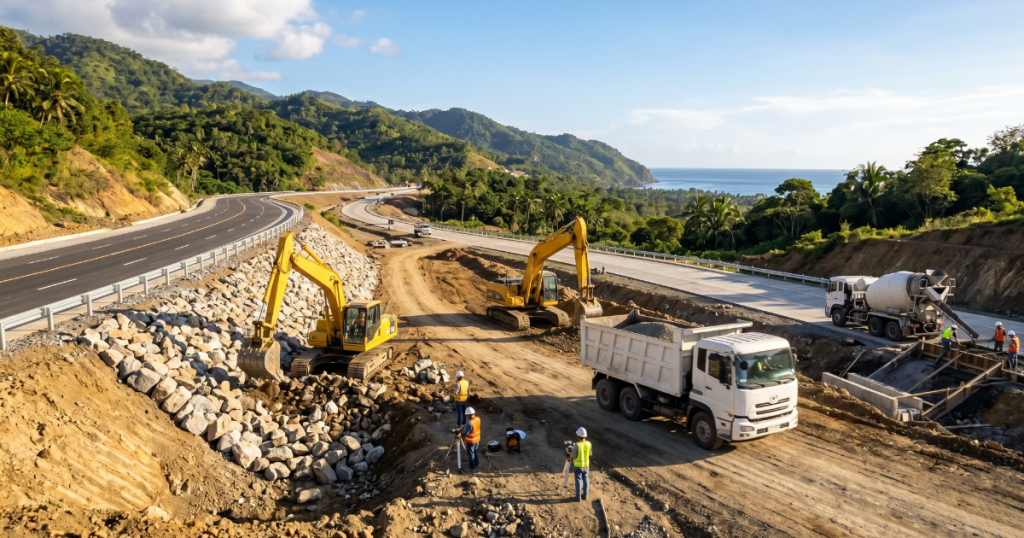
Agencies and contractors are currently compressing schedules to meet targets before the June rains. This involves optimizing resource allocation and streamlining government procurement to avoid bottlenecks. The 2026 project deployment strategy emphasizes high-performance materials to prevent rework during the wet season.
- Compressed Schedules: Use of “fast-track” construction methods to maximize the dry weather.
- Resource Optimization: Deploying heavy machinery to high-priority regions like Eastern Visayas, which is a major beneficiary of maintenance funds this year (Department of Public Works and Highways, 2026).
- Climate Resilience: By finishing civil engineering works now, the DPWH minimizes the risk of infrastructure failure during the upcoming typhoon season.
How Does This Push Ensure Long-Term Resilience?
The concentrated effort during the Golden Window ensures project continuity. By finishing critical phases before the monsoons, the DPWH prevents the “stop-start” cycle that often leads to budget overruns and material degradation. This strategic sprint delivers faster public benefits, such as improved urban mobility and more reliable transport networks.
“The 2026 budget marks a transition toward quality over quantity… we are building a more resilient and economically integrated Philippines” (Philippine Information Agency, 2026).
Conclusion: Building Resilience One Sprint at a Time
The DPWH’s 2026 dry season sprint is a testament to smarter governance and engineering. By utilizing the ₱530B infrastructure budget during the “Golden Window,” the Philippines is not just building faster—it is building better. This approach ensures that when the monsoons inevitably arrive, the nation’s infrastructure is ready to stand firm, delivering lasting value to every Filipino through efficient public expenditure and strategic road rehabilitation.
References:







 Facebook
 Instagram
 Linkedin
 Twitter
 Youtube
