
From Fuel to Steel:
How Global Conflicts are Affecting Local Construction Prices Today
The Global-Local Connection in Philippine Construction
Filipino builders, contractors, and homeowners are operating in an increasingly interconnected world where events thousands of miles away dictate the cost of a project at home. In 2026, the local construction landscape is heavily influenced by global geopolitical shifts. International conflicts—specifically the Russia-Ukraine War and escalating tensions in the Middle East—have disrupted the global supply of fuel, steel, and cement, directly driving up local costs. With the Philippine construction market valued at approximately PHP 1.94 trillion and growing by 6% annually (ResearchAndMarkets.com, 2025), understanding these price drivers is essential for maintaining project viability.
In this article, we explore how these global conflicts are disrupting supply chains, the specific drivers behind rising local expenses, and how the industry is pivoting toward sustainability to mitigate these risks. With the Philippine construction market valued at approximately PHP 1.94 trillion and growing by 6% annually (ResearchAndMarkets.com, 2025), understanding these price drivers is essential for maintaining project viability
Key Takeaways
- The Philippine construction market is forecast to expand at an average of 6.6% annually through 2029 (ResearchAndMarkets.com, 2025).
- Conflict-driven fuel price volatility inflates the cost of transporting heavy materials and operating onsite machinery.
- Trade route disruptions lead to imported steel shortages and significant shipping delays, pushing retail prices higher.
- Builders are increasingly turning to sustainable construction materials and green building materials to stabilize budgets and reduce supply chain dependency.
Major Cost Drivers: How Global Conflicts Hit the Local Market
*AI-Generated Image. For Visualization Only.
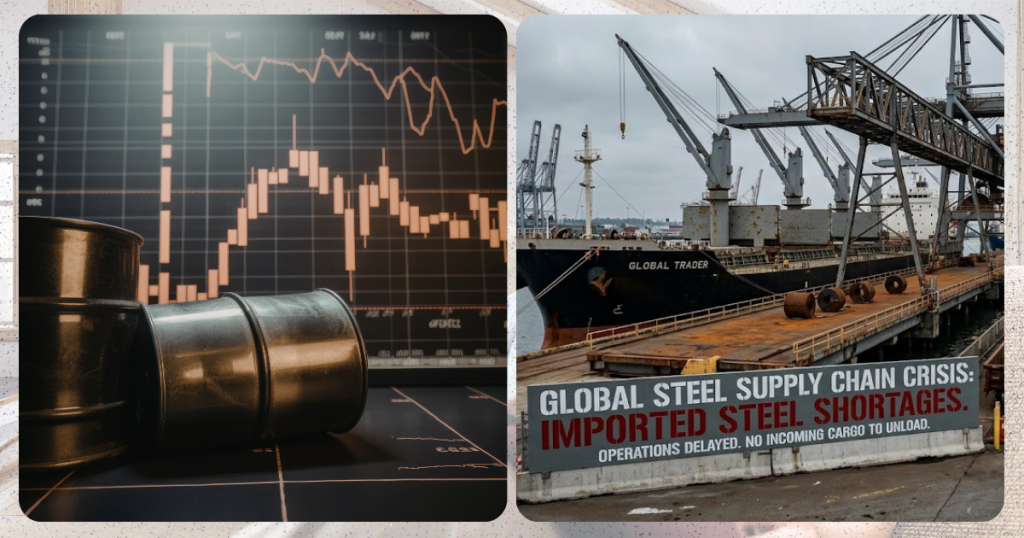
The link between international warfare and a local jobsite in the Philippines is defined by three major economic pressures:
- Fuel Price Volatility: Wars in oil-producing regions lead to immediate surges in global crude prices. For local builders, this means higher costs for logistics and the manufacturing of energy-intensive materials. Every truckload of aggregates or cement now carries a higher delivery surcharge due to fluctuating diesel prices.
- Imported Steel Shortages: With major steel-producing hubs in Eastern Europe facing production halts, the global supply of structural steel has tightened. This scarcity directly impacts the price of rebars and steel beams in the Philippines, affecting both high-rise developments and small residential projects (GlobalData, 2025).
- Shipping Delays and Logistics: Conflicts near major maritime trade routes force cargo vessels to take longer, more expensive detours. These delays create a bottleneck for essential equipment and specialized materials, often leading to “storage fees” and increased freight insurance costs.
The Ripple Effect on Contractors and Homeowners
*AI-Generated Image. For Visualization Only.
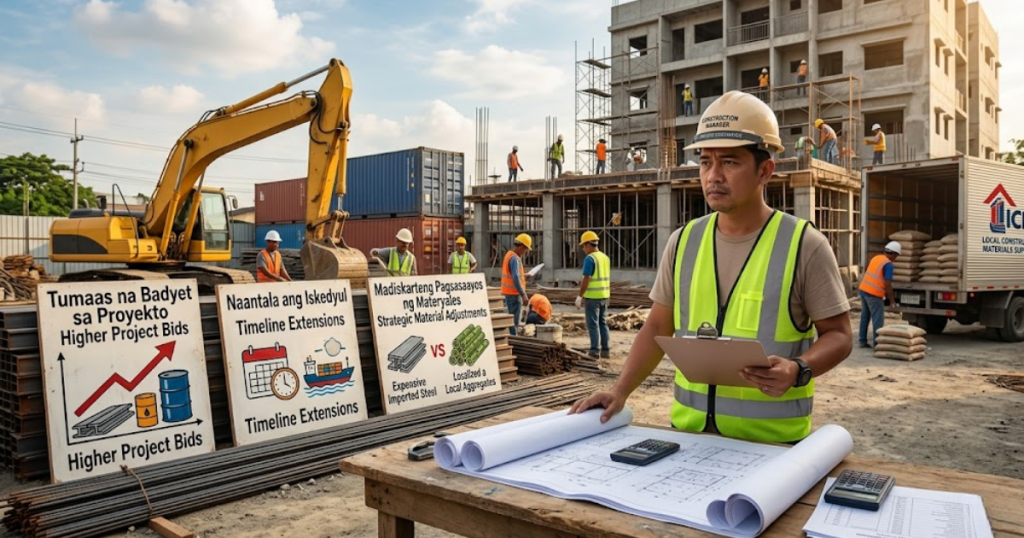
When global supply chains are strained, the impact trickles down to every level of the local industry. Total construction value in the Philippines grew by 9.4% in 2024 (Philippine Statistics Authority, 2025), and current volatility is forcing significant adjustments:
- Increased Project Bids: Contractors are forced to include higher contingencies or escalation clauses in their proposals to protect against sudden price spikes in fuel and steel.
- Timeline Extensions: Procurement delays for imported components mean that projects face unexpected pauses, extending construction timelines and increasing labor costs.
- Strategic Material Adjustments: Budget constraints are pushing builders to reconsider their material choices. There is a growing shift toward sustainable construction methods that prioritize efficiency and locally optimized solutions to offset the high cost of imports.
2026 Trends: Planning for Resilience and Sustainability
*AI-Generated Image. For Visualization Only.
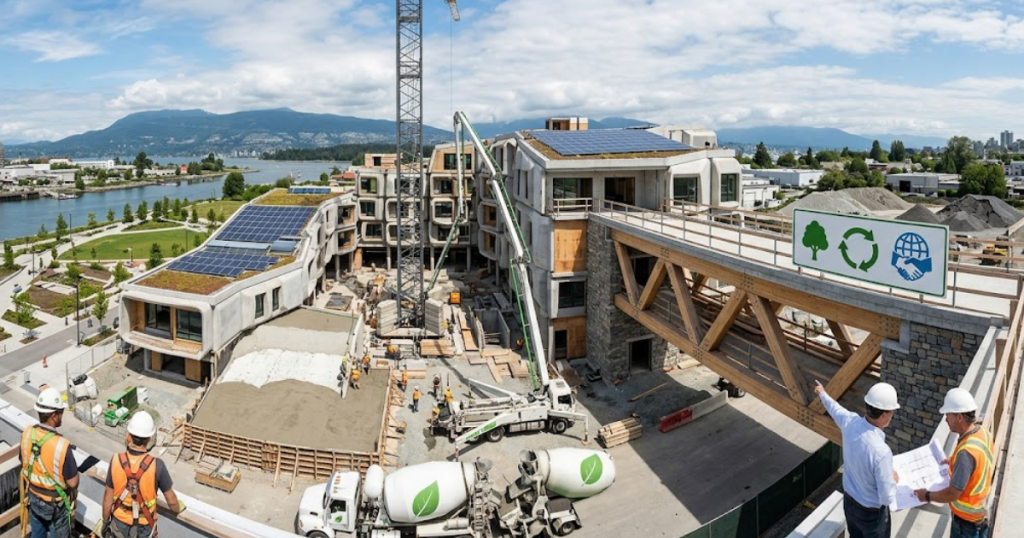
In 2026, the pressure of global price shifts is accelerating the adoption of innovative building strategies. Builders are moving toward a more resilient model to stay within budget:
- Adoption of Green Building Materials: To mitigate the high cost of traditional imports, many are turning to green cement and low carbon concrete. These materials often utilize local secondary components, making them less susceptible to international trade disruptions while assisting in carbon footprint reduction.
- Focus on Sustainable Infrastructure: Projects are being designed with a focus on longevity and resource efficiency. Using eco-friendly concrete and low carbon cement helps developers meet environmental standards while managing the rising cost of raw materials.
- Flexible Project Designs: Modern planning now incorporates “material flexibility,” allowing architects to substitute certain components of a specific global supply chain—such as imported steel—becomes too expensive or unavailable.
The Role of Knowledge and Innovation
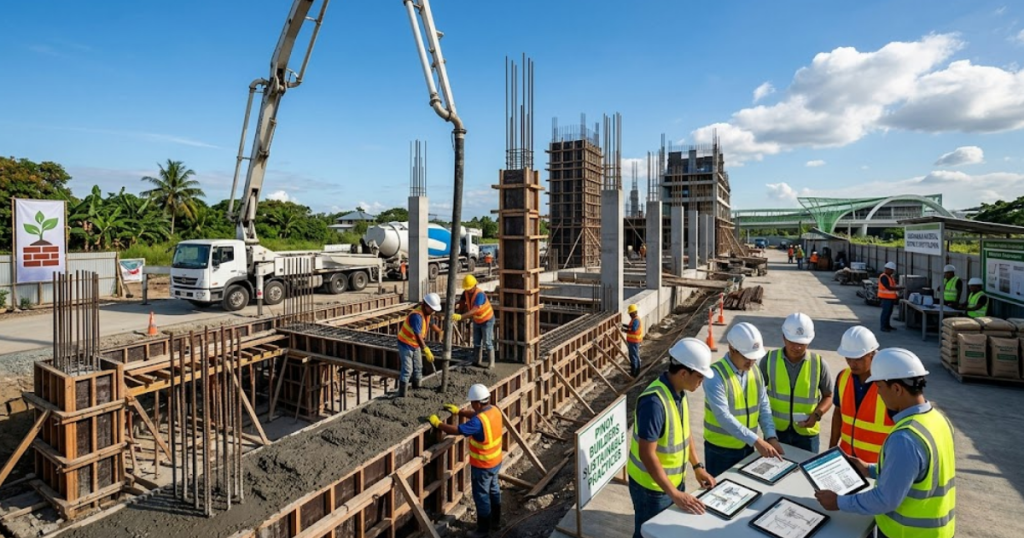
*AI-Generated Image. For Visualization Only.
As the sector grows—with non-residential permit values rising by 12.9% (GlobalData, 2025)—access to the right materials and technical guidance is critical.
- Sustainable Construction Materials: Utilizing low carbon concrete and high-performance cement blends allows builders to achieve structural goals with a lower environmental impact.
- Expert-Led Insights: Organizations like Pinoy Builders provide the necessary technical guides to help contractors navigate these trends, ensuring that even with rising costs, the quality of sustainable infrastructure in the Philippines remains uncompromised.
Navigating a Volatile Future
International wars may create a volatile market, but the move toward sustainable construction and green building materials provides a pathway to stability. By focusing on carbon footprint reduction and adopting eco-friendly concrete, the Philippine construction industry can build a more resilient future that is less dependent on the fluctuations of global conflict.
References








 Facebook
 Instagram
 Linkedin
 Twitter
 Youtube
