The Evolution of Wall Systems in Philippine Construction
For decades, concrete hollow blocks (CHB) have been the default walling material in the Philippines. From small residential homes to mid-rise developments, CHB has been widely used due to its affordability, availability, and familiarity among contractors.
However, in 2026, a new contender is steadily gaining attention: autoclaved aerated concrete (AAC) blocks. With increasing demand for faster construction, better thermal performance, and sustainable materials, AAC is being introduced in select residential and commercial projects across the country.
As the Philippine construction industry continues to grow—driven by housing demand and urbanization (Philippine Statistics Authority [PSA], 2024)—builders and homeowners are now asking a critical question: Which wall system is better suited for modern Filipino homes?
Key Takeaways
- CHB remains the most widely used wall material in the Philippines due to cost and accessibility
- AAC blocks offer faster installation, lighter weight, and improved thermal insulation
- AAC is gaining traction in urban and high-end residential projects
- CHB requires more labor-intensive processes and finishing
- The “winner” depends on project priorities: cost vs efficiency vs performance
Understanding the Basics: CHB vs AAC
What Are Concrete Hollow Blocks (CHB)?
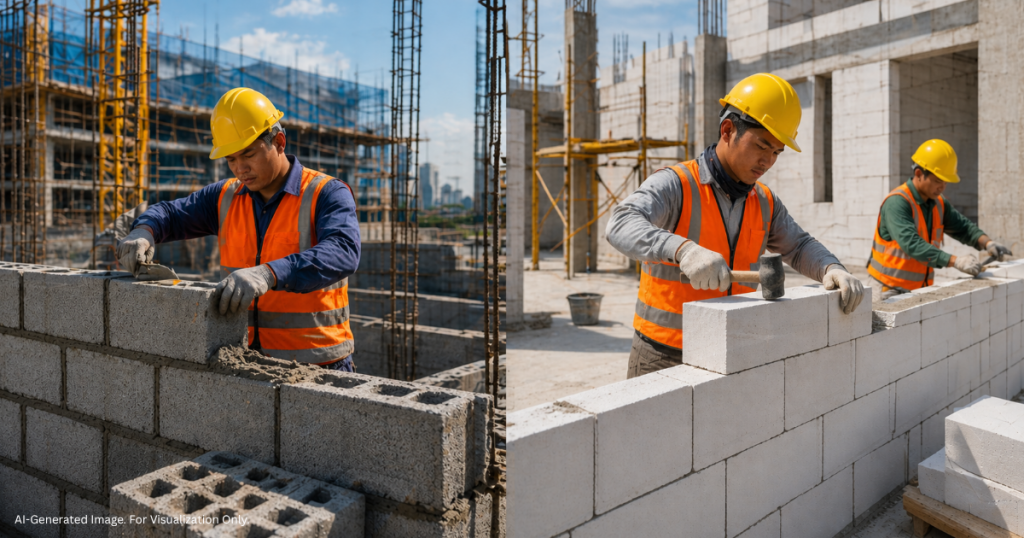
CHB are precast concrete masonry units made from cement, sand, and aggregates. They are widely used in Philippine construction due to their low cost and ease of production. CHB is typically laid using mortar and finished with plastering on both sides. It remains the standard wall system for most residential housing projects (Department of Public Works and Highways [DPWH], 2021).
What Are AAC Blocks?
AAC blocks are lightweight, precast foam concrete blocks made with cement, lime, sand, water, and an expansion agent. They undergo a curing process in an autoclave, which gives them a porous structure. AAC blocks are widely used globally for their:
- Lightweight properties
- Thermal insulation
- Faster installation systems. They are gradually being introduced in the Philippine market, particularly in urban developments and premium residential builds (Saad et al., 2024).
Major Comparison: CHB vs AAC in the Philippine Setting
1. Cost: Upfront vs Total Project Cost
CHB is still significantly cheaper per unit in the Philippines, making it the preferred option for budget-conscious projects. However, AAC blocks can reduce:
- Labor costs (faster installation)
- Finishing costs (less plastering required)
- Structural costs (lighter load on foundation). While AAC may appear more expensive up front, differences in total project costs can narrow depending on project scale (Construction Industry Authority of the Philippines [CIAP], 2025).
2. Construction Speed and Labor Efficiency
AAC blocks are larger and easier to install compared to CHB. This results in:
- Faster wall construction
- Reduced reliance on highly skilled labor
- Cleaner and more consistent installation.
In contrast, CHB construction involves:
- Manual laying of smaller blocks
- Extensive plastering
- Longer curing time. This makes AAC more attractive for developers aiming to shorten project timelines.
3. Structural Weight and Design Impact
AAC blocks are significantly lighter than CHB, reducing the overall structural load of a building. This is particularly beneficial in:
- Multi-storey residential buildings
- Soft soil areas are common in Metro Manila
- Projects aiming to optimize structural design. Reduced weight can lead to savings in foundation and structural components (World Bank, 2026).
4. Thermal and Acoustic Performance
AAC blocks offer better thermal insulation compared to CHB due to their porous structure. In the Philippine climate, this translates to:
- Reduced indoor heat gain
- Improved energy efficiency (less reliance on air conditioning). AAC also provides better sound insulation, making it ideal for urban residential settings. CHB, on the other hand, has lower insulation properties and typically requires additional finishing layers to improve performance.
5. Durability and Maintenance
Both CHB and AAC can be durable when properly installed. However:
- CHB quality can vary significantly depending on manufacturing standards
- AAC is factory-produced with more consistent quality control (Saad et al., 2024). Poor-quality CHB is a common issue in the Philippines, often leading to: cracking, water seepage, and uneven surfaces.
This variability is one of the reasons AAC is being considered as a more reliable alternative in controlled construction environments.
The Ripple Effect on Builders and Homeowners

The choice between CHB and AAC impacts not just material cost, but the entire construction process. As total construction value in the Philippines continues to grow (PSA, 2024), builders are becoming more strategic in selecting materials:
- Contractors are evaluating labor efficiency and project timelines
- Developers are considering long-term building performance and sustainability
- Homeowners are balancing upfront cost with comfort and durability. The increasing exposure to global construction practices is also influencing local preferences toward modern materials.
2026 Trends: Is AAC the Future of Wall Systems?
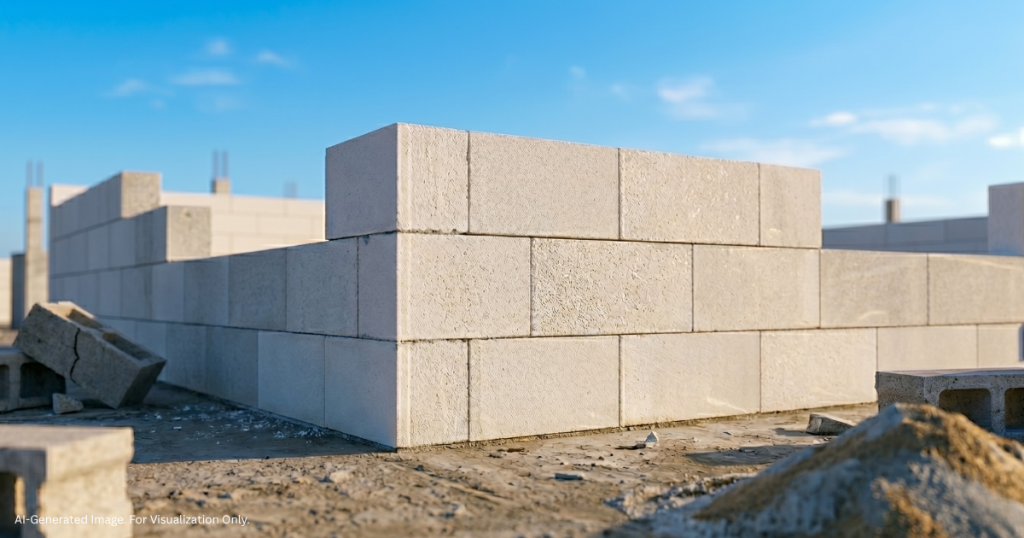
Several trends are shaping the adoption of AAC in the Philippines:
- Shift Toward Sustainable Construction: AAC production typically uses less raw material and generates lower waste compared to traditional CHB systems, aligning with sustainability goals.
- Demand for Faster Project Delivery: With rising labor costs and tight project timelines, faster wall systems like AAC are becoming more attractive.
- Urbanization and Space Optimization: In dense urban areas, lightweight materials that improve structural efficiency are gaining importance (CIAP, 2025).
- Growing Awareness and Market Entry: More suppliers and developers are introducing AAC into the Philippine market, gradually increasing accessibility.
The Role of Material Innovation in Modern Construction
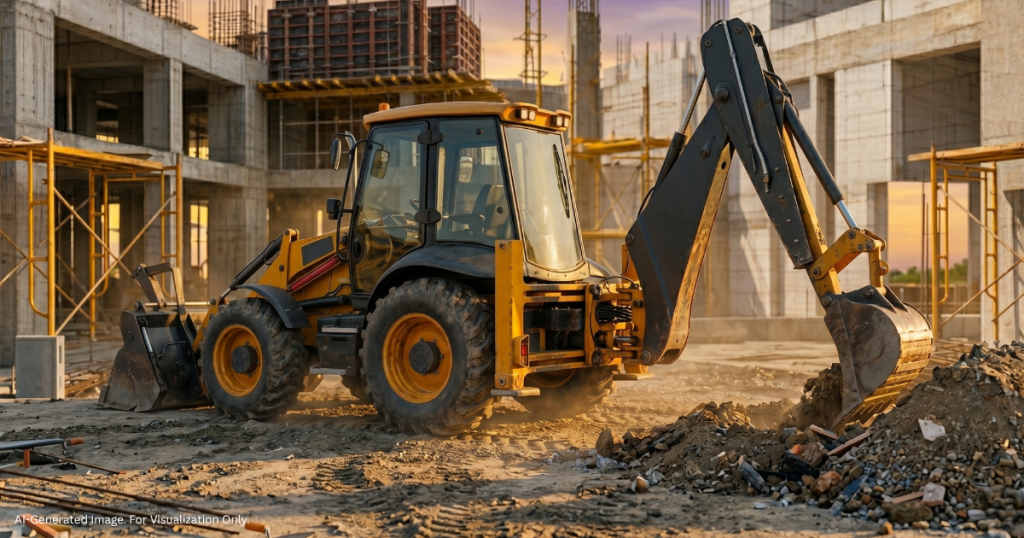
As the industry evolves, builders are no longer limited to traditional materials. The integration of new wall systems reflects a broader shift toward:
- Efficiency-driven construction
- Performance-based material selection
- Sustainable building practices. Organizations like Pinoy Builders play a key role in educating the market on these innovations, helping stakeholders make informed decisions.
Conclusion: Which Wall System Wins in 2026?
There is no one-size-fits-all answer. CHB remains the practical choice for cost-sensitive residential projects due to its affordability and widespread availability. AAC blocks emerge as the modern alternative, offering advantages in speed, performance, and long-term efficiency. In 2026, the “winner” depends on project priorities:
- Choose CHB for affordability and familiarity
- Choose AAC for efficiency, sustainability, and performance. As the Philippine construction industry continues to modernize, AAC is expected to gain a stronger foothold—but CHB will remain relevant for years to come.
References
Construction Industry Authority of the Philippines (CIAP). (2025). Publications. Construction.gov.ph. https://construction.gov.ph/publications/
Department of Public Works and Highways. (2021). Guidelines and Manuals. Dpwh.gov.ph. https://www.dpwh.gov.ph/dpwh/references/guidelines_manuals
Philippine Statistics Authority. (2024). Construction Statistics from Approved Building Permits Philippines 2024. Psa.gov.ph. https://psa.gov.ph/content/construction-statistics-approved-building-permits-philippines-2024
Saad, A. M., Gorse, C., Goodier, C. I., Blay, K., & Cavalaro, S. (2024). Autoclaved aerated concrete in reinforced building applications: A systematic review of AAC/RAAC in the last 40+ years. Results in Engineering, 24, 103431. https://doi.org/10.1016/j.rineng.2024.103431
World Bank. (2026). Commodity Markets. Worldbank.org. https://www.worldbank.org/en/research/commodity-markets




 Facebook
 Instagram
 Linkedin
 Twitter
 Youtube
