
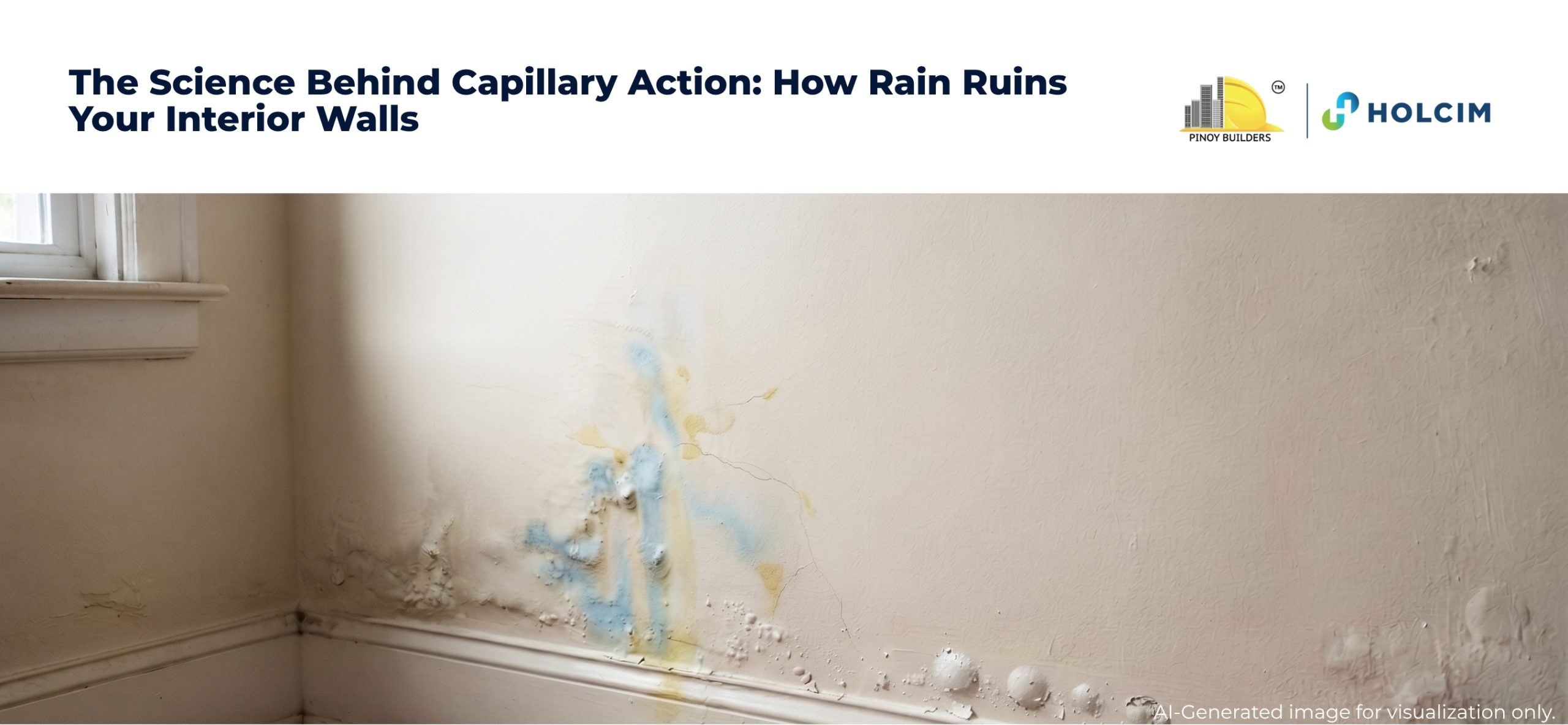
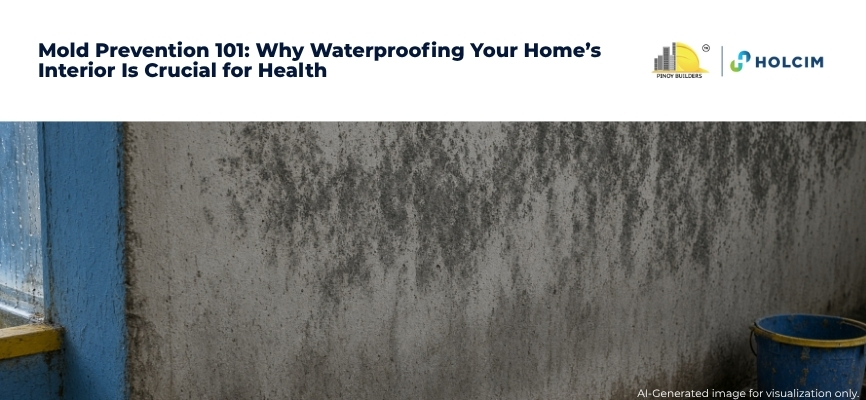
A wall does not have to be visibly flooded to develop a moisture problem. Water can work its way through tiny pores and cracks in concrete and masonry, eventually appearing on interior surfaces as damp patches, peeling paint, or white mineral deposits. Because concrete and masonry are naturally porous, moisture can travel beyond the point where it first enters, making seemingly minor water intrusion a potential long-term wall problem.
Key Takeaways
- Capillary action allows water to move through the tiny pores of porous materials, sometimes traveling upward or sideways even without visible flooding.
- Persistent water seepage can carry dissolved salts to the wall surface, creating efflorescence, while repeated moisture exposure can contribute to peeling paint and other finish problems.
- Effective wall waterproofing combines sound concrete and masonry, appropriate moisture barriers, proper surface preparation, and suitable waterproofing systems rather than relying on paint alone.
- Understanding water absorption, pore structure, and the behavior of water helps homeowners and builders address moisture at its source instead of simply covering its visible symptoms.
How Capillary Action Moves Water Through Walls
What Is Capillary Action?
Think of a concrete wall as having a network of extremely small pathways. When water reaches these spaces, it can be drawn into them through capillary action.
In simple terms, capillary action is the movement of water through the small spaces in a porous material due to the interaction of adhesion, cohesion, and surface tension. Water molecules are attracted to one another and to the surfaces surrounding them. In sufficiently small spaces, these forces can pull water farther into the material, even against gravity (U.S. Geological Survey [USGS], 2018).
This is why a wall can develop wall moisture even when there is no obvious stream of water running across it.
Why Porous Walls Are Vulnerable
Concrete and masonry are not completely solid at the microscopic level. They contain pores and interconnected pathways that can absorb and transport water. Research on concrete has shown that capillary water absorption is closely related to pore structure and can influence concrete durability (Zhao et al., 2019).
The condition of the concrete matters. Poor compaction, cracking, inadequate curing, and other construction factors can affect how easily water moves through the material.
This is where the concept of water absorption becomes important. The more readily a material takes in water, the greater the opportunity for moisture to move deeper into the wall.
From Rainwater to Wall Damage
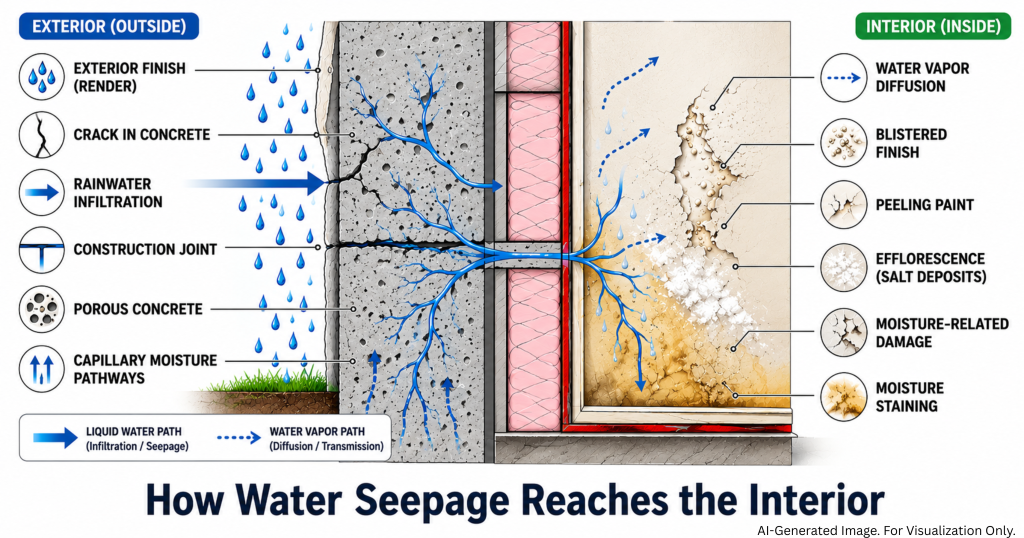
How Water Seepage Reaches the Interior
Rain does not necessarily enter a home through one obvious hole. Water can exploit cracks, construction joints, porous surfaces, poorly sealed openings, and other vulnerable areas.
Once inside, water can travel through the interconnected pores of concrete or masonry. If conditions allow, capillary forces can help distribute moisture beyond the point where it initially entered.
This makes water seepage particularly difficult to diagnose. The damp spot visible inside the house may not be directly behind the point where rain entered the exterior wall.
Holcim Philippines has similarly emphasized that water penetration can contribute to maintenance problems in tropical homes, noting that waterproofing is an important consideration for homes exposed to the country’s heavy rainfall.
Why Efflorescence Appears
One of the clearest visual signs of moisture movement is efflorescence, the white, powdery or chalk-like material that can appear on concrete and masonry.
The process is relatively straightforward: water moves through the material, dissolves soluble salts within it, and carries them toward the surface. When the moisture evaporates, the salts remain behind as a visible deposit (Goodwin, 1950; Concrete Society, 2025).
Efflorescence itself is generally an aesthetic problem rather than the primary cause of structural damage. However, recurring efflorescence can be a useful warning sign that moisture is repeatedly moving through the wall.
Simply cleaning the white deposits without addressing the source of the moisture may therefore allow the problem to return.
Why Paint Eventually Peels
Paint is the finish people see, but it is not necessarily the barrier responsible for stopping all water movement through a wall.
When moisture continues to reach the interface between the substrate and paint film, adhesion can deteriorate. Repeated wetting and drying can also contribute to blistering, discoloration, and peeling paint.
This is why repainting a damp wall without first investigating the source of moisture can provide only a temporary cosmetic solution.
How Waterproofing Changes the Equation
Waterproofing Works at the Surface and Pore Level
A successful waterproofing system does more than create a visibly sealed surface. Depending on the product and system, it can reduce water entry by forming a continuous barrier, filling or bridging suitable surface defects, or reducing the ability of water to penetrate the substrate.
The underlying concrete still matters. A dense, well-constructed concrete system with lower connected porosity provides a better foundation for subsequent moisture barriers and waterproofing treatments.
Holcim Philippines states that concrete made with its Excel ECOPlanet general-purpose blended cement has low porosity, high sulfate resistance, and reduced shrinkage and cracking, characteristics that contribute to concrete durability (Holcim Philippines, 2023).
This is an important distinction: Excel ECOPlanet is not a waterproofing paint or membrane. Rather, its role is in producing durable concrete that can form part of a broader moisture-management system.
The Role of Water-Repellent Cement
Some cement products are specifically formulated to provide water-repellent properties. Holcim’s Aqua X, for example, incorporates water-repellent boosters into its blended cement formulation and is designed to help reduce moisture-related damage in mortar and concrete (Holcim Philippines, 2021).
The choice between conventional cement, water-repellent cement, coatings, and membranes should depend on the location, exposure, substrate, and waterproofing requirements of the project.
No single material should be treated as a universal solution for every moisture problem.
Building a More Effective Moisture Defense
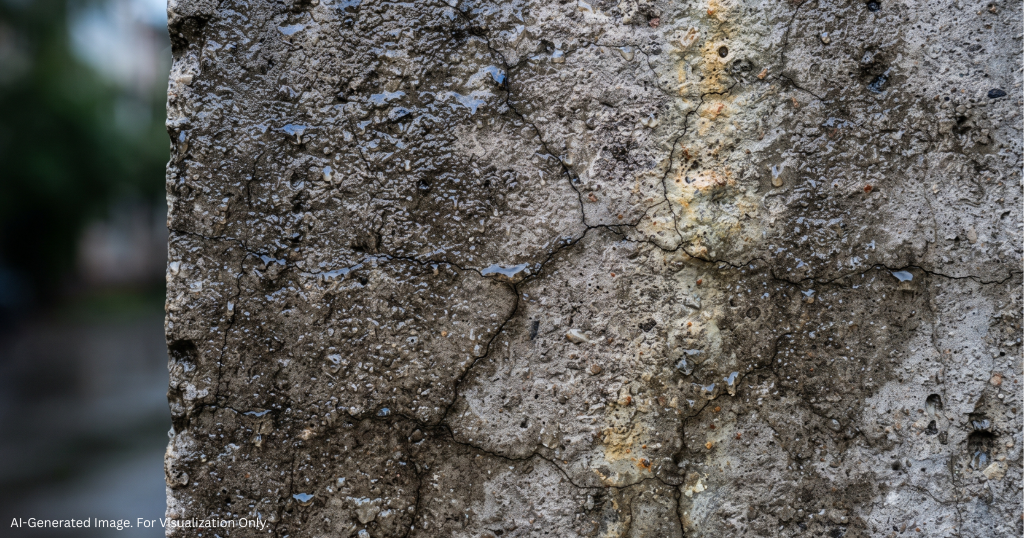
Start With the Source
Before applying waterproofing paint or another coating, determine where the water is coming from.
Check exterior cracks, roof and wall junctions, windows, plumbing lines, drainage conditions, and other potential entry points. Persistent dampness may require professional assessment, particularly when the source is concealed.
Prepare the Surface
Waterproofing products perform best when applied to a properly prepared substrate. Remove loose materials, repair appropriate cracks and defects, and follow the manufacturer’s requirements for surface condition and curing.
Holcim’s guidance on concrete waterproofing likewise emphasizes completing concrete repairs and ensuring that surfaces are clean before waterproofing application.
Combine Materials Into a System
A durable wall waterproofing strategy may involve several layers of protection:
- Properly designed and constructed concrete or masonry
- Correct detailing of joints and cracks
- Suitable moisture barriers
- Appropriate waterproofing coatings or membranes
- Proper drainage and exterior water management
The goal is not simply to make the wall look dry. It is to limit the pathways through which water can enter and move through the building.
Conclusion

Capillary action may be invisible, but its effects can eventually become impossible to ignore. Rainwater entering porous concrete or masonry can move through microscopic pathways, carrying moisture and dissolved salts toward interior surfaces. The resulting wall moisture, efflorescence, peeling paint, and water seepage are often signs of a larger moisture-management problem.
Understanding how water interacts with porous materials, surface tension, and the pore structure of concrete gives homeowners and builders a better basis for choosing the right solution. Effective wall waterproofing is therefore not simply about adding another coat of paint, it is about controlling water movement through a properly designed building system, from the concrete foundation to the final protective layer.
References
Concrete Society. (2025). Salt efflorescence. Concrete Society
DOST-PAGASA. (2026, June 4). Onset of the rainy season. Department of Science and Technology. DOST-PAGASA
Goodwin, M. J. (1950). Efflorescence on the exterior surface of masonry walls: A review of the literature. National Research Council of Canada. NRC Publications Archive
Holcim Philippines, Inc. (2015, October 2). Waterproofing essential to home maintenance in tropical PH. Holcim Philippines
Holcim Philippines, Inc. (2021, April 15). Holcim launches Philippines’ first water repellent cement. Holcim Philippines
Holcim Philippines, Inc. (2023, April 17). Holcim relaunches flagship product as Excel ECOPlanet. Holcim Philippines
U.S. Geological Survey. (2018, June 5). Capillary action and water. U.S. Department of the Interior. USGS Water Science School
Zhao, X., et al. (2019). Experimental analysis on the relationship between pore structure and capillary water absorption characteristics of cement-based materials. Structural Concrete, 20, 1750–1762. Wiley Online Library






 Facebook
 Instagram
 Linkedin
 Twitter
 Youtube
