
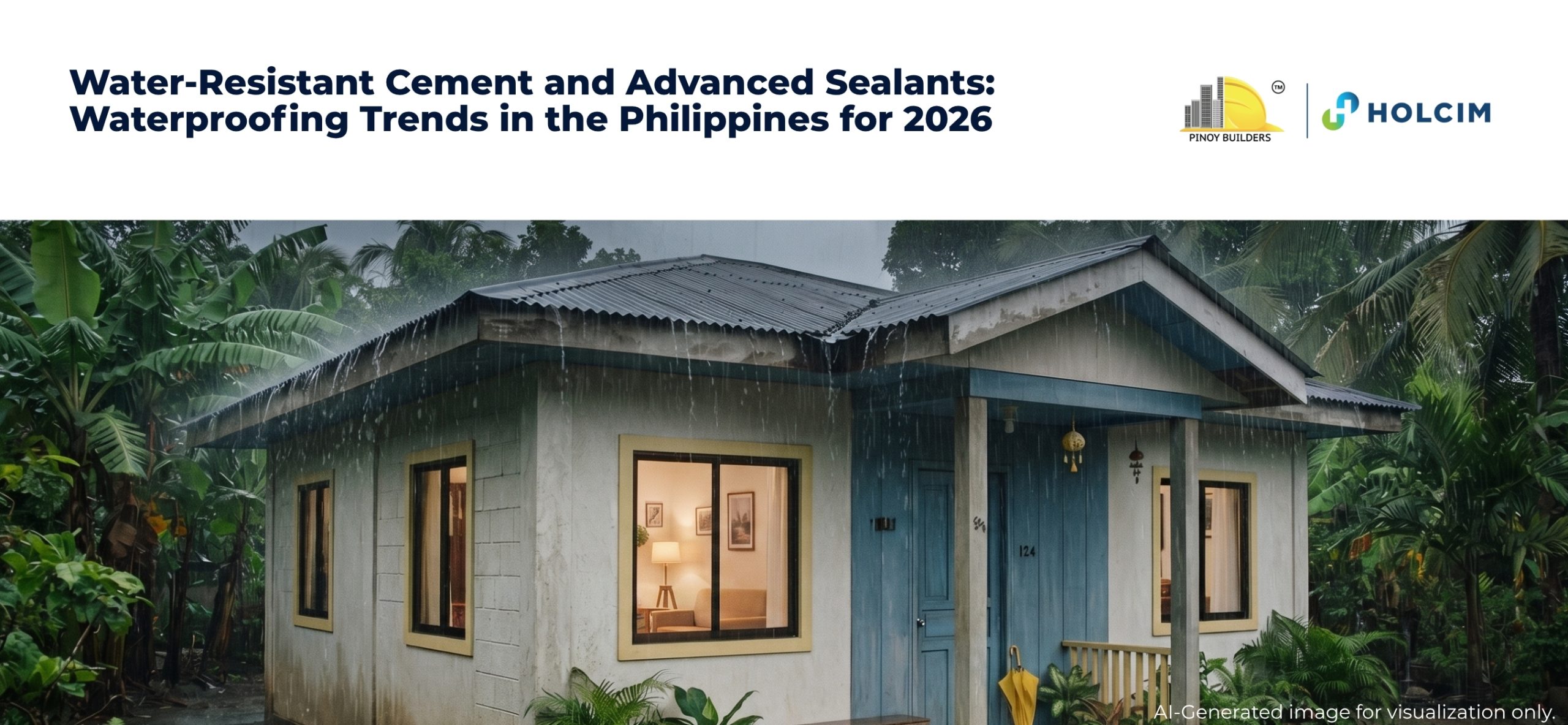
Waterproofing is becoming less about fixing leaks after they appear and more about preventing water from becoming a long-term building problem. With Philippine structures regularly exposed to heavy rainfall, flooding, humidity, and prolonged wet conditions, construction is increasingly looking at materials and systems that can manage moisture from the beginning.
Current Philippine research and construction practice point toward several approaches gaining relevance in waterproofing, from water-resistant cement and concrete admixtures to membranes, sealants, and protective coatings. DOST-PCIEERD’s 2026 priorities emphasize climate-adaptive, durable, and sustainable construction materials suited to Philippine conditions, including performance benchmarking and durability testing (DOST-PCIEERD, 2026).
These developments point toward a broader approach to waterproofing—one that considers moisture control as part of a building’s long-term performance rather than something addressed only after a leak appears.
Key Takeaways
- Waterproofing is shifting toward preventive protection rather than repair alone.
- Water resistance can be incorporated into concrete through waterproof cement and admixtures.
- Cementitious waterproofing membranes, structural sealants, acrylic concrete sealers, and weather resistant coatings can provide additional protection in vulnerable areas.
- Building waterproofing materials should be selected according to the building area and type of water exposure.
- Effective house flood protection still depends on waterproofing, drainage, proper detailing, and maintenance working together.
1. Water-Resistant Cement and Concrete Admixtures
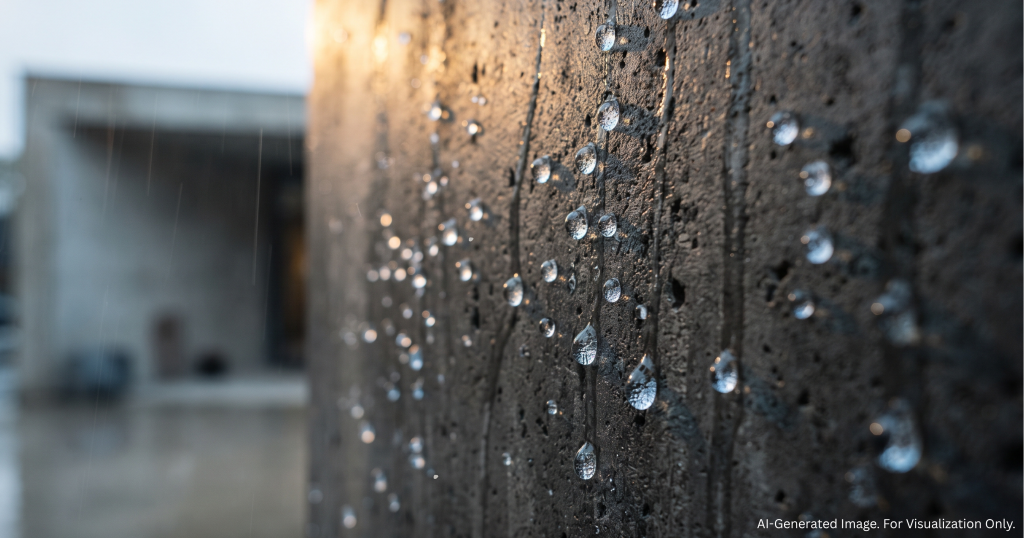
One approach gaining relevance is incorporating water resistance directly into cement or concrete rather than relying entirely on a surface-applied waterproofing layer.
Often referred to broadly as waterproof cement, water-resistant cement technologies are designed to provide additional protection against moisture penetration. Holcim Philippines’ Aqua X, for example, is marketed as a water-repellent cement formulated with water-repellent boosters intended to help reduce water seepage and leakage in applicable uses (Holcim Philippines, n.d.).
Another approach is the use of a crystalline waterproofing admixture. These materials are incorporated into concrete and are designed to reduce pathways through which water can penetrate. Unlike surface coatings, their water-resistance function is incorporated into the concrete mix itself.
These technologies reflect a wider interest in construction materials that improve durability and resilience. DOST-PCIEERD’s current research priorities specifically include innovative materials that are climate-adaptive, durable, and sustainable (DOST-PCIEERD, 2026).
However, these materials are not substitutes for good concrete practice. Mix design, proper placement, consolidation, curing, crack control, and joint detailing remain essential.
2. Cementitious Waterproofing Membranes Provide an Additional Barrier
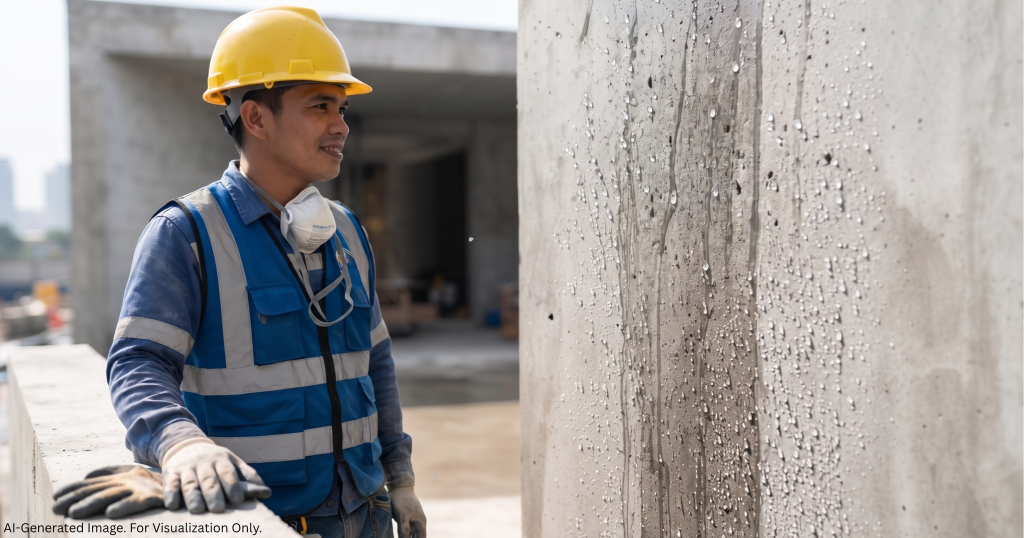
Concrete can resist water penetration while still requiring additional protection in areas exposed to prolonged moisture or water pressure.
A cementitious waterproofing membrane can provide a protective layer over concrete and masonry surfaces. Philippine DPWH specifications recognize cement-base waterproofing coatings and membrane systems for waterproofing applications involving concrete and masonry (Department of Public Works and Highways [DPWH], 2017).
These systems can be considered for areas such as:
- Roof decks and terraces
- Foundations and below-grade walls
- Balconies
- Wet areas
- Other water-exposed concrete surfaces
The key is matching the membrane to the substrate and exposure. Proper surface preparation is equally important. A membrane cannot compensate for unresolved cracks, poor drainage, or improperly detailed joints.
3. Sealants and Protective Coatings Are Addressing Vulnerable Areas
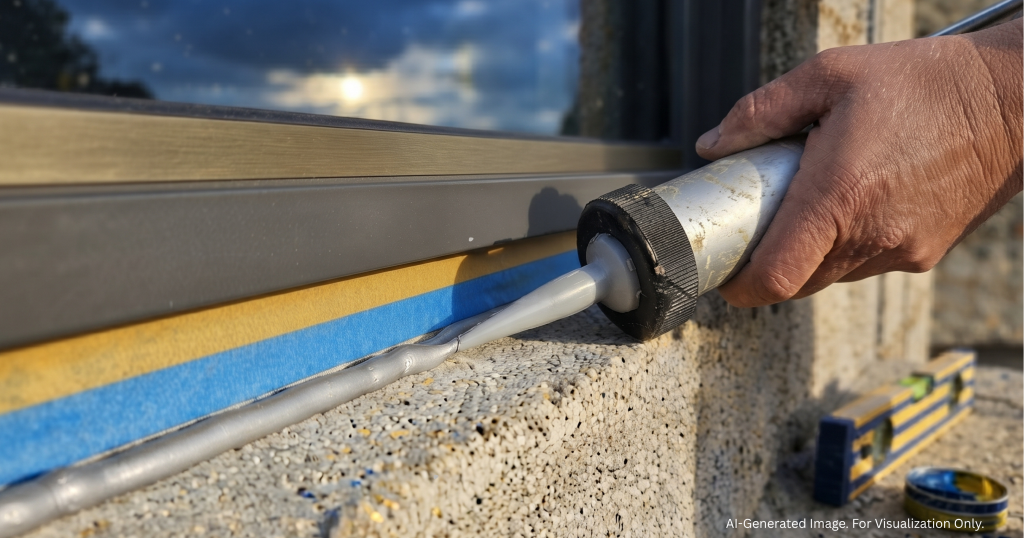
Water does not always enter through the middle of a concrete surface. Joints, gaps, penetrations, windows, and connections between different materials can become potential entry points.
This is where structural sealants and specialized joint-sealing materials can help. Because building components can move due to temperature changes, settlement, or other factors, sealants must be selected according to the joint’s movement, substrate, and exposure.
For exposed surfaces, acrylic concrete sealers and weather resistant coatings can provide another layer of protection against rain and environmental exposure. These materials can be particularly relevant to exterior wall waterproofing, where walls are repeatedly exposed to Philippine rainfall and humidity.
However, coatings should not be used to hide significant cracks or unresolved water-entry problems. The source of moisture should be identified before selecting a surface treatment.
4. Waterproofing Is Becoming Part of the Larger Building System
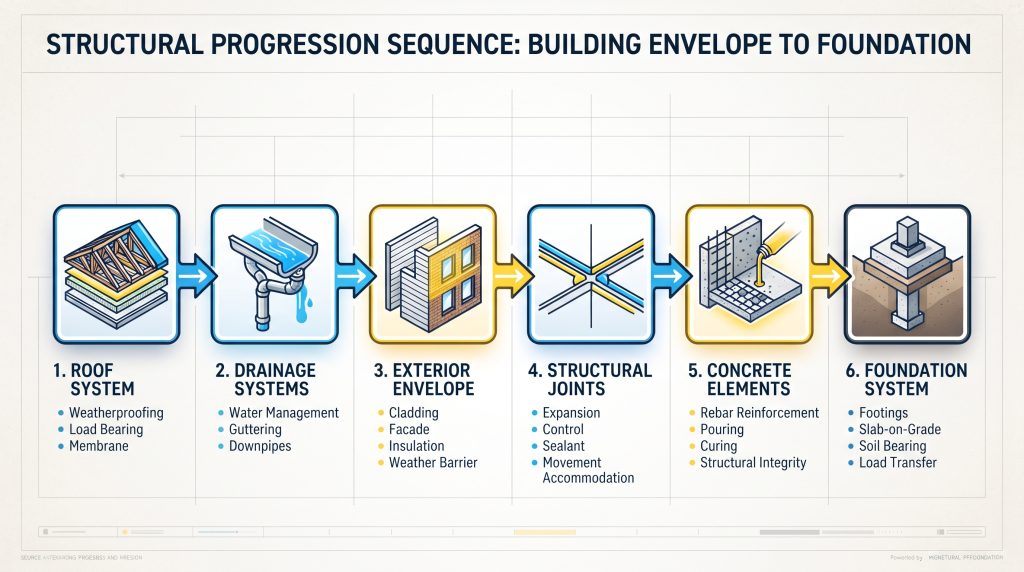
A major consideration in modern waterproofing is how different parts of the building work together to control water.
Each part influences where water goes and whether it can reach vulnerable components.
For example, a waterproofed roof deck can still develop problems if water is allowed to pond because of inadequate drainage. Similarly, an exterior wall can remain vulnerable if water enters through poorly sealed windows or penetrations.
This systems-based approach is consistent with Philippine efforts to develop more resilient and durable construction technologies. DOST-PCIEERD’s 2026 priorities include materials and technologies intended to address environmental hazards while undergoing performance and durability testing (DOST-PCIEERD, 2026).
For builders, this means building waterproofing materials should not be selected in isolation. The material, detailing, drainage, and construction method all need to work together.
5. What These Developments Mean for Homeowners
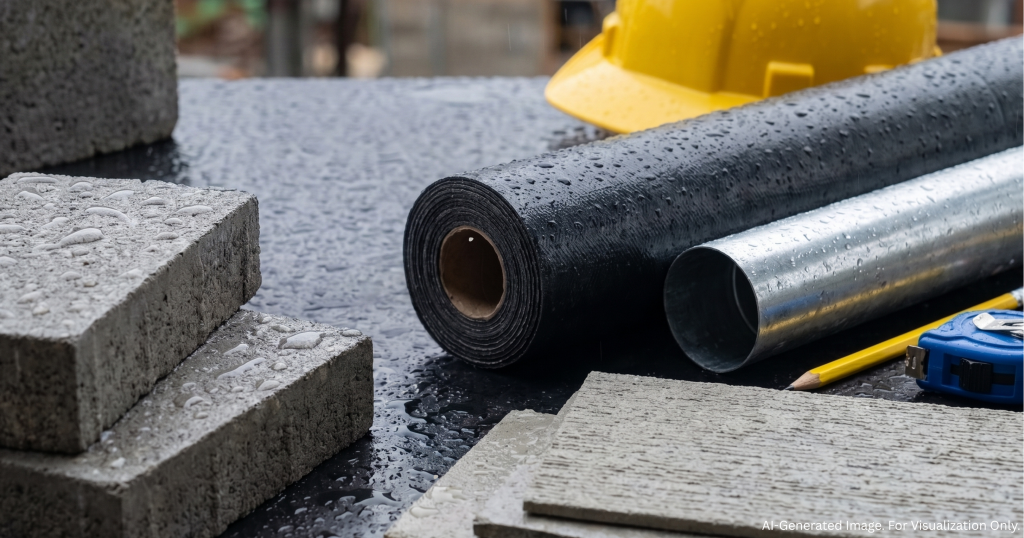
For homeowners, waterproofing starts with identifying the source of water—not simply buying the strongest-looking product.
For concrete foundation waterproofing, for example, the solution needs to consider exposure to soil moisture or groundwater. A roof deck experiencing leaks may require more than roof deck leak repair; cracks, joints, drainage outlets, and the existing waterproofing system should also be inspected.
The same principle applies to house flood protection. Waterproofing can reduce water intrusion, but it should be combined with proper drainage, appropriate building detailing, and other measures suited to the property’s flood exposure.
A Practical Approach
Identify the water source. Check roofs, walls, windows, foundations, plumbing penetrations, and drainage systems.
Match the material to the problem. Water-resistant cement, crystalline admixtures, membranes, coatings, and sealants have different applications.
Don’t ignore drainage. Directing water away from the building is just as important as preventing it from entering.
Fix problems early. Damp patches, efflorescence, peeling paint, cracks, and recurring leaks can indicate a larger moisture problem.
Conclusion
The waterproofing developments gaining relevance in the Philippines in 2026 point toward a more preventive approach to building protection. Waterproof cement, crystalline waterproofing admixtures, cementitious waterproofing membranes, structural sealants, acrylic concrete sealers, and weather resistant coatings each provide different ways to manage moisture.
But no single product can replace proper design and construction. Effective waterproofing depends on durable concrete, correctly detailed joints, suitable materials, good drainage, proper installation, and regular maintenance working together.
For Philippine homes and buildings exposed to increasingly demanding weather conditions, waterproofing is becoming less of a repair expense and more of a consideration in long-term building durability and resilience.
References
Department of Public Works and Highways. (2017). Amendment to the DPWH standard specification for Item 1016 – Waterproofing. Republic of the Philippines.
DOST-PCIEERD. (2026). Construction sector roadmap. Department of Science and Technology–Philippine Council for Industry, Energy and Emerging Technology Research and Development.
DOST-PCIEERD. (2026). DOST-PCIEERD 2026 call for proposals. Department of Science and Technology–Philippine Council for Industry, Energy and Emerging Technology Research and Development.
DOST-PCIEERD. (2026, June 1). DOST-PCIEERD, USTP open built environment laboratory in Northern Mindanao. Philippine Information Agency.
Holcim Philippines, Inc. (n.d.). Holcim Aqua X.




 Facebook
 Instagram
 Linkedin
 Twitter
 Youtube
