
Beating the Heat:
Why the Dry Season is the Optimal Time for Structural Concrete Work and How to Manage Curing in High Temperature
The dry season presents a unique window of opportunity for construction projects, particularly those involving structural concrete. With reduced rainfall, predictable weather patterns, and improved site accessibility, contractors and homeowners alike can achieve better efficiency and quality outcomes. However, high temperatures also introduce challenges—especially in concrete curing—that must be managed carefully to ensure durability and long-term performance.
In this article, we explore why the dry season is the optimal time for structural concrete work, how to effectively manage curing in high temperatures, and how modern concrete has become a leading material for stylish and durable garden renovations in 2026..
Key Takeaways
- Optimal Window: The dry season serves as the optimal window for structural concrete work due to predictable weather patterns and improved site accessibility.
- Modern Versatility: Modern concrete is a premier landscaping material in 2026, valued for its ability to mimic natural textures and its high durability.
- Tailored Upgrades: Strategic garden upgrades combine the compressive strength of the material with high-end architectural aesthetics.
- Curing Management: High-temperature management is essential to prevent thermal cracking and ensure structural integrity through moisture retention.
- Long-Term Investment: Investing in concrete features provides long-term value by offering functional, fire-resistant outdoor living spaces that last for decades.
The Rise of Concrete in Modern Landscaping
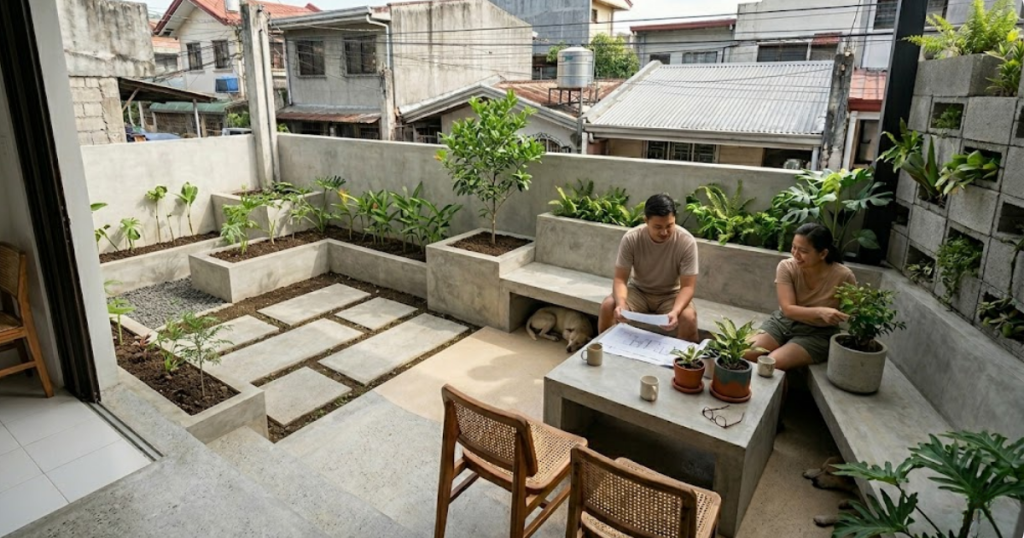
Concrete’s popularity in landscaping has grown due to its adaptability and strength. In 2026, the use of high-quality ready-mix concrete has become the top choice for transforming urban pocket gardens and lanai spaces. Advances in finishing techniques and water-cement ratio precision allow it to achieve minimalist, architectural looks that integrate seamlessly with tropical greenery.
Because structural concrete is highly resistant to weathering, pests, and fire, it is particularly suitable for outdoor environments (Philippine National Standard for Concrete, 2024). Additionally, it requires relatively low maintenance compared to wood, making it ideal for homeowners seeking long-lasting solutions. Its “cool-touch” potential—when finished with reflective light pigments—makes it even more desirable for the high-heat climates of 2026 (World Cement Association, 2026).
Three Concrete Projects for Aesthetic Garden Upgrades
1. Pebble Wash-out Driveways
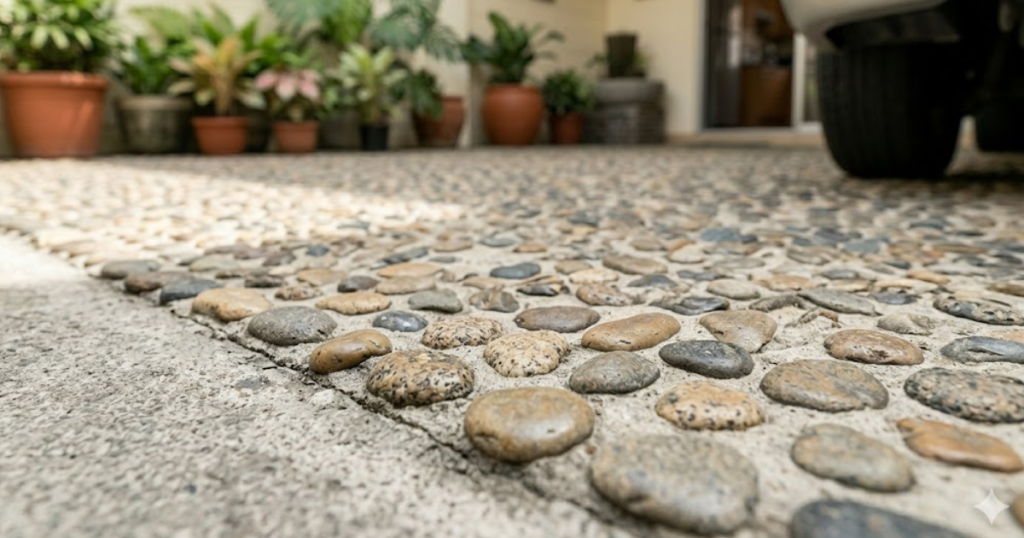
Pebble wash-out (or exposed aggregate) finishes involve stripping away the top layer of cement paste to reveal decorative pebbles. This creates a rugged yet refined surface designed to maintain its structural integrity under heavy foot traffic and family vehicles.
- Benefits: Highly durable and slip-resistant.
- Maintenance: Requires resealing every few years to keep colors vibrant.
- Estimated Timeline: 4–6 days.
2. Concrete-Stamped Patios
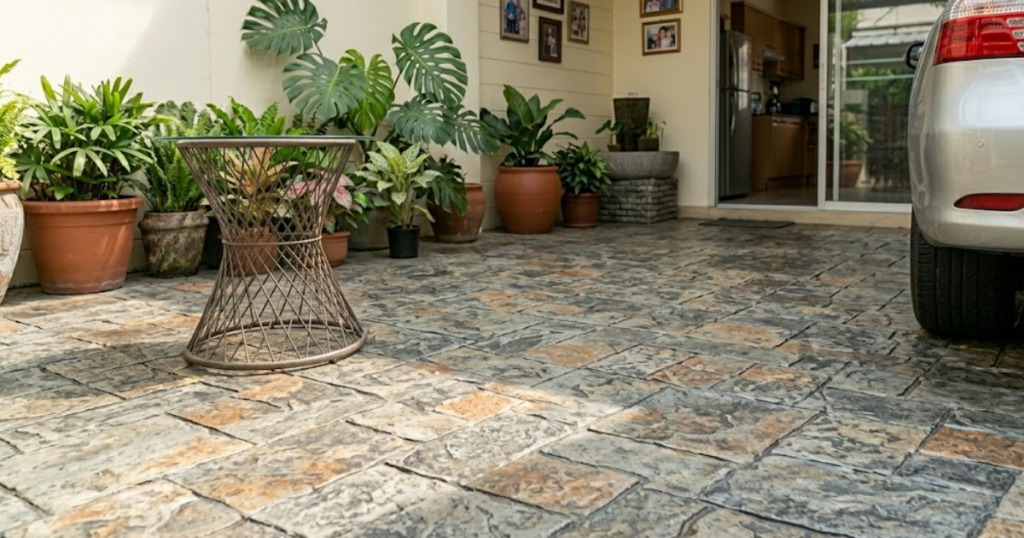
Concrete stamping allows homeowners to achieve the look of slate or brick at a fraction of the cost. Using a precise water-cement ratio ensures the stamps are crisp and the surface remains durable against the elements (Philippine National Standard for Concrete, 2024).
- Benefits: Customizable patterns; prevents weed growth common in traditional pavers.
- Maintenance: Low maintenance; easy to sweep and wash.
- Estimated Timeline: 3–5 days.
3. Space-Saving Bench Planters
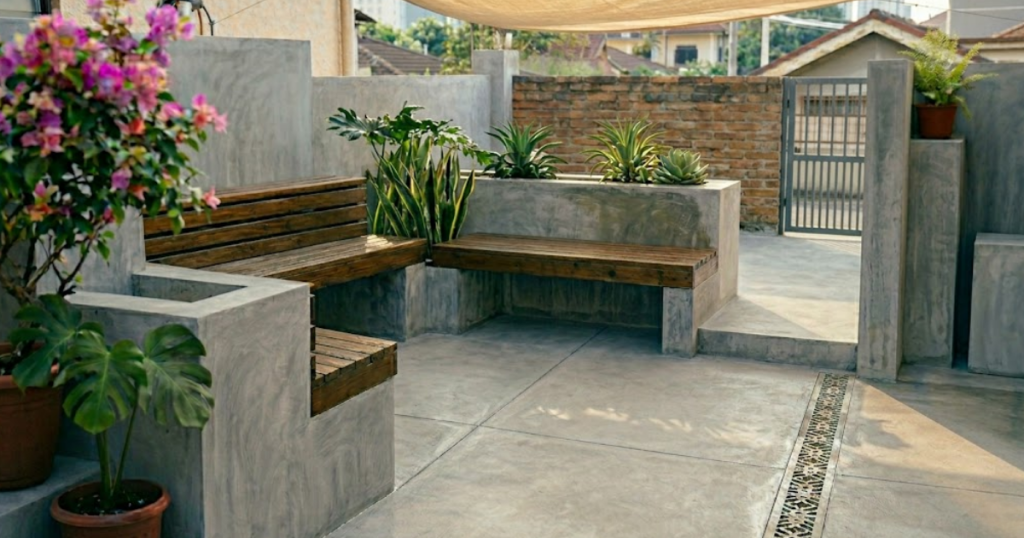
These integrated structures serve a dual purpose: providing sturdy seating while housing greenery. These require high compressive strength to support the weight of soil, water, and people simultaneously.
- Benefits: Maximizes square footage; adds a permanent modern element.
- Maintenance: Moisture-sealed interiors prevent water seepage.
- Estimated Timeline: 5–8 days
Managing Concrete Curing in High Temperatures
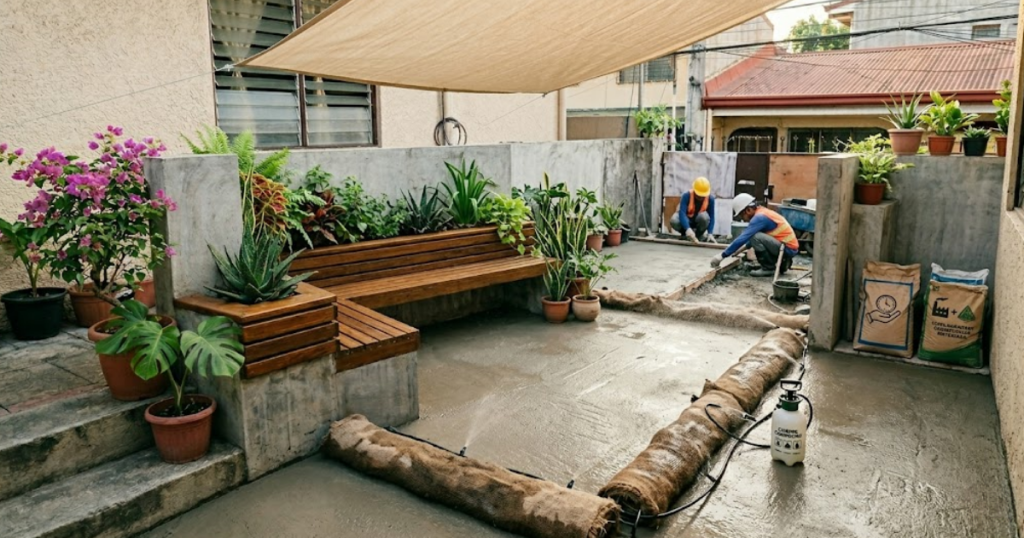
While the dry season is ideal for scheduling, elevated temperatures can accelerate the evaporation rate, leading to thermal cracking and reduced strength if not properly controlled. Effective concrete curing is essential to maintaining the project’s structural integrity.
Best Practices for Hot Weather Concreting:
- Moisture Retention: Use water curing (misting), wet burlap, or specialized curing compounds to form a protective film that prevents rapid drying (American Concrete Institute, 2025).
- Timing: Pour ready-mix concrete during the early morning or late afternoon to avoid peak solar radiation (National Ready Mixed Concrete Association, 2023).
- Evaporation Control: Use temporary tarps or windbreaks to reduce the evaporation rate caused by direct sun and wind.
- Mix Adjustments: Carefully monitor the water-cement ratio and incorporate retarders to manage internal heat and prevent thermal cracking (National Ready Mixed Concrete Association, 2023).
Proper curing ensures that the material achieves its intended compressive strength, even under challenging environmental conditions (American Concrete Institute, 2025)
Long-Term Value and Functionality
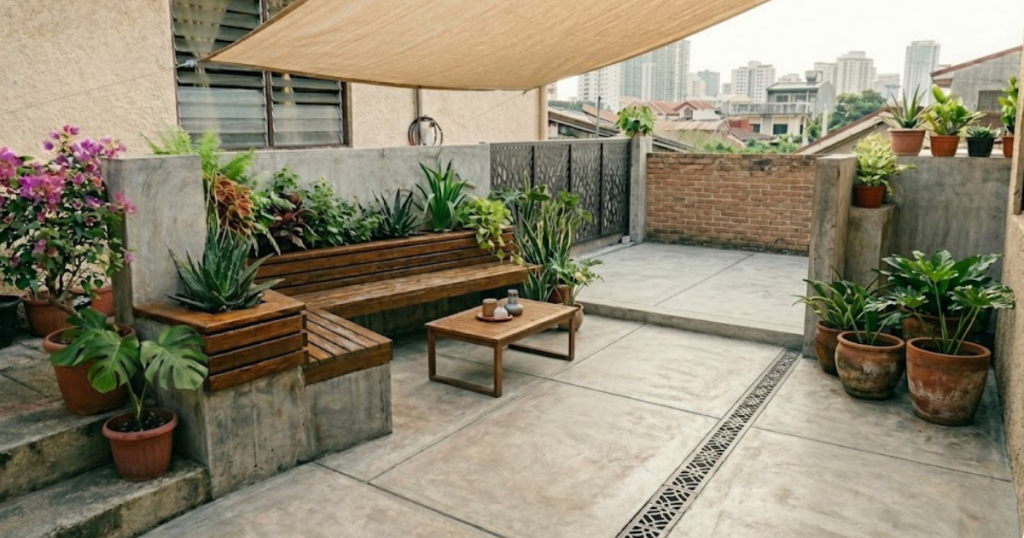
Investing in concrete landscaping features provides both immediate and long-term advantages. Beyond the aesthetics, these features offer structural reliability that traditional materials cannot match.
- Increase Property Value: Modern, well-designed outdoor spaces are highly attractive to buyers, often yielding a high return on investment (World Cement Association, 2026).
- Improve Functionality: Defined “tambayan” areas, secure driveways, and integrated planters enhance the usability of the home for family gatherings.
- Flood Resistance: Unlike soil or wood, properly graded and finished concrete helps manage runoff during the monsoon season that follows the dry months.
Conclusion
The dry season provides the perfect conditions for executing concrete projects efficiently, but success depends on proper curing techniques to counter high temperatures. Beyond structural applications, modern concrete has become a cornerstone of contemporary landscaping, offering durability, flexibility, and timeless style. Whether through a pebble wash-out driveway or a minimalist bench planter, concrete enables homeowners to transform their gardens into functional, elegant spaces that stand the test of time.
References
- American Concrete Institute. (2025). Advancements in Concrete Curing Practices.
- Philippine National Standard. (2024). PNS/BAFS 344:2024 – Concrete Masonry Units and Sustainable Landscaping Specifications.
- National Ready Mixed Concrete Association. (2023). Hot Weather Concreting Guidelines.
- World Cement Association. (2026). Innovations in Modern Concrete Applications.



 Facebook
 Instagram
 Linkedin
 Twitter
 Youtube
