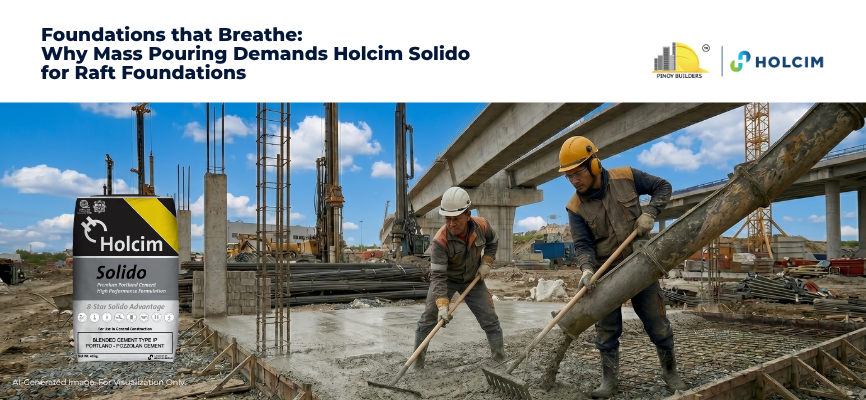
The Thermal Challenge of Massive Structural Pours in the Philippines
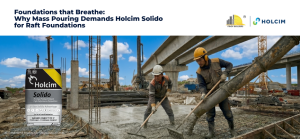
In the high-stakes world of Philippine vertical construction, the “raft foundation” serves as the literal bedrock of stability for our rising skylines. However, as buildings in BGC and Makati climb higher and infrastructure under the “Build Better More” program grows more massive, engineers face a silent, internal enemy: heat. When pouring thousands of cubic meters of reinforced cement concrete in a single session, the chemical reaction of hydration generates intense internal temperatures that are exacerbated by our tropical climate.
Without careful management, the core of a raft foundation can become significantly hotter than its surface. This temperature gradient leads to thermal cracking, microscopic fractures that compromise the structural integrity of the building before the first floor is even framed. In 2026, the local industry is moving away from complex cooling hacks toward specialized materials like Holcim Solido to manage this “heat of hydration” from within the mix, especially during the aggressive dry season deadlines.
Key Takeaways
- Raft Foundations in the PH setting require massive, continuous pours where internal heat management is critical due to high ambient temperatures.
- Thermal Cracking is a primary risk in large-scale projects, often requiring expensive mitigation like ice-flaking or liquid nitrogen cooling.
- Holcim Solido is engineered for low heat of hydration, making it the ideal choice for mass pouring in tropical environments.
- Economic Value: Using Solido reduces the need for external cooling systems, lowering overall project costs and simplifying site logistics.
- Enhanced Durability: The specialized chemical profile offers superior resistance to sulfate attack, which is vital for foundations in coastal Metro Manila soil.
Where Solido Shines: Critical Applications in 2026
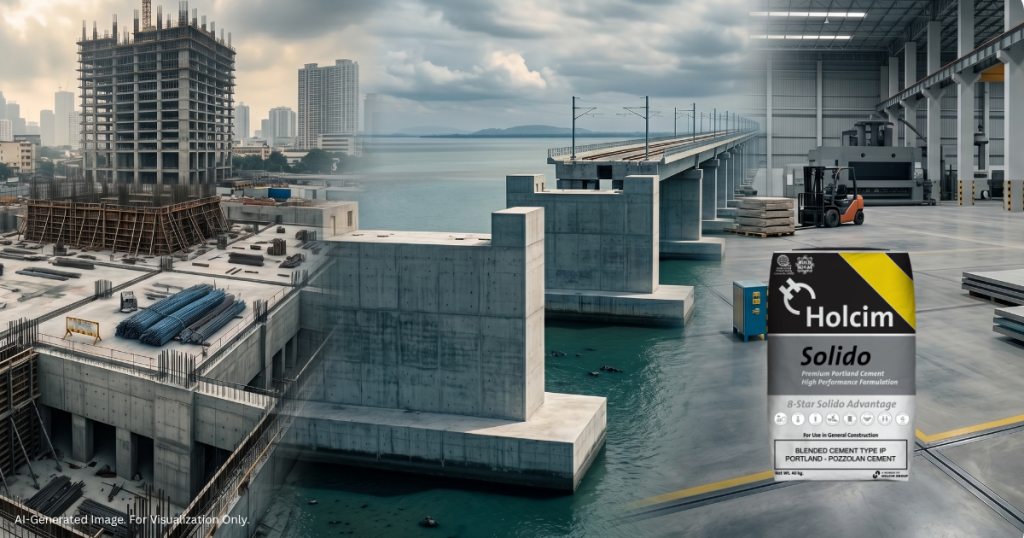
Holcim Solido is specifically formulated for projects where a standard portland cement might generate too much heat or set too quickly during a long-haul pour in Philippine humidity. There are three specific applications where this technology is becoming the gold standard for local contractors:
1. Skyscraper Raft Foundations
Modern towers in the Manila Bay area and Ortigas demand foundations several meters thick to combat soil liquefaction risks. Solido allows for continuous 24-hour pouring by maintaining a consistent internal temperature, ensuring the foundation sets as a single, monolithic block without the “cold joints” often caused by traffic-related delivery delays in Metro Manila.
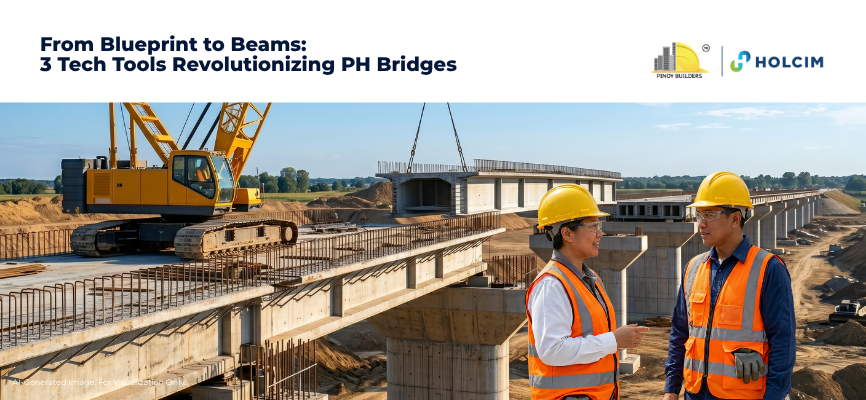
2. Bridge Abutments and Piers
For massive infrastructure projects like the North-South Commuter Railway (NSCR) and the Bataan-Cavite Interlink Bridge, supports must withstand both heavy loads and the corrosive elements of brackish water. Solido’s low-heat properties ensure these massive blocks cure evenly, providing a denser, more durable finish that complies with DPWH standard specifications.
3. Heavy Industrial Plant Floors
From the economic zones in Laguna to new battery plants in Batangas, industrial floors must handle heavy machinery without cracking. The improved workability of Solido allows for smoother leveling over vast surface areas, reducing the risk of surface imperfections even when working under the intense Philippine sun.
The Chemical Advantage: Managing the Core
What sets Solido apart from a traditional portland cement is its optimized clinker composition. By reducing the rate of heat evolution during the initial stages of curing, Solido prevents the “core-to-surface” temperature delta from reaching dangerous thresholds defined by local infrastructure standards.
Furthermore, Solido is engineered for the logistical realities of the Philippines. In a massive raft pour that might last two days straight, the concrete must remain fluid enough to bond with previously laid layers despite Metro Manila’s unpredictable traffic. This balance is critical for 24-hour operations, as it reduces the labor-intensive need to constantly vibrate or re-work the mix (Holcim Philippines, 2024).
Long-Term Resistance to Environmental Stress
Beyond the initial pour, Solido offers a secondary defense: sulfate resistance. Raft foundations in the Philippines are often in contact with soil and groundwater that may have high salinity in coastal areas. Solido’s chemical matrix is denser than standard mixes, preventing sulfates and chlorides from penetrating the concrete and reaching the steel reinforcement, which is vital for a structure’s 50-year service life in our archipelago.
Maximizing Value: Reducing the Need for Artificial Cooling
Historically, to prevent thermal cracking in massive PH pours, contractors had to resort to expensive “ice-flaking”—replacing up to 50% of the mixing water with ice—or installing intricate networks of cooling pipes inside the foundation itself.
By switching to Holcim Solido, developers can significantly lower project overhead. Because the cement itself manages the thermal gradient:
- Lower Equipment Costs: Minimal or no need for cooling pipe installation or onsite refrigeration.
- Reduced Energy Usage: Less reliance on the energy-heavy process of producing ice for concrete batching.
- Faster Timelines: Simplified mix designs lead to faster batching plant turnarounds and more reliable delivery schedules.
Conclusion: Building for a Stronger Philippine Foundation
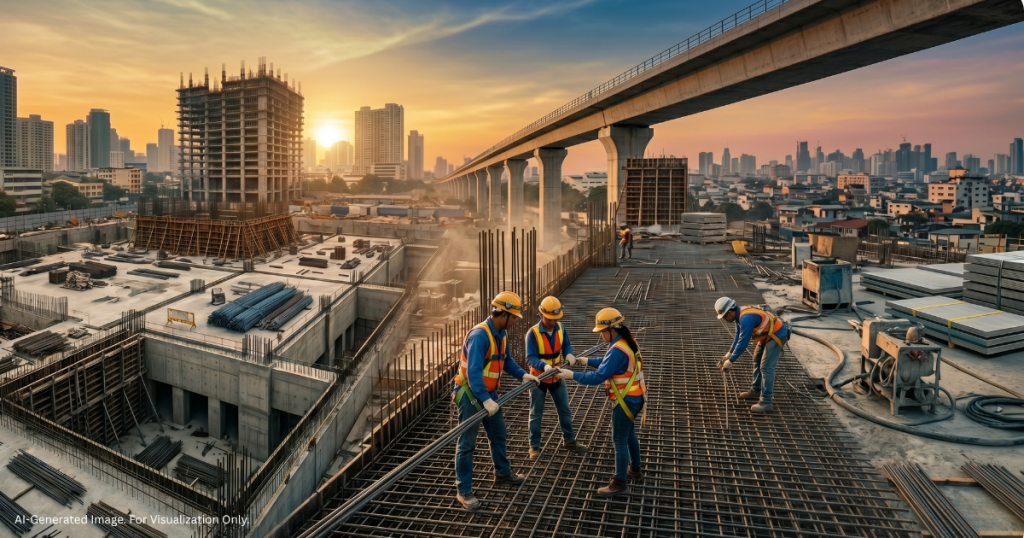
The Philippine construction surge of 2026 demands more than just strength; it demands resilience against our environmental realities. As raft foundations become larger and more complex, the choice of cement becomes a strategic decision that affects the entire project’s lifespan (PIA, 2026). Holcim Solido represents a shift toward “smarter” materials—foundations that “breathe” through the hydration process without cracking under the pressure of the Philippine climate.
In the race to build the next skyline, the strongest projects are the ones built on foundations that stay cool.
References
Department of Public Works and Highways. (2025). Department Order No. 32, Series of 2025: Standard Specification for Structural Concrete. Dpwh.gov.ph. https://www.dpwh.gov.ph/dpwh/sites/default/files/issuances/do_032_s2025.pdf
Holcim Philippines. (2024). Solido: The Concrete Choice for Infrastructure and Mass Pours. Holcim.ph. https://www.holcim.ph/solido
Philippine Information Agency (PIA). (2026). DPWH pushes transparent infrastructure spending under 2026 budget. Pia.gov.ph. https://pia.gov.ph/news/dpwh-pushes-transparent-infrastructure-spending-under-2026-budget/
Philippine Statistics Authority. (2024). Construction Statistics from Approved Building Permits Philippines 2024. Psa.gov.ph. https://psa.gov.ph/content/construction-statistics-approved-building-permits-philippines-2024

 Facebook
  Instagram
  Linkedin
  Twitter
  Youtube