

The New Era of Philippine Connectivity

For decades, bridge construction in the Philippines was a race against the clouds. Traditional manual methods often struggled to keep pace with the volatile monsoon cycles, leading to the dreaded “stop-start” construction rhythm that ballooned budgets and delayed critical links between provinces.
However, as we move through 2026, the Department of Public Works and Highways (DPWH) is maximizing the “Golden Window”—the critical dry season sprint—by trading slow, manual labor for high-tech structural assembly. With a ₱530.9 billion infrastructure budget focused on “Asset Preservation” and “Urban Mobility” (PIA, 2026), the goal is clear: build faster, build smarter, and ensure that every beam laid today survives the typhoons of tomorrow.
Key Takeaways
- BIM Technology is now the standard for 3D clash detection in major flyover and bridge projects.
- Automated Launching Girders have accelerated pre-cast segment placement, reducing onsite hazards.
- Smart Concrete Sensors (IoT) allow engineers to monitor structural strength in real-time via smartphones.
- Efficiency Gap reduction is saving developers up to 30% in long-term maintenance costs.
- 2026 Strategy prioritizes “quality over quantity,” ensuring projects are delivered “right the first time.”
The Tech Trinity: 3 Tools Redefining the Skyline
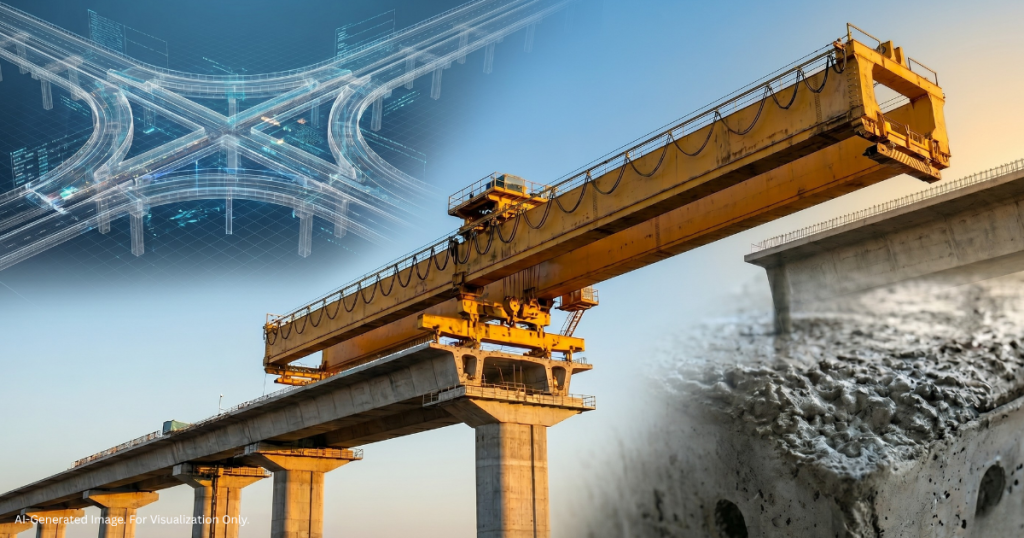
1. Building Information Modeling (BIM): The End of Onsite Surprises
Historically, “clashes”—where a bridge support might unexpectedly intersect with an underground utility line—were only discovered during excavation. In 2026, BIM has eliminated this guesswork. By creating a digital twin of the bridge before a single shovel hits the dirt, engineers can detect spatial conflicts in a virtual 3D environment. This real-time coordination ensures that massive steel beam alignments are precise to the millimeter, protecting the structural integrity of the entire span from the very first day of assembly (DPWH, 2026).
2. Automated Launching Girders: The Rapid Assembly Line
On projects like the Bataan-Cavite Interlink Bridge (BCIB), the sight of massive overhead cranes “walking” across piers has become common. These automated Launching Girders allow for the rapid placement of pre-cast concrete segments. Unlike traditional scaffolding that requires extensive ground prep and manual lifting, these gantries launch themselves forward, transporting and positioning segments with robotic precision (NRS Bridge Construction, 2026). This tool is pivotal for meeting aggressive dry season deadlines, where every day of sun is a day for assembly.
3. IoT-Enabled Concrete Sensors: The Pulse of the Structure
Concrete curing in the high-humidity environment of the Philippines is notoriously difficult to predict. Today, “Smart Concrete” is a reality. By embedding IoT sensors directly into the ready-mix concrete during the pour, site managers receive live data on temperature and strength gain on their mobile devices. Instead of waiting days for lab results, teams know the exact minute a slab reaches its target strength. This precision also helps contractors achieve superior concrete finishes by monitoring internal moisture levels to prevent surface scaling or cracks (Latium Technologies, 2026).
Bridging the “Efficiency Gap”
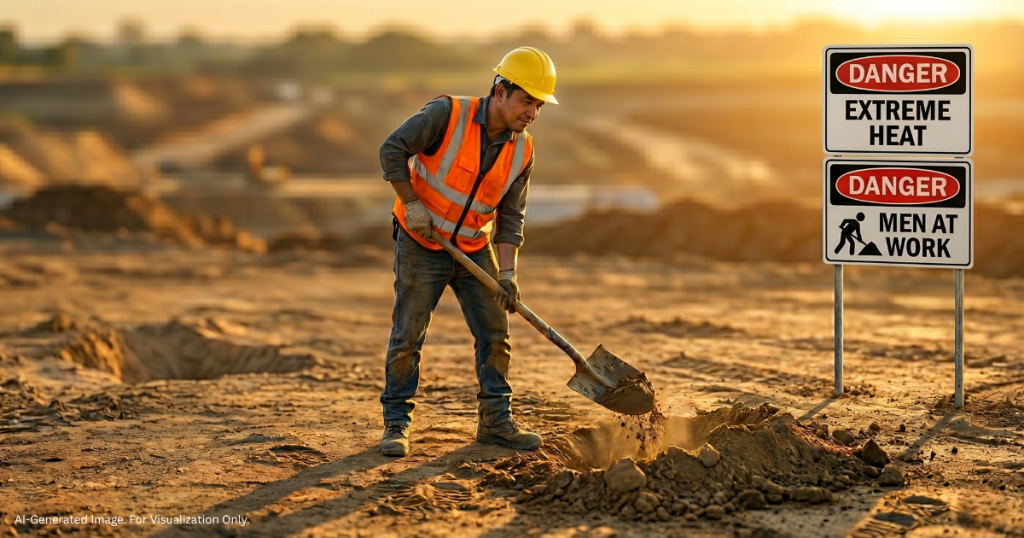
The transition to these tools isn’t just about speed; it’s about closing a structural productivity gap. In the past, construction productivity lagged behind other industries by nearly 40% (MDPI, 2026). By moving toward tech-driven assembly:
- Labor Hazards are Reduced: Fewer workers are needed in high-risk zones or at extreme heights.
- Human Error is Minimized: Automated alignments eliminate the 1-2% measurement errors that lead to structural “creep” over time.
- 24/7 Monitoring: IoT sensors provide a continuous stream of data, allowing for “Predictive Maintenance.”
Long-Term Value: The Gold Standard for Smart Bridges
While the upfront investment in Launching Girders and BIM software is significant, the long-term economic value is undeniable. “Smart Bridges” equipped with health-monitoring sensors are projected to require 30% less manual maintenance over their 50-year lifespan. Modern data-driven methods also optimize the use of raw materials, ensuring that cement and aggregates are used efficiently without wasteful over-specification.
By catching micro-cracks or vibration anomalies early, the DPWH can address repairs before they become catastrophic failures. This shift sets a new gold standard for transparency and safety in Philippine public works—moving from a culture of “repair when broken” to “preserve while performing” (PIA, 2026).
Conclusion: A Resilient Future for PH Infrastructure
The 2026 infrastructure push marks a turning point. We are no longer just building bridges; we are deploying sophisticated pieces of technology that happen to carry traffic. As these tools become the norm from Ilocos to Mindanao, the Filipino builder is evolving—from a manual laborer to a tech-savvy manager of a digital construction ecosystem.
In the race between the blueprint and the beam, technology has finally given us the lead.
References
Department of Public Works and Highways. (2026). Department Orders and Issuances. Dpwh.gov.ph. https://www.dpwh.gov.ph/dpwh/references/issuances/department_order
Latium Technologies. (2026). Top 5 IoT Sensors and Solutions Construction Sites Need in 2026. Latiumtech.com. https://www.latiumtech.com/post/top-5-iot-solutions-construction-2026
MDPI. (2026). Bridging the Construction Productivity Gap—A Hierarchical Framework for the Age of Automation. Mdpi.com. https://www.mdpi.com/2075-5309/15/16/2899
NRS Bridge Construction Equipment. (2026). Launching Gantry (LG) System for Precast Segmental Bridges. Nrsas.com. https://www.nrsas.com/launching-gantries/
Philippine Information Agency (PIA). (2026). DPWH pushes transparent infrastructure spending under 2026 budget. Pia.gov.ph. https://pia.gov.ph/news/dpwh-pushes-transparent-infrastructure-spending-under-2026-budget/








 Facebook
 Instagram
 Linkedin
 Twitter
 Youtube
