
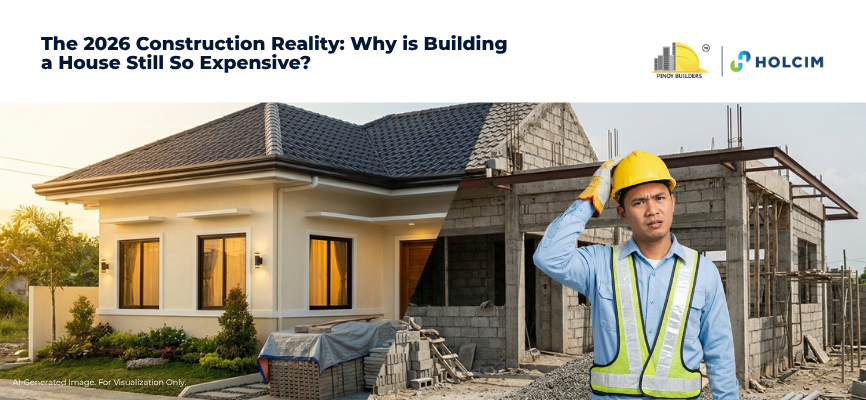
The Then vs. Now Gap: The Death of the ₱1M Budget
In 2019, a budget of ₱1.0 million was a viable entry point for a Filipino family to build a decent, 50-square-meter bungalow with mid-range finishes. Fast forward to 2026, and that same amount barely covers the shell phase, rough concrete, basic plumbing, and structural steel, leaving the dream of a finished home out of reach for many.
The question “Bakit ang mahal pa rin magpagawa?” (Why is it still so expensive?) echoes across hardware stores and social media. While the global supply chain has stabilized since the pandemic, a combination of local inflation, labor shortages, and rising regulatory fees has created a new normal for construction costs that continues to surprise homeowners.
Key Takeaways
- Material Volatility: Cement and steel prices remain elevated due to global energy costs and local DTI SRP adjustments.
- Economic Impact: High construction costs are slowing residential development and shifting the market toward smaller, vertical living spaces.
- Labor Crisis: Regional wage increases and a shortage of TESDA-certified workers have pushed daily rates significantly higher.
- Common Mistakes in Construction: Cost-cutting measures often lead to structural shortcuts that result in double costs later.
- Strategic Planning: Modern builds require a 20% contingency buffer to account for mid-project material price spikes.
1. The Price of Raw Materials and Their Broad Economic Impact
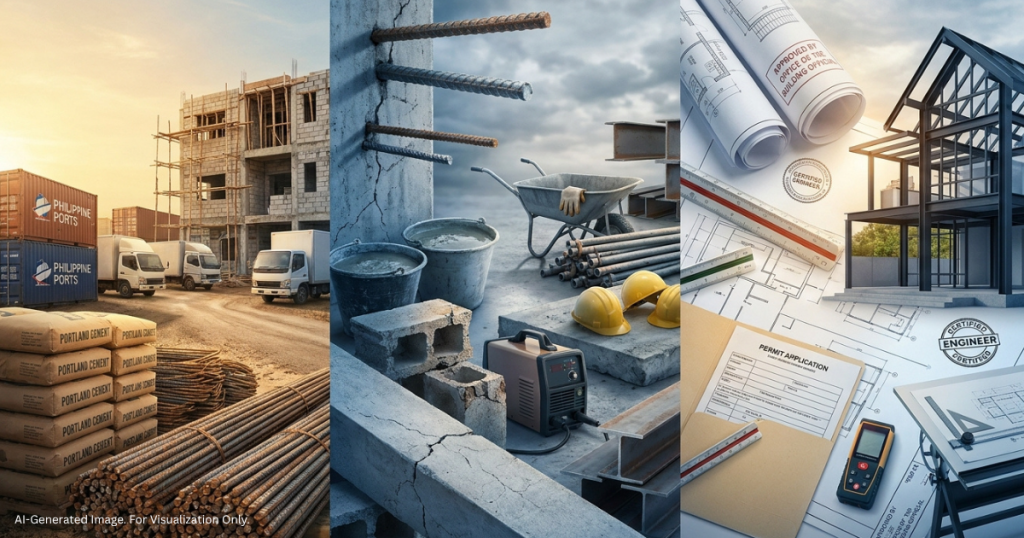
The bones of a Philippine home rely heavily on portland cement and deformed steel bars. While the supply chain frenzy has passed, prices remain at a high plateau. The Department of Trade and Industry (DTI) continues to monitor the Suggested Retail Price (SRP) of basic construction materials, noting that logistics costs in the archipelago keep regional prices volatile (DTI, 2024).
The economic impact of these high prices extends beyond the individual homeowner. As raw materials become more expensive, developers are forced to increase unit prices, making affordable housing increasingly difficult to achieve. This is further exacerbated by the government’s ₱1.18 trillion infrastructure push, which consumes a vast majority of the local supply (PIA, 2026). When the state competes for the same concrete and steel as residential builders, retail prices for homeowners rarely drop, even when global markets cool.
2. High Costs and Common Mistakes in Construction
One of the most dangerous side effects of the current pricing climate is the rise of common mistakes in construction. In an attempt to stay within 2019-era budgets, many homeowners and colorum contractors take ill-advised shortcuts, such as:
- Sub-standard Rebar Sizing: Using 10mm bars where 12mm is specified.
- Stretching Cement Ratios: Weakening the concrete mix to save on bag counts, compromising the structural integrity.
- Skipping Soil Tests: Avoiding the ₱20,000–₱40,000 fee for geotechnical reports, which leads to foundation settling in soft soil areas like Pasig or Muntinlupa.
These errors are often hidden until the first major earthquake or typhoon hits, at which point the repair costs far exceed the initial savings.
3. The Labor Shortage: Skill vs. Scarcity
Perhaps the most overlooked factor is the Brain Drain in the construction sector. As many experienced Filipino foremen move to the Middle East, local daily rates have shifted. According to the National Wages and Productivity Commission (NWPC), recent regional wage orders have increased the baseline for labor, but the scarcity of specialized skills (like steel beam installation) has pushed actual market rates even higher (DOLE-NWPC, 2024).
In 2019, a skilled mason in Metro Manila might accept ₱600–₱700 per day; in 2026, that rate has climbed to ₱900–₱1,100, assuming you can find one available during the peak Golden Window of the dry season.
4. The Regulatory Squeeze and Professional Oversight
In 2026, the National Building Code (PD 1096) will be enforced with greater technological scrutiny. While this ensures structural engineering standards are met, it introduces professional fees that were often bypassed in older builds. Plans must now be signed and sealed by licensed Civil Engineers and Architects to be eligible for LGU permits, a process that ensures the safety of the structure but adds an upfront cost of ₱50,000 to ₱150,000 depending on the project’s scale (DPWH, 2026).
Conclusion: How to Build Smarter in 2026
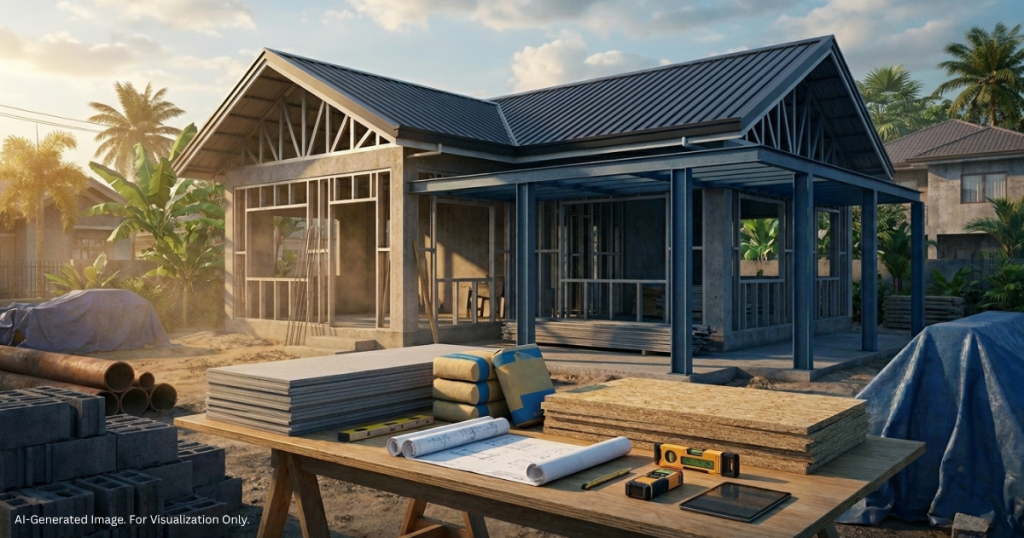
The reality is that construction costs are unlikely to return to pre-2020 levels. To succeed, modern homeowners must move away from estimates and toward precise, data-driven budgeting.
- Phased Building: Focus on a livable shell first to ensure the structural engineering is perfect.
- Material Selection: Opt for moisture-resistant fiber cement boards for ceilings to reduce long-term maintenance.
- Avoid Shortcuts: Investing in quality raw materials and licensed professionals is the only way to avoid the common mistakes in construction that lead to financial ruin.
References
BusinessWorld Online. (2026). Metro Manila wholesale building materials price growth hits two-year high in March. Bworldonline.com. https://www.bworldonline.com/economy/2026/04/15/743198/metro-manila-wholesale-building-materials-price-growth-hits-two-year-high-in-march/
Department of Public Works and Highways. (2026). Department Orders and Issuances on Material and Building Standards. Dpwh.gov.ph. https://www.dpwh.gov.ph/dpwh/references/issuances/department_order
Department of Trade and Industry (DTI). (2024). Price Monitoring of Construction Materials. Dti.gov.ph. https://www.dti.gov.ph/resources/price-monitoring/
DOLE – National Wages and Productivity Commission (NWPC). (2024). Summary of Current Regional Daily Minimum Wage Rates. Nwpc.dole.gov.ph. https://nwpc.dole.gov.ph/stats/current-real-minimum-wage-rates/
Philippine Information Agency (PIA). (2026). DPWH pushes transparent infrastructure spending under 2026 budget. Pia.gov.ph. https://pia.gov.ph/news/dpwh-pushes-transparent-infrastructure-spending-under-2026-budget/







 Facebook
 Instagram
 Linkedin
 Twitter
 Youtube
