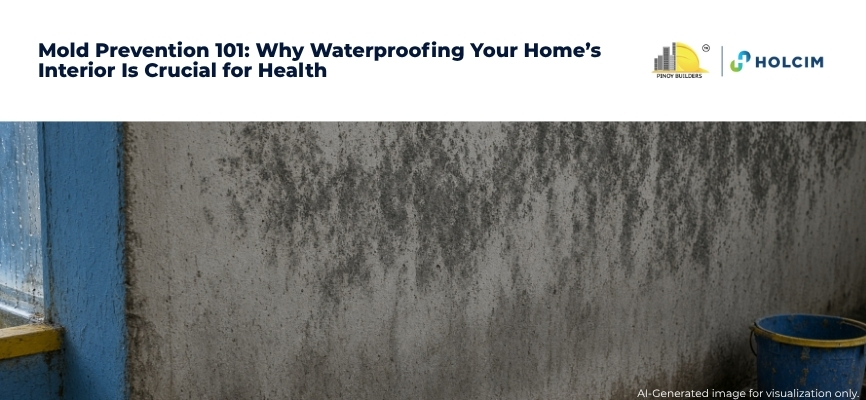
In the Philippines, moisture is something every homeowner has to deal with. Our tropical climate brings high humidity and abundant rainfall, creating ideal conditions for mold when water finds its way into the home. PAGASA reports that average monthly relative humidity in the country can range from 71% to 85%, while annual rainfall can reach more than 4,000 millimeters in some areas (DOST-PAGASA, n.d.). This makes proper home waterproofing more than a way to protect walls, it is also an important part of maintaining a healthier indoor environment.
Key Takeaways
- Persistent moisture creates favorable conditions for mold growth.
- Bathrooms, under-sink cabinets, and damp walls are common problem areas.
- Mold allergies and respiratory problems can be associated with damp, moldy environments.
- Waterproofing should address the source of moisture instead of simply covering mold on walls.
- The right waterproofing system, ventilation, and construction materials work together to prevent moisture problems.
Why Mold Thrives in Philippine Homes
Mold needs moisture to grow, and Philippine homes regularly face plenty of it.
The country’s warm temperatures, high humidity, and heavy rainfall can make it difficult for interior spaces to dry completely. During the rainy season, water can enter through cracks, poorly protected walls, roofs, or plumbing. Meanwhile, everyday activities such as bathing and cooking add even more moisture indoors (DOST-PAGASA, n.d.).
When that moisture stays trapped, mold can follow.
The World Health Organization (WHO) has associated persistent dampness and indoor microbial growth with respiratory symptoms, allergies, and asthma (WHO, 2009). The Philippine Department of Health also identifies molds as potential asthma triggers (Department of Health–Regional Medical Center, n.d.).
Where Mold Commonly Starts
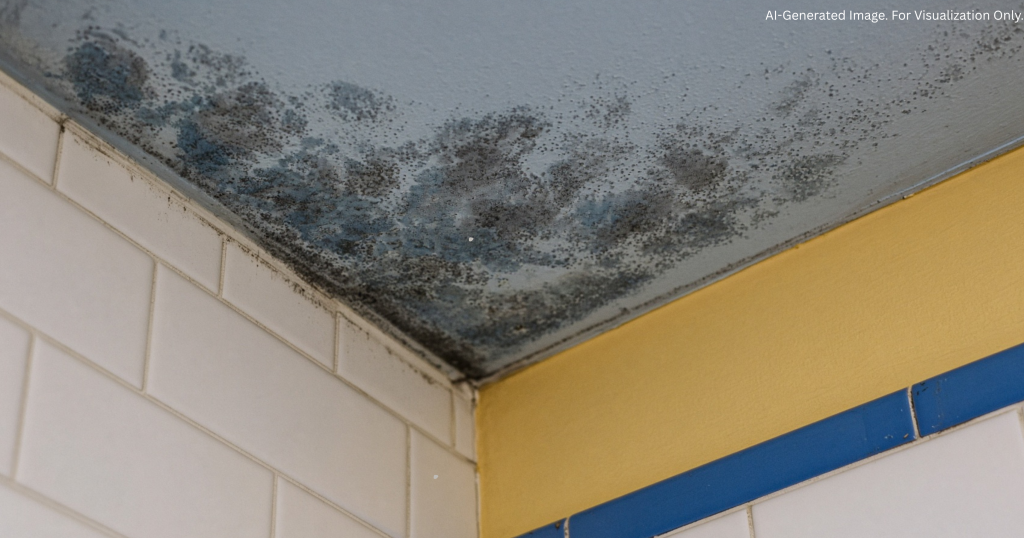
Bathroom Mold
Bathrooms are naturally vulnerable because they regularly experience water and steam. Without adequate ventilation and waterproofing, moisture can remain on walls, ceilings, and other surfaces.
This is where bathroom mold often appears, particularly around corners, grout lines, ceilings, and areas with recurring water exposure.
Under-Sink Cabinets
A small plumbing leak can easily go unnoticed beneath a sink. Because cabinets have limited airflow, damp materials may remain wet long enough for mold to develop.
Regularly checking pipes, fittings, and cabinet interiors can help catch these problems before they spread.
Walls and Corners
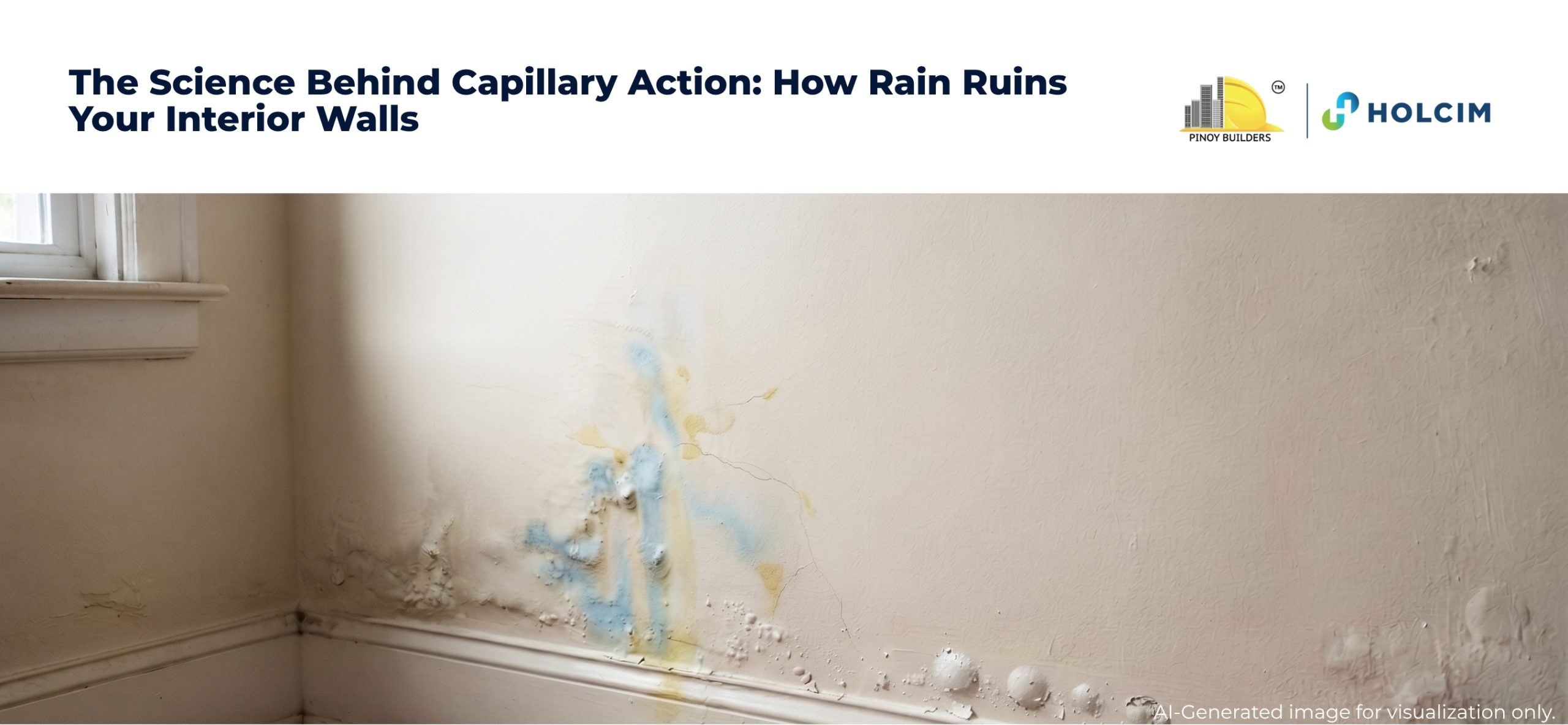
Mold on walls does not always mean there is a visible leak. Moisture may be entering from outside, coming from plumbing, or forming through condensation on walls when warm, humid air meets a cooler surface.
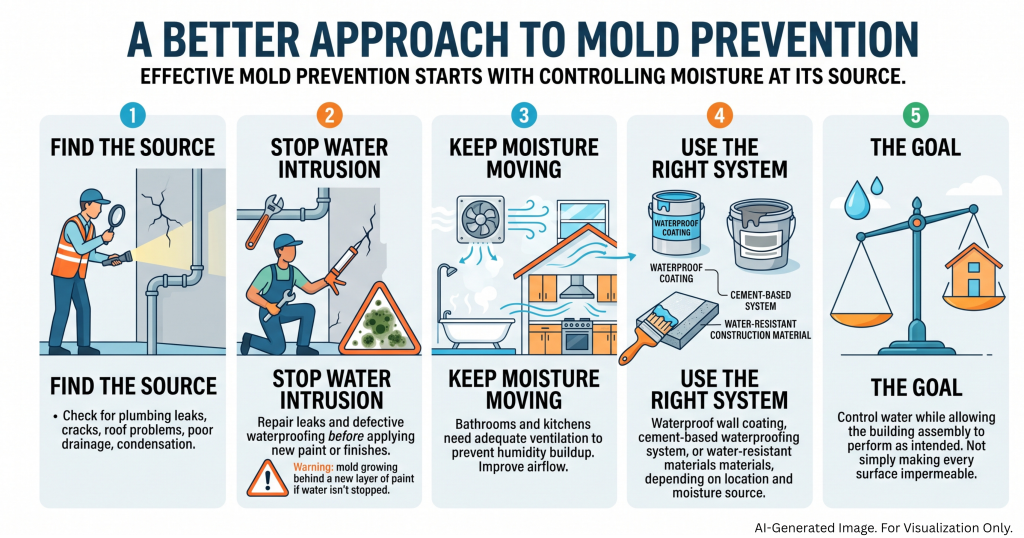
Finding the source is important because simply repainting the affected area may only hide the problem temporarily.
Is Mold Dangerous?
It can be, especially for people who are sensitive to mold or already have respiratory conditions.
Exposure to damp and moldy indoor environments has been associated with respiratory symptoms, allergies, and asthma (WHO, 2009). The Philippine Department of Health likewise notes molds among environmental factors that can trigger asthma attacks (Department of Health–Regional Medical Center, n.d.).
However, homeowners should also be careful with the term “toxic mold symptoms.” Not every symptom attributed online to “toxic mold” has been scientifically established as being caused by mold. The clearer concern is that prolonged exposure to damp, moldy environments can contribute to allergic and respiratory problems.
The better approach is therefore straightforward: if mold keeps returning, find the moisture source.
Waterproofing Is More Than Painting Over Mold
Using anti mold paint may help protect a properly prepared surface, but it should not be treated as a replacement for waterproofing.
If water continues to seep through a wall, leak from plumbing, or accumulate because of poor ventilation, the mold problem can return.
This is why waterproofing should be considered as early as the construction or renovation stage.
The DPWH Standard Specification for Item 1016 is a set of technical requirements issued by the Department of Public Works and Highways (DPWH) that outlines the materials, application methods, and quality standards for waterproofing works in construction projects. The specification, for example, includes cement-based waterproofing coatings for concrete and masonry surfaces exposed to water. It also recognizes waterproofing systems for interior below-grade walls where water pressure is present (Department of Public Works and Highways [DPWH], 2017).
Choosing the Right Moisture Barrier
Not every moisture problem requires the same solution.
Breathable vs. Impermeable
Breathable or vapor-permeable materials allow some water vapor to move through a wall assembly, which can be useful when controlled drying is necessary.
Impermeable or highly water-resistant coatings, on the other hand, provide stronger resistance to liquid water and can be appropriate for surfaces exposed to direct moisture.
The important thing is to understand where the water is coming from and how the wall needs to dry. A coating should be selected according to the application rather than simply choosing the most waterproof product available.
Building Water Resistance Into the Wall
Water protection can also begin with the materials used during construction.
One example is Holcim Aqua X, a water-repellent cement from Holcim Philippines. According to Holcim, its active water-repellent boosters help reduce water absorption and protect concrete and mortar against moisture-related damage such as seepage and leakage (Holcim Philippines, n.d.). (Holcim Philippines)
This is different from an interior waterproof wall coating: Aqua X is a cement product intended to build water resistance into concrete and mortar rather than simply coating an existing finished wall. Used appropriately as part of a larger waterproofing strategy, materials like these can help address moisture before it becomes an interior problem.
Conclusion
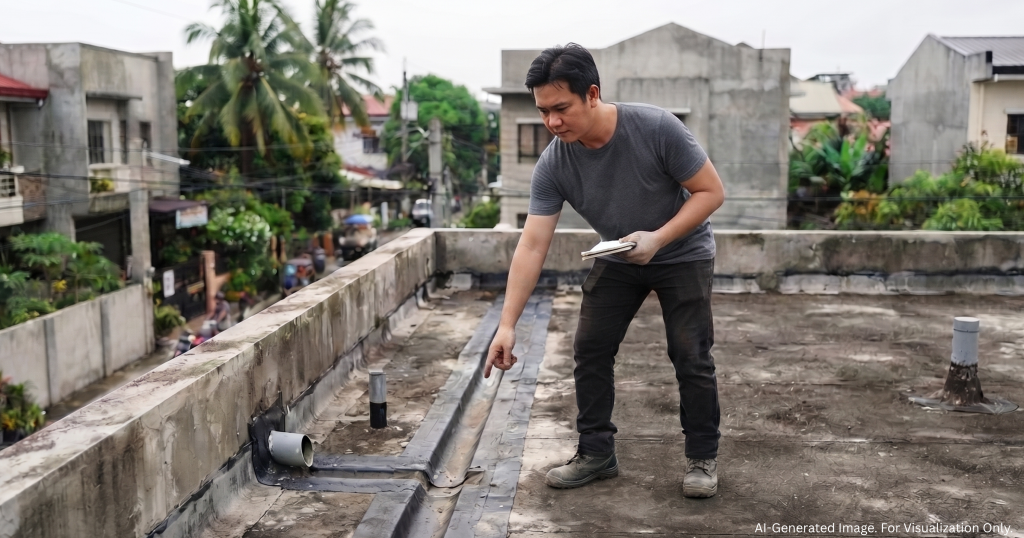
In the Philippines, keeping a home dry is a constant battle against rain, humidity, leaks, and condensation. When moisture is left unchecked, the result can be more than peeling paint or unsightly stains, it can create conditions where mold thrives.
Proper waterproofing helps address the problem before it reaches the interior. Combined with good ventilation, regular maintenance, and appropriate construction materials, it can reduce the conditions that allow mold to develop.
Because protecting a home from moisture is not only about keeping walls looking good. It is about building a space that stays dry, durable, and healthier for the family.
References
Department of Health–Regional Medical Center. (n.d.). Ang init!!! Ang… hika!!!
Department of Public Works and Highways. (2017). Amendment to DPWH standard specification for Item 1016, Waterproofing (Department Order No. 110, s. 2017). (Department of Public Works and Highways)
DOST–Philippine Atmospheric, Geophysical and Astronomical Services Administration. (n.d.). Climate of the Philippines. (PAGASA)
Holcim Philippines. (n.d.). Holcim Aqua X. (Holcim Philippines)
World Health Organization. (2009). WHO guidelines for indoor air quality: Dampness and mould. WHO Regional Office for Europe.

 Facebook
 Instagram
 Linkedin
 Twitter
 Youtube
