
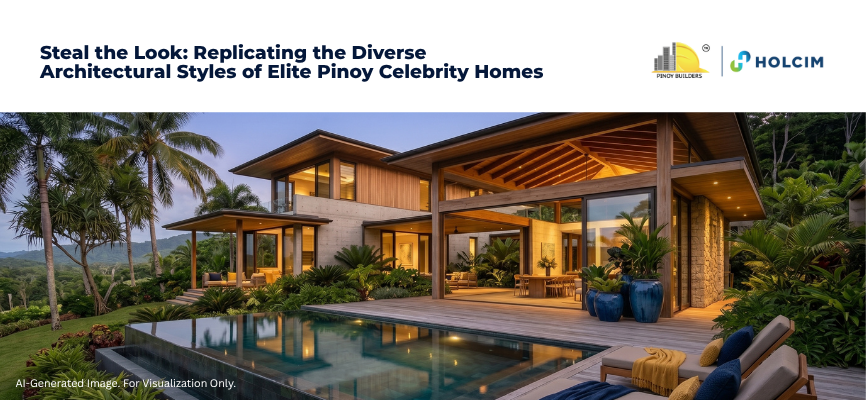
The Rise of Diverse Celebrity Real Estate Investments
If you have been scrolling through social media lately, you have likely noticed that some Pinoy celebrities are investing heavily in real estate. Rather than sticking to standard suburban developments, local icons are building customized, breathtaking escape homes across the provinces of Batangas, Cavite, Rizal, and Cebu.
However, a close look at these viral properties reveals that their design choices are incredibly diverse. There is no single “modern-tropical” template that fits them all. Some celebrities lean toward rustic, organic luxury, others prefer sleek, high-tech industrialism, and some champion airy, family-centric Mediterranean layouts.
While these beautiful sanctuaries might look like they require an endless budget, the core principles behind them are highly adaptable and firmly rooted in practical environmental science. By decoding the distinct design styles of these elite properties, everyday DIY builders can explore how to cost-effectively replicate their premium aesthetics, proving that true luxury is not a one-size-fits-all formula.
Key Takeaways
- Diverse Aesthetic Portfolios: Pinoy celebrities are investing in highly customized architectural styles, showcasing distinct personal tastes from rustic minimalism to smart contemporary industrialism.
- Universal Engineering Physics: Regardless of whether a home is rustic, industrial, or tropical, the fundamental principles of passive cooling and structural insulation remain identical.
- Cost-Effective Design Strategies: Everyday builders can achieve a premium look by using smart glazing layouts and natural ventilation instead of relying on expensive mechanical systems.
- The Structural Skeleton First: The ultimate rule of elite builds is dedicating the bulk of the budget to high-performance foundations, waterproofing, and framing before investing in luxury finishes.
1. Decoding the Design DNA: Three Distinct Celebrity Real Estate Styles
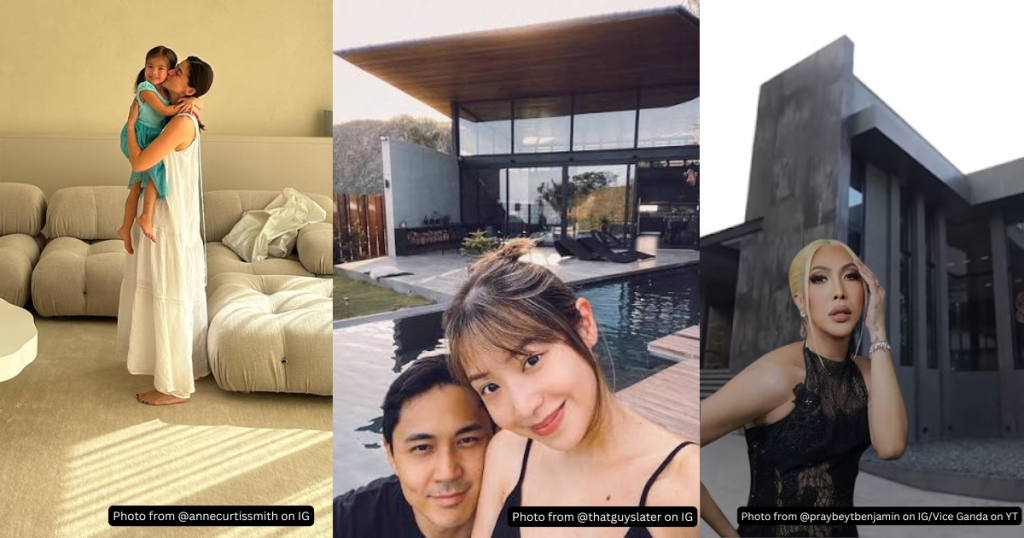
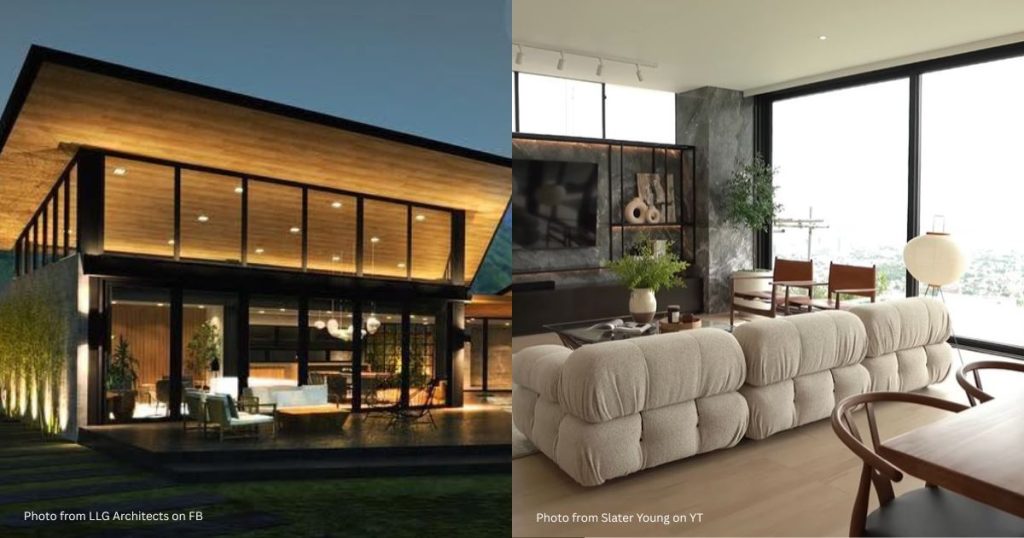
To replicate these looks without breaking the bank, we must first understand that luxury can be achieved through multiple architectural lenses. When analyzing these viral celebrity homes, three very different design philosophies stand out (Lico, 2024):
The Organic, Rustic Luxury of Anne Curtis
Anne Curtis’s design style often favors understated, organic elegance. Leaning heavily toward rustic, natural textures, this aesthetic blends clean architectural lines with raw elements like exposed stone, distressed wood, and neutral, earthy color palettes. In a provincial setting, this rustic approach allows the natural landscape to take center stage, creating a warm, grounded sanctuary.
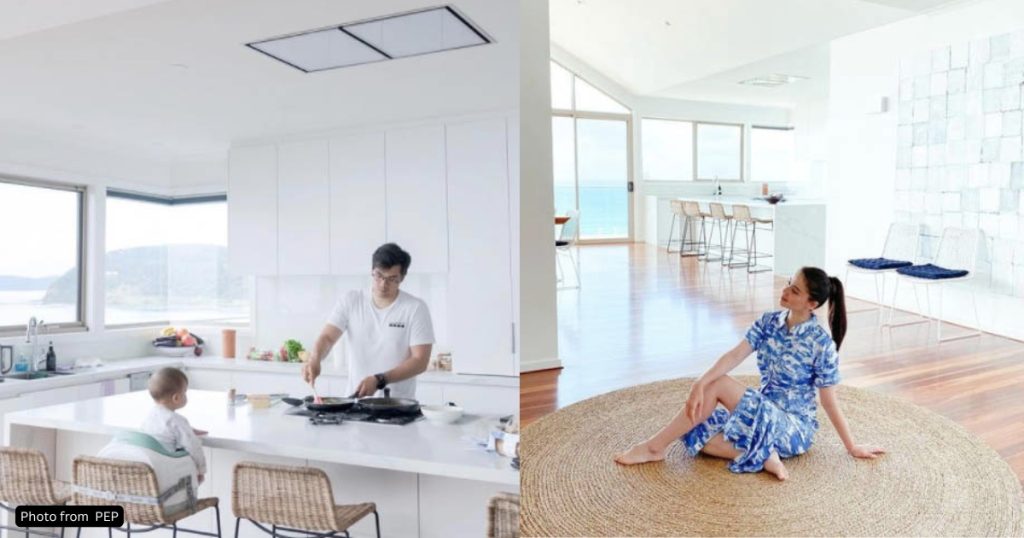
The Smart Contemporary Industrialism of Vice Ganda
At the opposite end of the design spectrum is the ultra-modern, high-tech industrial style championed by Vice Ganda. This aesthetic relies on sleek steel framing, polished concrete finishes, and massive glass panels. What elevates this style to elite standards is the integration of smart-home automation, including automated climate controls, intelligent lighting, and motorized shading systems that work together to maintain comfort.
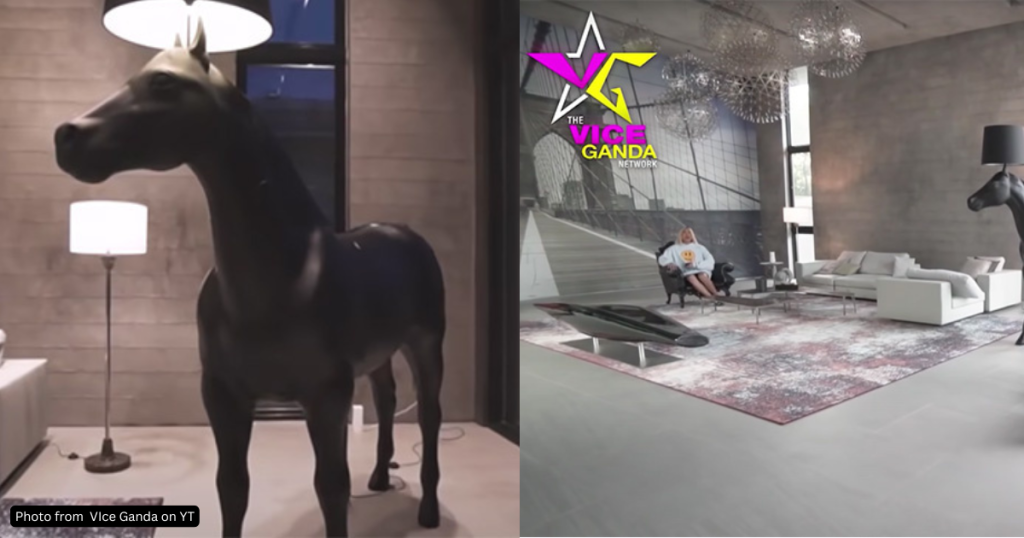
The Mediterranean-Tropical Family Build of Kryz Uy
Known for documenting her family-building journey, Kryz Uy’s property showcases a bright, breezy Mediterranean-tropical aesthetic. This style focuses heavily on open-concept layout plans, curved archways, light plaster finishes, and indoor-outdoor living spaces. It is designed to be highly functional for a growing family, maximizing community spaces while maintaining a highly relaxed, resort-like atmosphere.
2. Cost-Effective Replication: Nature Does the Heavy Lifting
You do not need a celebrity bank account to capture the essence of these premium properties. The secret to sustainable home design is letting natural physics do the heavy lifting. Regardless of whether you choose a rustic, industrial, or Mediterranean look, you can maintain comfortable indoor temperatures naturally (Department of Public Works and Highways [DPWH], 2026):
Mastering Passive Cooling Design
Everyday DIY builders can replicate these premium aesthetics through highly efficient passive cooling layouts. This involves incorporating high ceilings, strategic cross-ventilation corridors, and generous roof overhangs. These features shield the home from the harsh midday sun while allowing cool breezes to flush out trapped heat, reducing your reliance on expensive air conditioning.
Strategic Expansive Glass Orientations
Massive windows that blur the line between indoor and outdoor living are a staple of elite celebrity homes. However, if placed incorrectly, glass acts like a greenhouse, trapping heat inside. To replicate this look safely, implement smart glass orientations by directing your largest glass panels toward the north or south. This maximizes natural ambient light while minimizing direct, heat-inducing glare from the east and west.
3. Site Harmony: Smart Placements and Local Materials
Before laying a single brick, it is vital to study your building lot. Truly sustainable homes are designed to work with the land, not against it.
Smart Structural Placements
This requires placing your structure in a way that takes full advantage of prevailing local wind paths, such as the Amihan (northeast monsoon) and Habagat (southwest monsoon). It also means preserving existing mature trees on your lot to provide free, natural shade, which reduces the thermal load on your exterior walls (Philippine Green Building Council [PHILGBC], 2025).
Utilizing Local Building Materials
Achieving a luxury look for less comes down to smart material selection. Integrating locally sourced, eco-friendly materials is both cost-effective and authentic. Consider utilizing treated bamboo, locally sourced reclaimed wood, or modern concrete finishes that mimic natural, organic textures. These materials add deep, visual warmth to any architectural style and align perfectly with national green building performance standards.
4. The Golden Rule: Budgeting for the Bones First
When managing your own build, it is incredibly tempting to blow your budget on the beautiful surface details you see online, such as designer tiles, statement lighting, or high-end bathroom fixtures.
However, experienced builders and structural engineers all agree on one critical rule: you must prioritize your budget on solid foundation bones first. The most crucial lesson to take away from elite builds is that while high-end interior finishes can wait, structural resilience cannot.
Investing in high-quality structural steel, proper waterproofing, robust roofing systems, and excellent insulation is non-negotiable. This is especially true when executing building projects in the Philippines, as the local climate is highly prone to heavy rains, intense humidity, and severe typhoons (DPWH, 2026). Build a resilient, weatherproof shell first. You can always upgrade your countertops and lighting fixtures later when your budget replenishes, but fixing a compromised foundation will cost you a fortune.
Conclusion: Building Your Personal Sanctuary
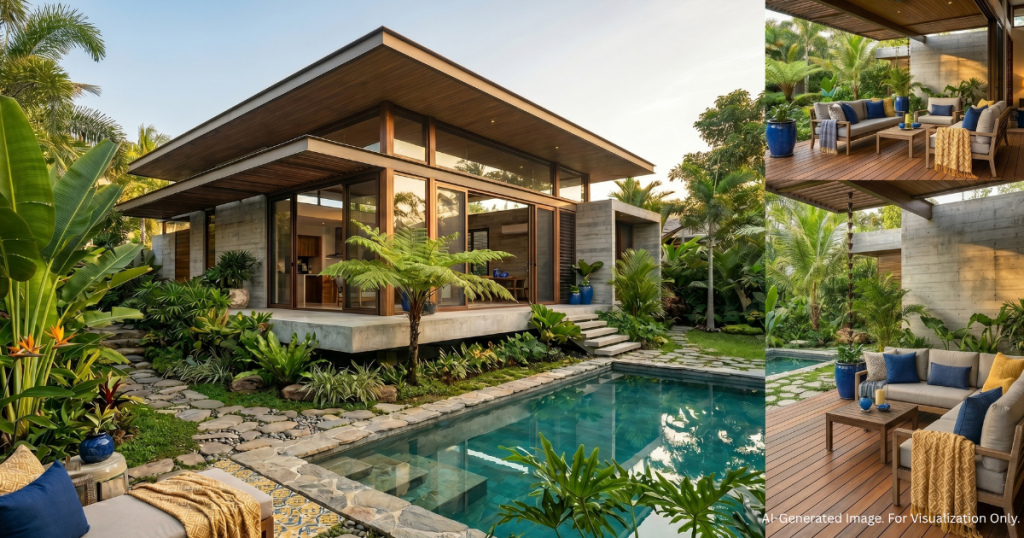
By focusing on smart spatial planning, embracing natural light, and prioritizing structural integrity, any DIY builder can successfully capture the premium feel of a celebrity escape. True luxury is not defined by the price tag of your finishing touches, but by how intelligently, sustainably, and safely your home integrates with its surrounding environment.
References
Department of Public Works and Highways (DPWH). (2026). The Philippine green building code: Standards for energy efficiency, site sustainability, and passive cooling. DPWH Portal. https://www.dpwh.gov.ph/dpwh/references/laws_codes_orders
Lico, G. (2024). Tropical architecture and vernacular design strategies: Adapting traditional passive cooling for modern environments. Journal of Southeast Asian Sustainable Architecture. https://www.academia.edu/31112889/TROPICAL_DESIGN_THEORIES
Philippine Green Building Council (PHILGBC). (2025). BERDE green building rating system: Certification guidelines for ecologically responsive design. PHILGBC Publications. https://www.philgbc.net/certification




 Facebook
 Instagram
 Linkedin
 Twitter
 Youtube
