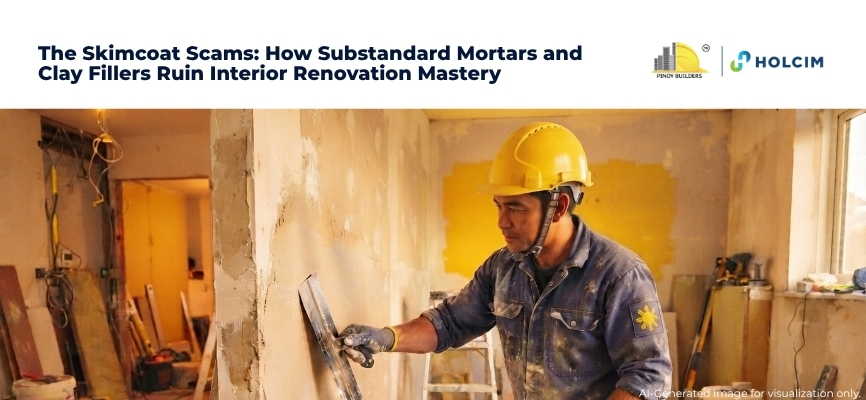
Interior renovations in the Philippines are booming, with modern homeowners striving for the flawless, minimalist aesthetic of perfectly smooth concrete walls. However, beneath the pristine surface of many newly renovated homes lies a hidden, costly danger. Some contractors may substitute lower-quality finishing materials or alter recommended mix proportions to reduce costs or shorten project timelines. While these practices may not immediately affect a building’s structural framework, they can reduce the durability, appearance, and service life of interior wall finishes. These shortcuts can lead to premature cracking, poor paint adhesion, and recurring maintenance issues that increase long-term repair costs. By understanding how material selection affects wall performance and by verifying that renovation work follows applicable building standards and manufacturer recommendations, homeowners can better protect their investment from premature deterioration in the Philippine climate.
Key Takeaways:
- Avoid Material Substitutions: Some renovation projects substitute lower-cost fillers or improperly mixed materials in place of cement-based finishing products, increasing the risk of poor adhesion and premature wall finish failure.
- Climate Exposes Weaknesses: The severe humidity spikes typical of the Philippine wet season (especially around July) rapidly degrade low-grade plasters, causing chalking, skim coat cracking, and severe paint failure.
- Know Your Rights: The National Building Code of the Philippines (PD 1096) sets strict quality standards for construction materials, providing homeowners with a legal baseline to demand quality.
- Invest in Quality over “Pakyaw” Shortcuts: Avoid labor-only “pakyaw” agreements that incentivize material scrounging; instead, insist on certified, pre-blended polymer-modified mortar systems for lasting safety and mastery.
The Dangerous Reality of Philippine Jobsite Practices
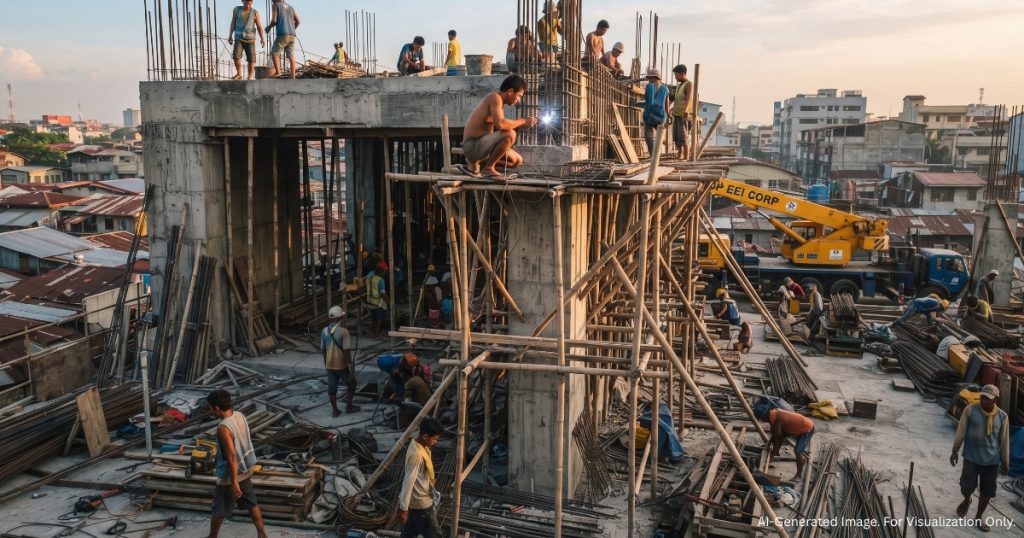
Achieving a perfectly plumb and smooth concrete wall requires skill, time, and high-quality materials. Unfortunately, the local construction scene is rife with hidden shortcuts that compromise the final output long before the first coat of primer is applied.
Exposing the Allure of Cheap Fillers
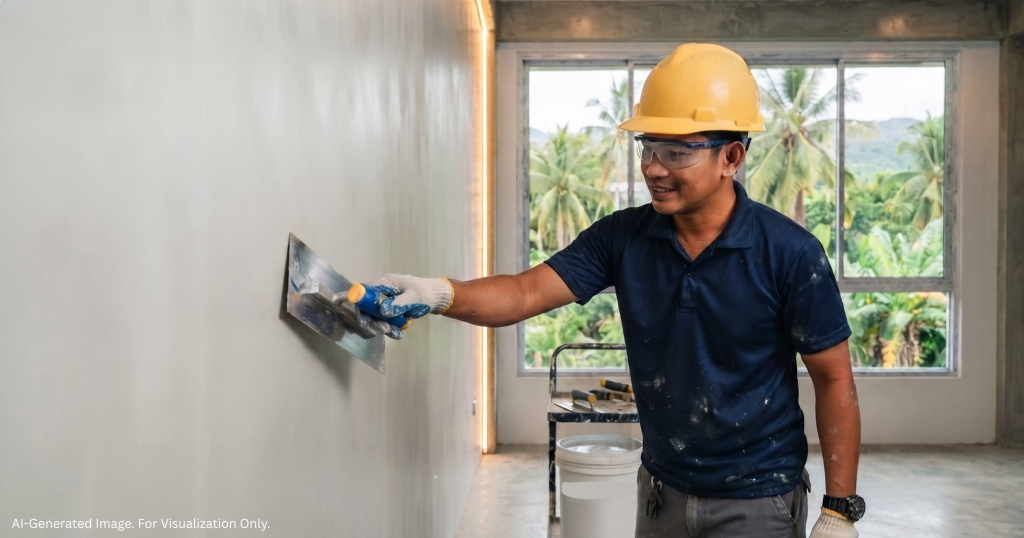
A pervasive and dangerous jobsite practice involves using cheap, non-cementitious clay fillers or heavily over-sanded mixtures to smooth out uneven interior concrete walls. In a bid to increase profit margins, some workers substitute true cementitious products with a basic joint compound or standard acrylic wall putty. While these materials are suitable for lightweight drywall skim coating or minor wood repairs, they lack the chemical properties required to bond effectively with bare, porous concrete (Fajardo, 2000). Furthermore, laborers often mix raw cement with excess, unwashed sand, an over-sanded mixture that completely dilutes the binding agents, resulting in a fragile, sandy layer that merely sits on the wall rather than chemically bonding to it.
Structural Consequences in the Tropical Climate
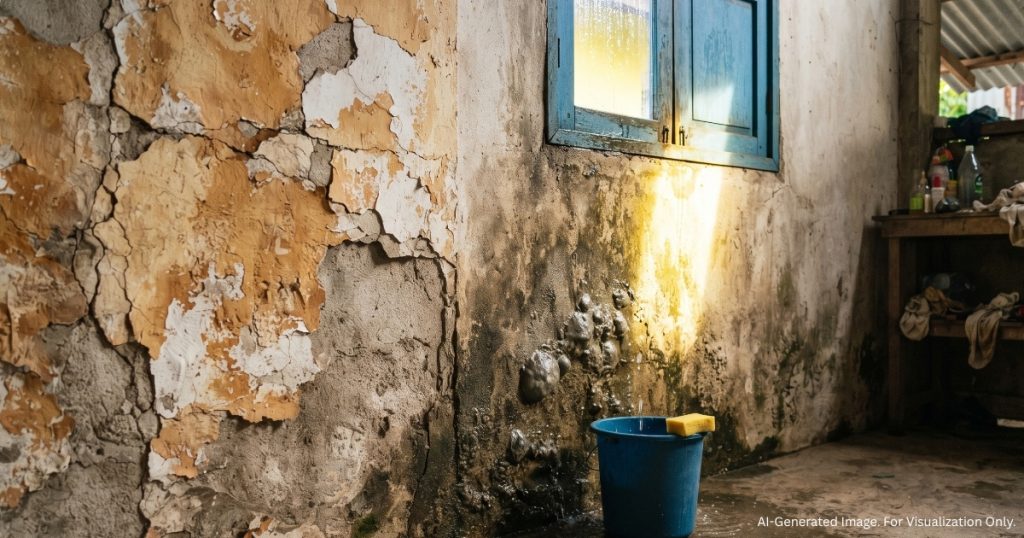
The true test of an interior wall finish in the Philippines is its ability to withstand the country’s extreme tropical weather. The transition from the scorching dry season to the torrential wet season exposes the devastating flaws of substandard wall preparation.
The July Humidity Spike
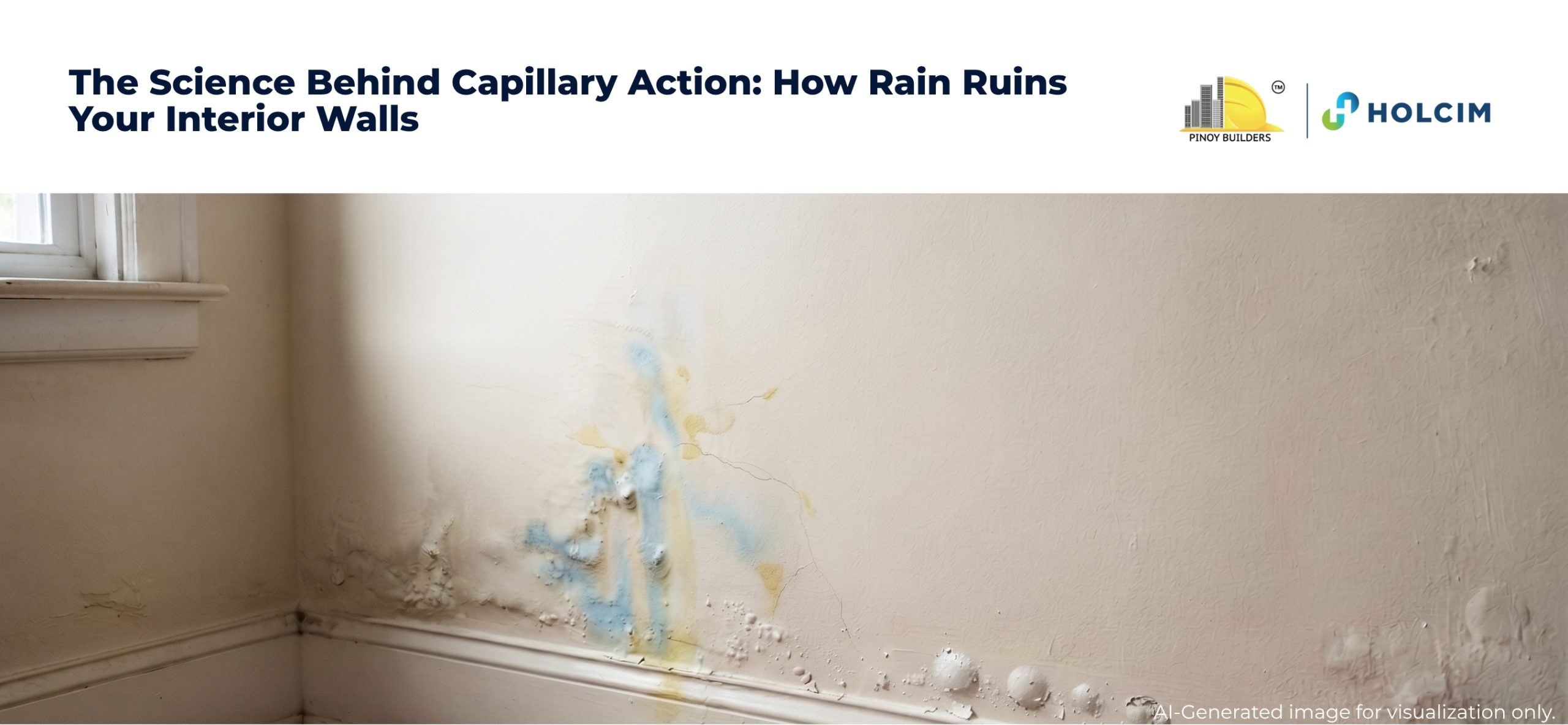
The Philippine climate is unforgiving to low-grade building materials. According to the Philippine Atmospheric, Geophysical and Astronomical Services Administration (DOST-PAGASA, 2023), the onset of the southwest monsoon (Habagat) brings a drastic spike in humidity levels, peaking around July. When unqualified skim coat powder or clay-based fillers are subjected to this intense moisture, they act like sponges. The immediate structural consequences include rapid surface chalking, where the wall literally turns to dust upon contact. As the trapped moisture attempts to escape during minor temperature fluctuations, it causes extensive skim coat cracking. Ultimately, this loss of adhesion leads to catastrophic and widespread flaking wall paint, turning a newly renovated interior into an eyesore within months.
Consumer Protection and Philippine Building Standards
Homeowners are not without defense against these predatory contractor practices. The Philippine government has established rigorous standards to ensure the safety, durability, and quality of built environments.
The National Building Code (PD 1096)
The National Building Code of the Philippines, or Presidential Decree No. 1096 (Republic of the Philippines, 1977), was enacted to safeguard life, health, property, and public welfare. Chapter 7 of the Code, alongside its implementing rules and regulations, details strict quality criteria for construction materials, including the required adhesive strength and durability of masonry and plasters. Under these regulations, the materials used for a building’s interior finish, such as a proper finishing mortar, must meet minimum standard specifications to ensure they do not pose a hazard or degrade prematurely. By understanding that PD 1096 sets a legal baseline for quality, consumers can hold their contractors accountable and demand materials that pass local engineering standards.
Establishing the Ultimate Homeowner Safety Baseline
True interior renovation mastery requires a proactive approach from the homeowner. Ensuring a long-lasting, flawless finish means moving away from traditional, risky contracting habits and embracing modern material science.
Beware the “Pakyaw” Pitfalls
The local “pakyaw” system, where labor is contracted for a lump sum, often leaving the workers to procure secondary materials, is a primary breeding ground for these scams. When workers are incentivized to finish quickly and cheaply, they will inevitably reach for substandard clay fillers to artificially speed up the curing process. Reinforcing the ultimate homeowner safety baseline requires strict avoidance of these “pakyaw” shortcuts that compromise chemical bonds. Homeowners must maintain control over material procurement or demand complete transparency in the bill of materials.
The Polymer-Modified Solution
To guarantee safety and durability, the baseline must be set at the use of certified, pre-blended polymer-modified mortar systems. Unlike raw cement or cheap putties, these advanced systems contain engineered polymers that flex with temperature changes and resist moisture penetration (Salvan, 1986). By insisting on these specific materials, homeowners ensure a profound chemical bond with the concrete substrate, entirely eliminating the risks of chalking, cracking, and peeling, regardless of the July rains.
Conclusion
Achieving a flawless and durable interior wall in the Philippines is more than just an aesthetic pursuit; it is a structural necessity heavily influenced by our unforgiving tropical climate. While Dishonest contractors may push for quick, cheap fixes using inappropriate clay fillers or over-sanded mixtures, homeowners hold the ultimate power to dictate quality. By understanding the severe consequences of material substitutions and recognizing the protections afforded by the National Building Code of the Philippines, consumers can actively safeguard their renovations. Ultimately, rejecting risky “pakyaw” practices in favor of certified, polymer-modified finishing systems is not merely about preventing unsightly cracking and peeling, it is an essential investment in the long-term safety, durability, and structural mastery of your home.
References
DOST-PAGASA. (2023). Climate of the Philippines. Philippine Atmospheric, Geophysical and Astronomical Services Administration. Retrieved from http://bagong.pagasa.dost.gov.ph/information/climate-philippines
Fajardo, M. B. (2000). Simplified construction estimate. 5138 Merchandising.
Republic of the Philippines. (1977). Presidential Decree No. 1096, Adopting a National Building Code of the Philippines (NBCP) thereby revising Republic Act Numbered Sixty-Five Hundred Forty-One (R.A. No. 6541). Official Gazette of the Republic of the Philippines.
Salvan, G. S. (1986). Architectural utilities 3: Lighting and acoustics (With fundamental principles of architectural materials). JMC Press.


 Facebook
 Instagram
 Linkedin
 Twitter
 Youtube
