
Seismic Activity Exposes the Vulnerabilities of Philippine Infrastructure
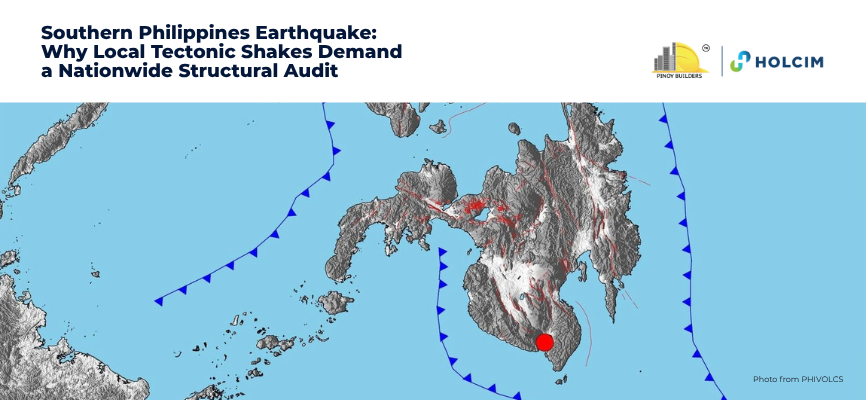
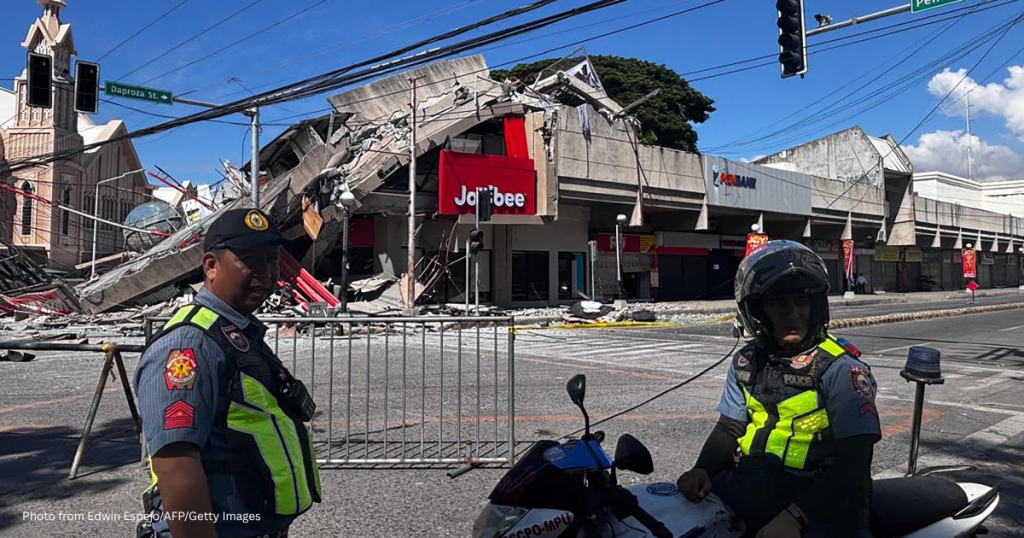
On June 8, 2026, a strong earthquake struck the southern region of the Philippines, sending shockwaves through Mindanao’s major urban centers and provinces. According to the Philippine Institute of Volcanology and Seismology (PHIVOLCS), the tectonic event prompted immediate evacuations, triggered localized power outages, and left municipal engineers racing to conduct rapid structural damage assessments of schools, hospitals, and high-rise developments.
While the epicenter was located in the south, this event has triggered immediate concern across the entire country. From the high-density skylines of Metro Manila to the historical heritage structures of the Visayas, real estate developers, contractors, and homeowners are facing a critical reality.
In the Philippines, an archipelago positioned along the volatile Pacific Ring of Fire, earthquakes are an inevitable geological reality. Seismologists warn that active fault systems stretch across Luzon, Visayas, and Mindanao. Because of this, today’s event serves as a stark nationwide reminder: buildings do not kill people during an earthquake; poorly engineered structures do. Evaluating the structural health of our buildings is not just a regional concern; it is an immediate safety and awareness mandate for the entire country.
Key Takeaways
- A Nationwide Wake-Up Call: Today’s earthquake highlights the urgent need for proactive structural assessments across residential, commercial, and public buildings throughout the Philippines.
- Understanding Seismic Movement: Earthquakes shake structures horizontally rather than vertically. Buildings everywhere must be engineered with ductility, the structural flexibility to bend and absorb motion without collapsing.
- Country-Wide Vulnerabilities: Common construction shortcuts, such as open ground floors, unreinforced hollow block walls, and improper steel bend detailing, compromise home safety nationwide.
- Universal Protection Standards: True building safety depends on strict code compliance, correct concrete-to-water ratios, proper steel reinforcement hooks, and working with licensed civil engineers.
1. The Science of Seismic Waves: How Earthquakes Test Our Structures
To build homes that stand strong against tectonic shifts, we must first understand how seismic waves interact with physical structures. When a fault line slips, the energy travels to the surface and moves the ground violently from side to side.
This horizontal movement is the real threat to buildings. While traditional buildings are designed to support heavy downward weight (gravity load), they are highly vulnerable to sideways forces (lateral load).
When an earthquake strikes, a building’s own weight works against it. The heavier the roof and the upper floors, the more momentum they carry when shaken side to side, putting immense stress on the supporting columns.
If a building is constructed too rigidly, it will snap under the tension. If it is built with substandard materials, it will buckle. Modern building design relies on ductility, the ability of a structure to sway and absorb energy safely before returning to its original state. Achieving this resilience is a national priority that begins with quality materials and licensed execution on every local job site.
2. Common Structural Weaknesses in Philippine Homes
Regardless of whether a house is built in Davao, Cebu, or Metro Manila, municipal engineers repeatedly identify the same structural errors following seismic events. Homeowners and local builders nationwide must keep a close eye out for these three critical weak points:
The Soft Story Hazard
A soft story occurs when a building’s ground floor features wide, open spaces, such as open-concept garage bays, retail storefronts, or open lobbies, with very few supporting walls, while the upper floors are heavy, partitioned, and dense. During a sideways shake, the flexible ground floor columns carry the brunt of the movement. Without rigid supporting structures (shear walls) to brace them, the ground level can collapse entirely, causing the upper floors to crash straight down.
Unreinforced Concrete Hollow Block (CHB) Walls
In many informal or DIY pakyaw builds across the country, perimeter walls and home partitions are built using standard concrete hollow blocks without enough steel reinforcing bars running through them. During tectonic shifts, these unreinforced walls crack in diagonal “X” shapes and can fall outward. This creates a severe hazard that can injure residents or block critical escape paths.
Incomplete Column Hook Detailing
While concrete is excellent at handling heavy compressive loads, it easily cracks under tension or twisting. This is why vertical steel rebars are placed inside columns. To hold these rebars in place during a heavy shake, they are wrapped with smaller horizontal steel loops called stirrups.
For maximum safety, the ends of these stirrups must be bent inward at a sharp 135-degree hook. If the stirrup ends are left at a simple, lazy 90-degree bend, they can easily open up under seismic stress, causing the concrete inside the column to burst outward and fail.
3. The National Homeowner’s Checklist for Seismic Safety
Building a resilient home does not have to be overly expensive or complicated. By prioritizing structural integrity over high-end finishes, you can secure your home for decades. Here is a simplified checklist that every Filipino homeowner and builder should follow:
- Insist on Strong Concrete: For structural foundations, columns, and beams, ensure the concrete mix achieves a minimum compressive strength of 3,000 psi (20.7 MPa). Avoid adding excess water on-site to make the mix easier to pour, as watery concrete dries into a weak, porous, and brittle structure.
- Verify Steel Hook Angles: Ensure that the steel stirrups wrapping around your columns are bent at a 135-degree hook angle. This small detail is what prevents the columns from bursting under sideways pressure.
- Incorporate Solid Bracing (Shear Walls): Work with an engineer to strategically place solid, reinforced concrete walls in your home’s layout. These walls act as lateral anchors, absorbing horizontal forces and limiting structural sway.
- Connect Foundations Together: If you are building on soft, sandy, or reclaimed soil, ensure your independent foundation footings are securely connected using horizontal tie-beams. This allows the foundation to move as a single, unified unit during an earthquake.
Partnering with a licensed civil engineer to evaluate your soil condition and design your building according to the National Structural Code of the Philippines (NSCP) is the single most important investment you can make for your family’s safety.
Conclusion: Active Awareness Protects Our Communities
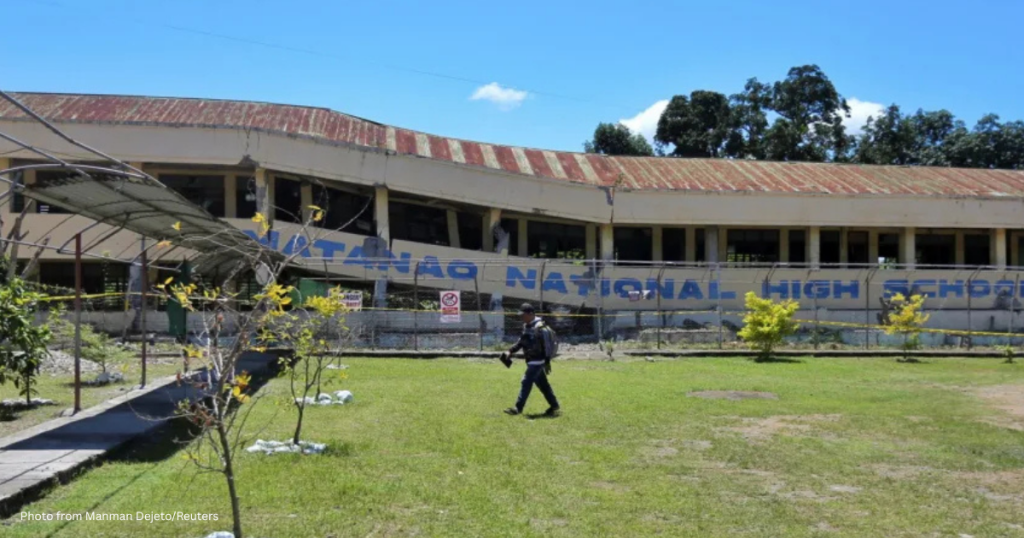
Today’s earthquake in the southern Philippines is a clear warning that natural forces do not respect geographical boundaries. From northern Luzon down to the southern tip of Mindanao, our active fault lines are interconnected geological realities.
As responsible builders and homeowners, we must move away from a culture of reactive repairs to one of proactive safety. Take action today by inspecting your property, checking for existing hairline cracks, and consulting licensed professionals. Paint and beautiful tiles can always be added later when the budget allows, but structural integrity is a foundational investment that stands between safety and disaster.
References
Department of Public Works and Highways. (2026). Official guidelines on rapid structural assessment of buildings after seismic events. DPWH Portal. https://www.dpwh.gov.ph/dpwh/references/guidelines_manuals
Philippine Daily Inquirer. (2026, June 8). Mindanao earthquake updates and real-time seismic tracking. Inquirer News Tag. https://newsinfo.inquirer.net/tag/earthquake
Philippine Institute of Volcanology and Seismology. (2026, June 8). Real-time earthquake monitoring and bulletins database. Department of Science and Technology. https://www.phivolcs.dost.gov.ph/index.php/earthquake/earthquake-information
Philippine Institute of Civil Engineers (PICE). (2025). National Structural Code of the Philippines (NSCP) official publications directory. PICE Publications. https://www.pice.org.ph/pice-publications
Philstar Global. (2026, June 8). National seismic news and rapid structural assessment features. Philstar Tag Hub. https://www.philstar.com/tags/earthquake








 Facebook
 Instagram
 Linkedin
 Twitter
 Youtube
